GFOUNDRY SOLUTIONS BY INDUSTRIES
Talent Management for Manufacturing and Industrial Operations
The factory floor is the company.
Most of the people who actually make manufacturing happen are on the floor. Three shifts. Steel-toed boots and helmets. No desk. No laptop. No corporate inbox. The morning shift, the afternoon shift, the night shift. The line in Aveiro and the line in Bydgoszcz and the line in Mexico City.
The tools that should support these people, recognise them, train them, surface their ideas, were designed for office workers. For one shift. For one country. For one language. For headquarters.
So what happens on the floor disappears from the system. Innovations stay unsaid. Burnout grows quietly. Resignations are a surprise. The mandatory safety training reports 70% completion in the office and 18% on the line. The audit will find that out before you do.
Generic HR software was built for the head office. In manufacturing, the company is on the floor.
GFoundry was built for that.
Why generic HR platforms break in manufacturing.
Five failure modes you will recognise from any factory, plant, or industrial operation.
The morning shift uses the system. The night shift is a black box. The HR platform was rolled out at 10am, demoed to morning supervisors, and never reached the floor at 11pm. The operator on the night shift, who runs the same line for eight hours and goes home at 6am, has no realistic path to open it. Engagement, recognition, training, comms, all bypass two-thirds of the workforce.
Mandatory safety training in 17 languages, except your fleet of 1,200 doesn’t read all 17. A multinational manufacturer has plants in five countries and operators in twelve. Compliance training (HACCP, ISO, hazardous materials, machine safety) is mandatory by region. The standard LMS forces you to either translate everything into English or build twelve separate training programs. Both options miss completion targets. The auditor sees it.
Innovation contests when the operator doing the work cannot access the form. The best ideas in a factory come from the people running the line. They see the bottleneck, the wasted material, the safer way to load. Then HR launches an “innovation challenge” on the corporate HR portal. The operator does not log into the corporate HR portal. The ideas stay on the floor and never reach the people who could fund them.
Engagement surveys that the production line never opens. The pulse goes out by corporate email. The operators do not read corporate email. Response rate: 19%, all from the office tower. The Friday all-hands is a Zoom the line cannot watch. You build a “culture of communication” that serves the part of the company the work does not depend on.
Recognition that goes to managers, not the people running the machines. Annual awards, employee of the month, the slick newsletter. The operator who caught the calibration drift before it scrapped a batch gets a thank-you in chat. The technician who kept the line running through the night when the controller went down does not make the slide deck. Recognition is supposed to live where the work happens.
The floor and the office. One platform.
Same gamification engine. Same AI. Same mobile app. One platform that reaches the operator in capacete on the night shift and the partner in the head office, in the language each one actually speaks, with the same recognition, the same career, the same data.
Front 1: on the factory floor. Operators, technicians, supervisors.
Three shifts, steel-toed boots, no desk. The platform reaches them on a personal phone, in their language, in five-minute windows between two production runs.
1. Onboarding for operators that fits between two production runs.
Pre-onboarding from contract signature. Day-by-day journeys mapped to the line the new operator will run, the safety protocols she has to know, the team she will report to. Mandatory training broken into micro-modules she can complete on her phone, in her language. By week 2 she is on the line, certified, and the supervisor has signal on how she is settling. Onboarding done well lifts retention 25%. Know more here.
Front 2: in the office, the lab, the sales floor.
Where the operation is planned, the products are designed, the customers are sold to, the audit is answered. The same platform connects the floor to the people who run the company.
6. Internal communications that reach every plant, every shift, every country.
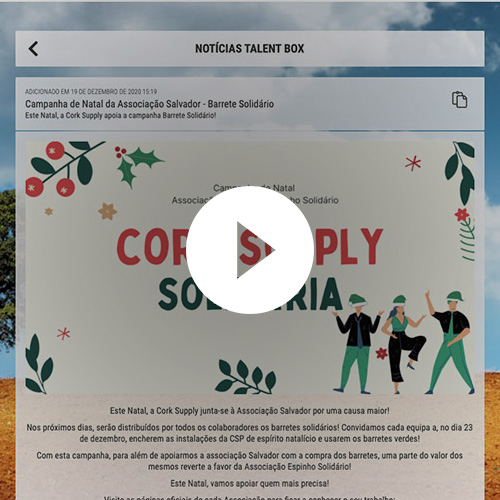
News feed, push notifications, segmented announcements per plant, region or role. Cork Supply uses the platform to publish news, launch campaigns, and run the “We Care” programme across operators, sales teams and head office. One stream the team will not silence, in the language each user opted into.
ONE PLATFORM. EVERY SHIFT.
The same engine. The night shift or the boardroom.
The same five-minute micro-module that updates a junior operator on a new safety protocol runs the same way on the line at 3am and in the office on Tuesday morning.
The same recognition that lets a peer celebrate a colleague’s calibration save reaches the operator on the night shift the same minute it lands at headquarters.
The same career conversation that decides whether the senior technician moves up or moves out happens on the same platform whether the manager is in plant A or in head office.
This is not a perk. This is the difference between a factory that loses 25% of its operators a year and one that turns the line into a place worth staying.
One platform. From the line to the boardroom.
One case study you can actually use.
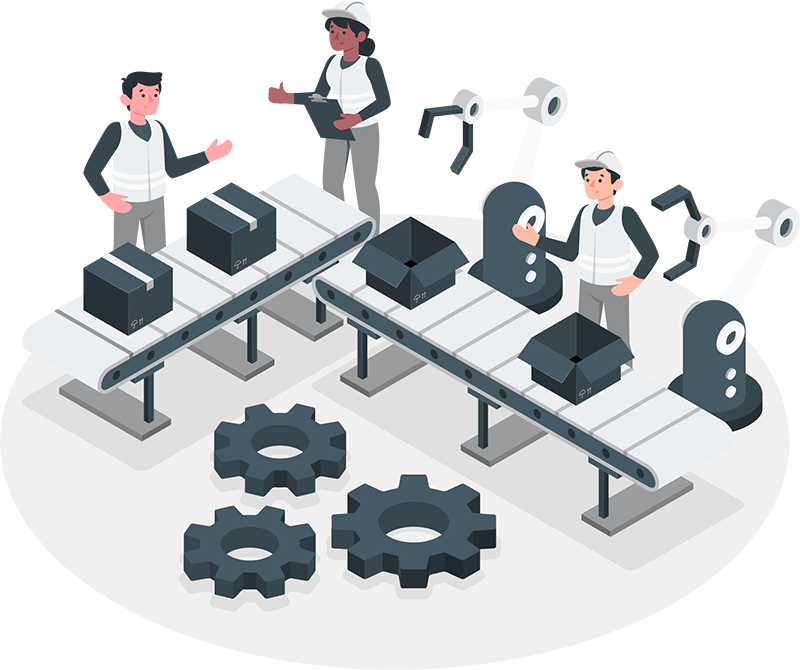
Cork Supply, the Portuguese cork multinational (HARV 81 group), supplying the wine and spirits industry across Europe. They built their talent platform on GFoundry from 2019: onboarding, microlearning, performance evaluation, recognition, innovation, surveys. Sales-team training in five languages (PT, EN, FR, IT, ES). Their “Eco Tips” innovation contests turned operator ideas into funded change, including planting cork oak trees and carpooling programs. Quarterly evaluations, continuous feedback, and a “We Care” programme that runs across the head office and the plants.
Keep on reading.
-
The internal mobility imperative: why building talent beats buying it in a tight labor market
-
Beyond the job title: operationalizing a dynamic skills-based talent strategy
-
Employee onboarding 2026: from compliance to connection
-
The remote work paradox: more motivation and autonomy, but 86% report burnout
-
The end of app fatigue: unify internal communications and silence digital noise
-
The silent budget killer: the true cost of doing nothing in HR transformation
Frequently asked questions.
The questions HR directors of factories, plants and industrial groups actually ask before a demo.
How does GFoundry reach an operator who works the night shift on a personal phone?
Mobile-first by design. iOS and Android apps with the same feature parity as the web. Push notifications, micro-modules, gamified missions, weekly digests. Branded as your factory’s app, so the operator sees your company’s brand, not a third-party tool. Adoption is voluntary; the gamification engine drives the participation curve. Multi-language so each operator opens the app in her language, not the corporate one.
Ready to get started?
Take the next step and learn more about how GFoundry can help you.