Logistics & transport
Talent management
in logistics.
Bring drivers, warehouse teams and dispatchers together around onboarding, operating knowledge and recognition.
Programmes for your industry
Connect the depot, the warehouse and the road.
People work across locations and shifts, with limited time at a desk. Make relevant information easy to reach and give team leaders a practical way to follow learning and participation.
Structure the first weeks
Create induction journeys for drivers, warehouse staff and dispatchers. Combine procedures, practical tasks and quizzes, with progress visible to the people responsible for onboarding.
Keep procedures within reach
Organise short learning content and formal training programmes by role. Update the knowledge teams need for delivery, handling and customer service, and follow completion.
Make operational progress visible
Use competitions based on your own indicators, supplied by Excel or API. Set clear rules and select measures that balance service quality, teamwork and operational priorities.
Talent management in Premium
Connect learning
to talent decisions.
Connect performance evaluation, objectives, development plans and careers with learning and feedback. Premium brings these processes together so people development has continuity.
People Intelligence provides the organisation view. Talent Insights brings individual context into profiles, including support for mentor-mentee matching. Talent Strategist helps explore data in natural language.
Published experience
DPD: connecting people and operations.
DPD Portugal combined communication, an internal learning academy, onboarding and driver competitions in Post a Goal. The published interview describes the programme and its indicators at that stage of the project.
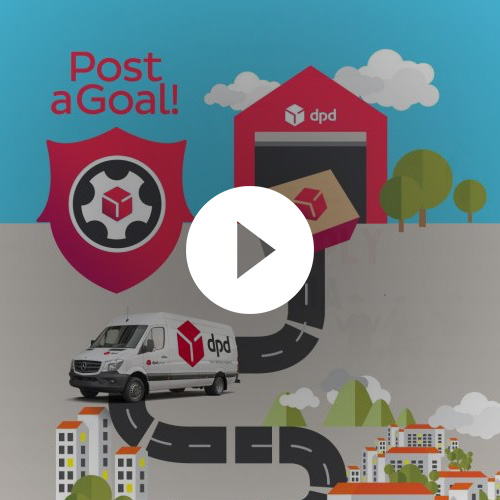
[vc_row][vc_column][vc_column_text] An organisation open to innovation, capable and motivated people, and above all with the will to make things different: these were the main ingredients of this successful project at DPD Portugal (Geopost Group). [/vc_column_text][vc_empty_space][/vc_column][/vc_row][vc_row el_class="gradient-text-7"][vc_column][sc_youtube height="650" video_id="yxmj7I_4GNY"][vc_column_text] Transforming Success: DPD Portugal’s Strategic Partnership with GFoundry DPD Portugal, in collaboration with GFoundry, launched a strategic…
Before you start
Frequently asked questions
Answers to help define the scope and next steps for your project.
Can drivers access the platform away from the depot?
Yes. GFoundry is available on web, iOS and Android. Plan learning and participation for appropriate breaks or training time, with content suited to the audience and the work context.
Can we use our delivery or service indicators in competitions?
Yes. Competitions can use indicators imported through Excel or API. Agree the source, update process, eligibility and scoring rules before launch.
Can drivers, warehouse teams and head office follow different programmes?
Yes. Configure separate audiences, content and journeys for each role or location. Company-wide communication and recognition can be shared where appropriate.
Does GFoundry replace our LMS or HRIS?
GFoundry brings learning, performance, objectives, feedback, recognition and engagement into one platform. It can replace separate tools for these processes and connect to your HRIS/HCM. Payroll and administrative HR remain in that system; integration scope is agreed in the project.
How is AI used?
Learning Designer helps create courses from a briefing or PDF, with review before publication. Role-Play Coach supports conversation practice, and Talent Strategist helps explore talent data. These agents use the available context and configured access. People Intelligence and Talent Insights are separate intelligence services.
Which plan fits our project?
Compare Base, Plus and Premium against the processes you want to launch. Premium includes performance and career management, People Intelligence, Talent Insights and MCP access. The proposal defines the audience, configuration, integrations and partner services.
How do we start an implementation?
Choose a first programme, agree the audience and objectives, prepare the content and configure the experience. A GFoundry partner can support design, implementation and follow-up. Timing depends on the scope, content readiness and integrations.
Can we include mentoring?
Yes. GFoundry can suggest mentor-mentee pairs automatically, with HR reviewing and approving them. Talent Insights adds individual talent and development context to support matching. Mentoring projects using Talent Insights require Premium.