Climate and engagement
Listen to people. Understand what changes.
Combine Pulse Surveys and customised assessments to follow your organisational climate. Track eNPS and engagement metrics over time, identify areas that need support and make listening a continuous practice.
Engagement Thermometer
A picture of today. A view over time.
The Engagement Thermometer brings continuous feedback together to help you understand trends, sentiments and patterns across the organisation. Following responses over time helps show where actions are having an effect and which teams or areas need attention.
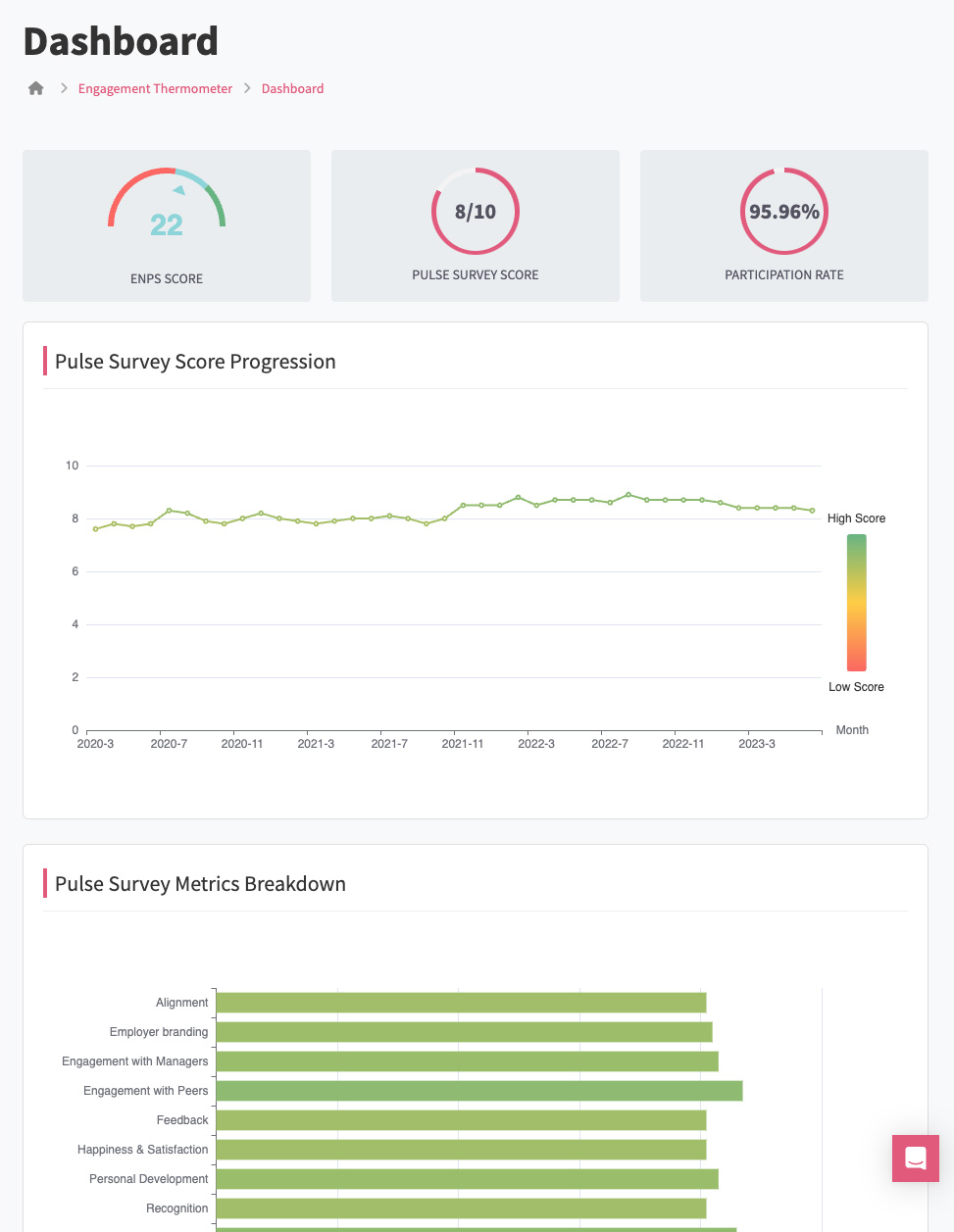
Results and metrics in the Engagement Thermometer.
Metrics with continuity.
Follow nine metrics and their evolution, with results updated as new responses arrive. eNPS adds another perspective on people’s relationship with the organisation.
Signals to help guide support.
The integrated view can provide improvement recommendations and signals associated with the risk of leaving. These support conversations and understanding of the context; they need interpretation and follow-up by the responsible teams.
From observation to action.
Results give you a basis for deciding where to listen more closely, which topics to explore and which actions to follow. Repeating the measurement helps you understand how the experience is changing.
Pulse Surveys
Regular questions. A closer perspective.
Choose a weekly, fortnightly or monthly frequency. People answer on a scale from 0 to 10, with coloured icons, contributing to the Engagement Score and its nine dimensions.
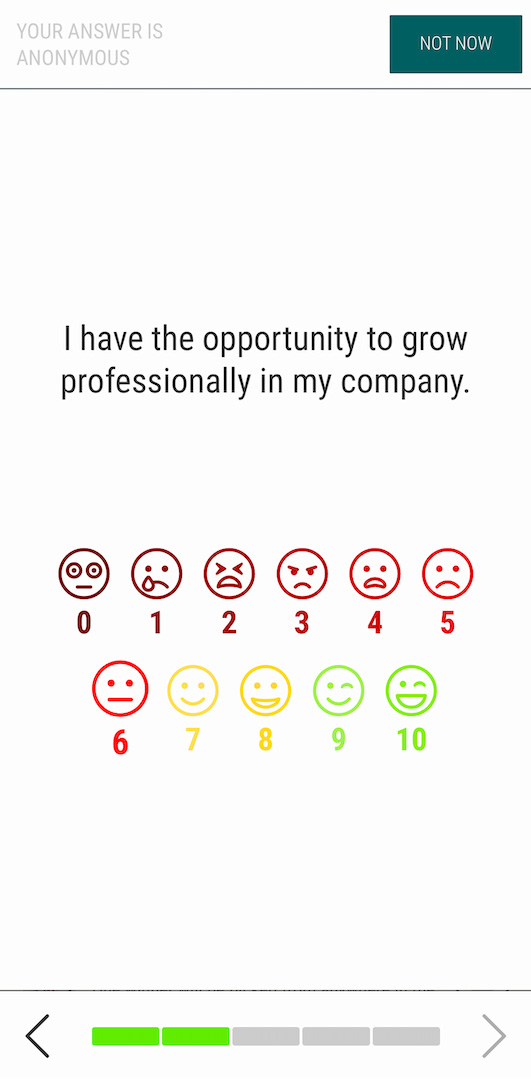
An example of answering a Pulse Survey.
Development and relationships.
Personal Development, Engagement with Managers and Engagement with Peers are three separate metrics. They let you look at growth and working relationships without reducing them to a single result.
Experience and belonging.
Happiness and Satisfaction, Employer Branding and Work-Life Balance add context to how people experience the organisation and fit work alongside other parts of their lives.
Feedback, alignment and recognition.
These three metrics complete the picture: the quality of conversations, the connection with objectives and the visibility of contributions. Together, the nine dimensions help explain what sits behind the score.
Customised assessments
Explore the topics that need a conversation.
Alongside Pulse Surveys, you can create assessment cycles in the Engagement Thermometer interface. The organisation defines the period and questions to explore specific topics, with the option of anonymous responses.
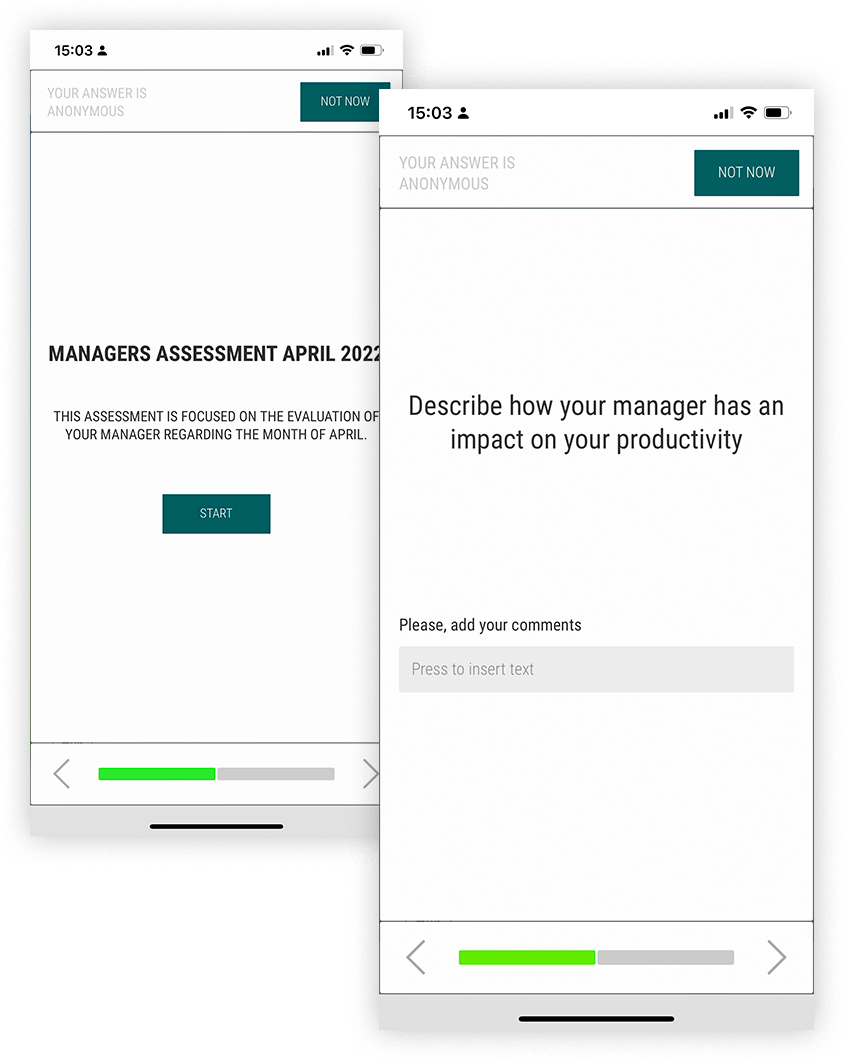
An example of a customised assessment in GFoundry.
Scales and open-ended questions.
Use scale questions, open-ended questions or both. Scales help you follow patterns; open responses give people room to explain the context that a number cannot show.
Cycles defined by your organisation.
Define when the assessment is available and the period in which people can respond. Communicate the anonymity option according to the configuration you choose.
An example: manager assessment.
Create regular cycles in which employees assess their managers. The feedback helps you understand the team’s experience and prepare development actions and improvements to management practices.
Frequently asked questions
Climate and engagement. Your questions, answered.
How do Pulse Surveys differ from customised assessments?
Pulse Surveys provide recurring listening on a scale from 0 to 10, with nine engagement metrics. Customised assessments let you define questions, formats and periods to explore topics chosen by your organisation.
Which frequency can we choose?
Pulse Surveys can run weekly, fortnightly or monthly. For customised assessments, the organisation defines the cycles and response periods.
Can responses be anonymous?
Customised assessments include an anonymous response option. Explain the chosen configuration and how results will be used before people participate.
Which plan should we choose?
Compare the current plans and confirm the modules, configuration and services that fit your listening strategy.