Recognition and feedback
Value the contribution. Build the relationship.
Make good work and people’s skills visible. Bring peer recognition and continuous feedback together in an experience that connects teams, managers and employees.
Peer recognition
A simple gesture. A visible contribution.
Recognition has meaning when it explains what someone did and why it mattered. In GFoundry, colleagues can recognise contributions publicly, endorse skills and share positive feedback.
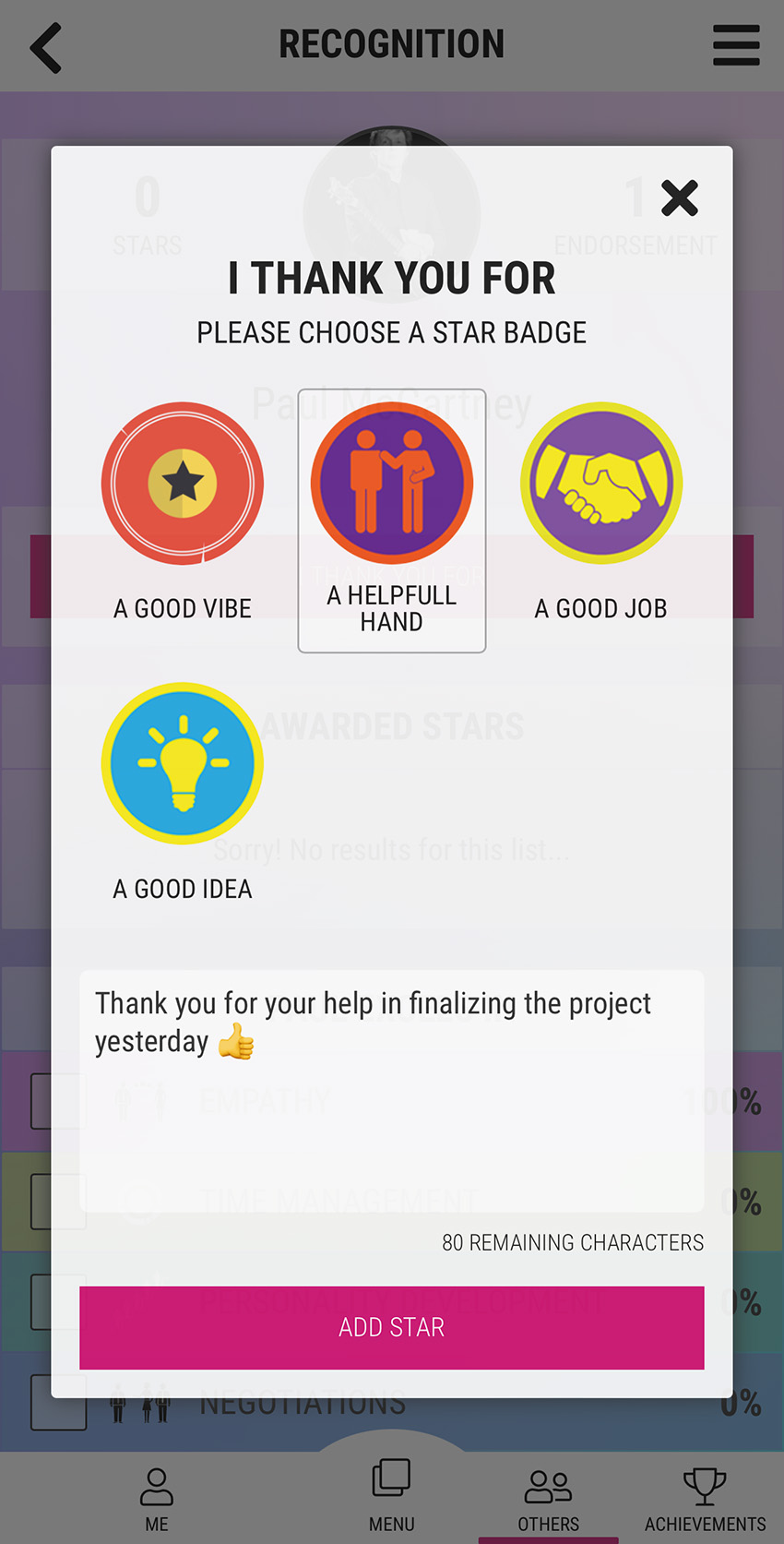
Recognition of colleagues and their skills.
Public recognition with Star Badges.
Give a colleague a Star Badge with a comment about their contribution. Other people can see the recognition, giving the gesture context and making good work part of the shared experience.
Behavioural and emotional skills.
Endorse the soft skills you see in everyday work. Available skills are configured in the backoffice around your organisation’s needs, so recognition uses language that fits your context.
Technical skills.
Recognise your colleagues’ hard skills too. Each person can create their own technical skills and receive peer endorsements, making the knowledge they bring to the team more visible.
A feedback culture
A useful conversation does not need to wait for the next cycle.
The Feedback module lets colleagues share and request feedback, and supports exchanges between employees and managers in both directions. It can remain continuously available, creating room to talk about work when that conversation is useful.
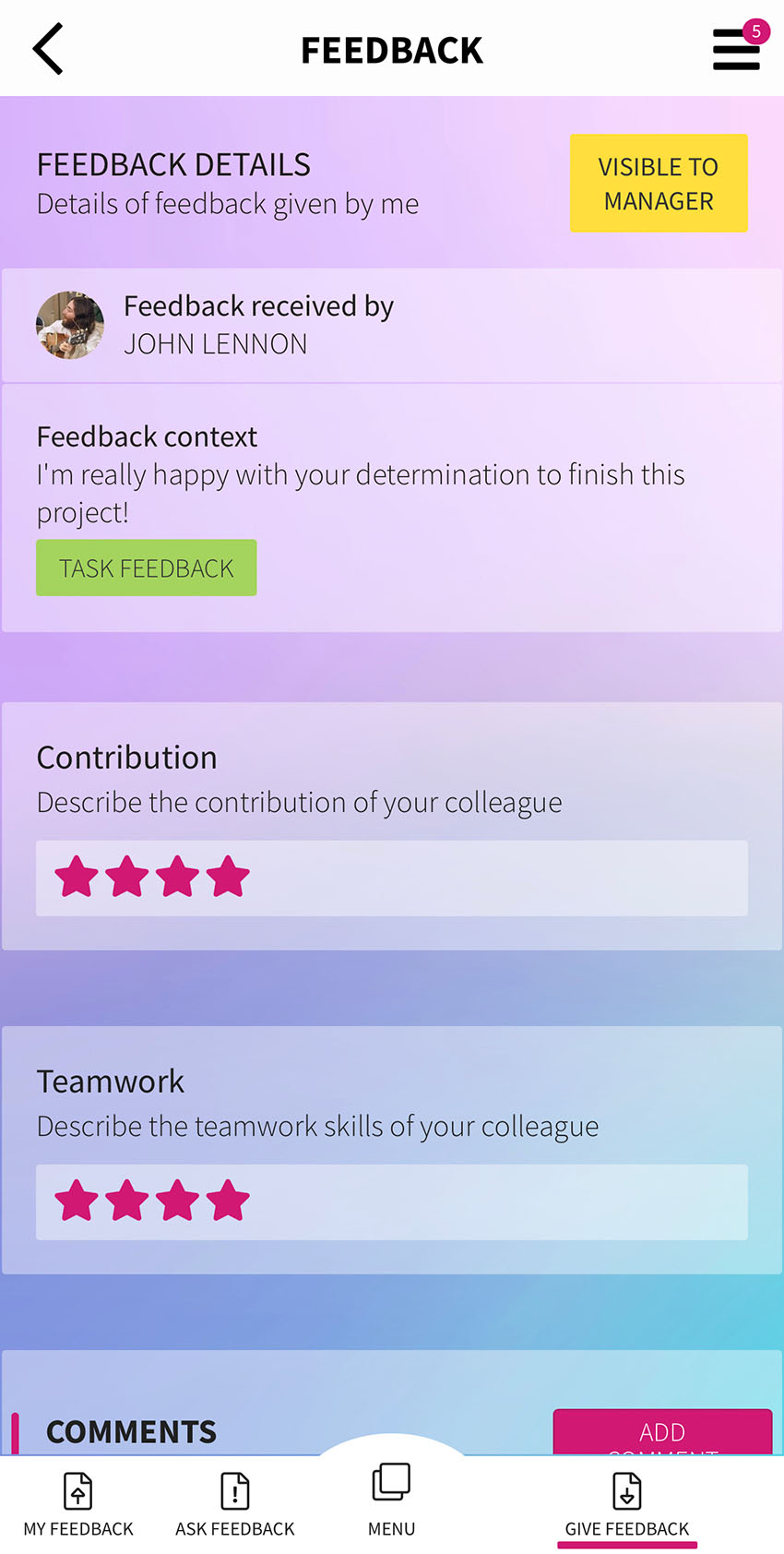
Feedback between peers, employees and managers.
Share and request.
Feedback can start with someone who notices a contribution or someone seeking a perspective on their work. Both options help make conversation an active practice, alongside formal moments.
Across relationships and contexts.
Exchanges can happen between peers or between an employee and their manager. A recent collaboration, a project or an everyday situation gives the conversation context and helps people understand what worked and what could improve.
Continuity in development.
Recognition values a contribution; feedback helps people reflect on it. Connecting these practices to talent management creates more opportunities to learn from work and from colleagues.
Gamification and recognition
Recognition can encourage participation too.
The Gamification Engine supports game and reward dynamics linked to actions and achievements. Badges and other incentives make recognition and feedback more interactive when criteria reflect the behaviours your organisation wants to value.
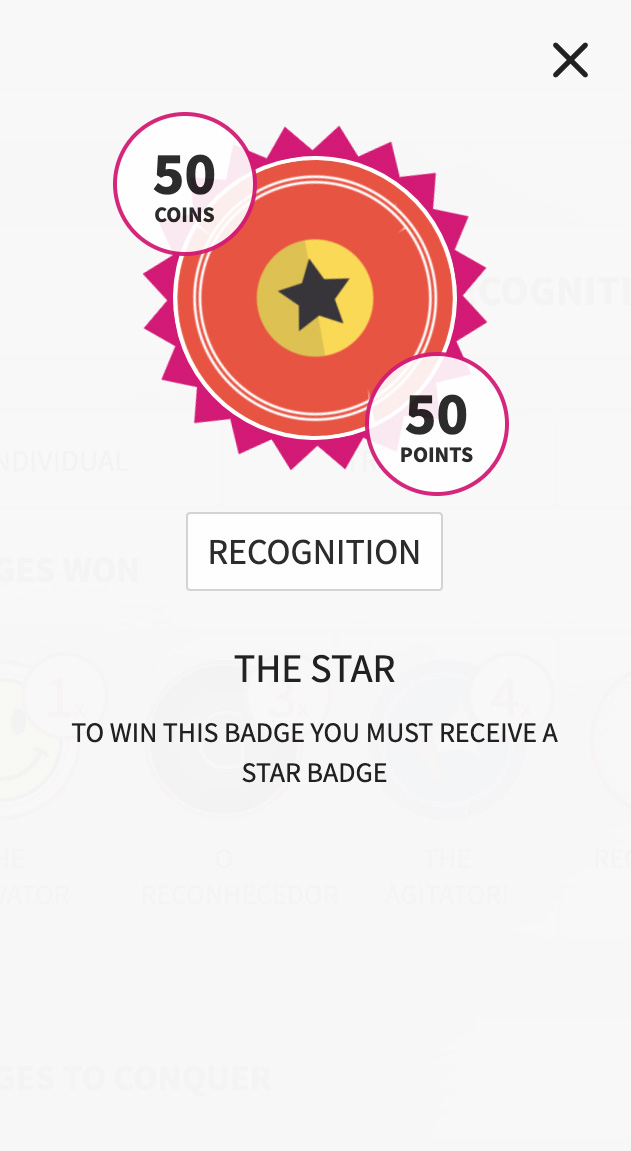
A badge linked to participation in the recognition experience.
Achievements people can see.
Badges give actions and achievements a visual expression. Their meaning should be clear, so recognition is understood and goes beyond accumulating points.
Dynamics that fit your culture.
Your strategy can value participation, collaboration and relevant contributions. Incentives should support the quality of relationships and give people reasons to keep taking part.
What research tells us
Recognition and outcomes: a relationship worth exploring.
Gallup/Workhuman research explores recognition, productivity and absenteeism. The figures below describe one scenario in that study and offer context for thinking about your organisation’s recognition strategy.
Productivity.
For a scenario doubling the proportion of employees who strongly agree they received recognition in the past week, Gallup estimates a 9% productivity increase for the median organisation.
Absenteeism.
The same scenario estimates 22% lower absenteeism, below four days per person annually. Its revised example for a US company with 10,000 employees projects approximately $3.8 million in annual savings.
Frequently asked questions
Recognition and feedback. Your questions, answered.
How can we recognise a colleague?
You can give public recognition with a Star Badge and a comment, endorse behavioural and emotional skills, or recognise technical skills. These are three complementary ways to make people’s contributions and knowledge visible.
Does feedback only happen between an employee and their manager?
No. It can happen between peers and between employees and managers in both directions. The module can remain continuously available for people to share or request feedback when they need it.
Can gamification be part of our strategy?
Yes. The Gamification Engine supports game and reward dynamics linked to actions and achievements. Criteria should reflect your culture and the behaviours your organisation wants to value.
Which plan should we choose for recognition and feedback?
Compare the modules and services in current plans. A demonstration can help explore the forms of recognition, feedback relationships and participation dynamics you want to create.