GFOUNDRY SOLUTIONS BY INDUSTRIES

Talent Management for Insurers and Mediation Networks

Insurance is sold by people who do not work for you.

Most insurance is placed at a kitchen table, on a broker’s screen, on a tied-agent’s tablet, on the bancassurance counter. The advisor handing the policy to the customer is, for that customer, the brand. The advisor is also, in most markets, a self-employed mediator on a commission contract, working for several insurers, attending your training when she has time, completing your IDD module when the regulator’s deadline gets close.
Then the moment of truth arrives. The customer files a claim. A claims handler in a contact centre, on a 30-call shift, with a regulator-defined response window, becomes the brand all over again. The same customer who was sold the policy by an external mediator now meets an internal employee and decides whether the brand kept its promise.
Behind both lives a third house: the underwriters, actuaries, data scientists, IT and compliance teams who design the products and govern the risk. Three audiences, three contracts, three turnover curves, one brand at the end of the chain.
Generic HR software was built for one shape of company. Insurance is three, and one of them is not even on your payroll.
GFoundry was built for that.
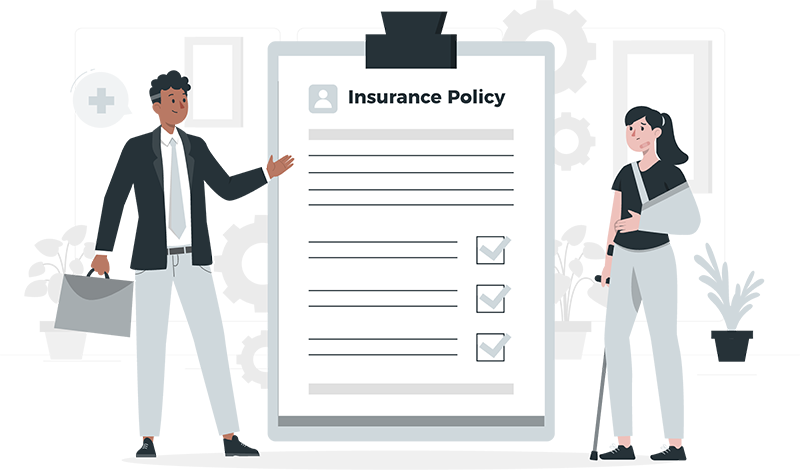
Two individuals discussing an insurance policy with a checklist on a document.

Why generic HR platforms fail in insurance.

Five failure modes you will recognise in any insurer with an external mediation network and an internal claims operation.

The mediator who places policies on Monday is not in your HRIS. She is a tied agent on a commission contract, or a multi-tied broker, or a bancassurance partner. She is not an employee. She does not appear in the payroll system. She does not get the corporate HR portal login. The IDD module the regulator requires has to reach her anyway, in her language, on her phone, with a pass-fail trail you can show the supervisor. The standard HR platform was not built to onboard, train, recognise and certify someone who is not on the payroll.
Mandatory IDD, IPID and suitability training that the regulator cannot trace, by mediator, by language, by version. The Insurance Distribution Directive (IDD) requires 15 hours of continuous professional training per year per distributor. The supervisor wants the trail by mediator, by training, by date, by version. The classic LMS records a completion. It does not record which version, in which language, with which assessment threshold, for which contract type. When the supervisor asks, the compliance team rebuilds the trail in Excel. The supervisor is not impressed.
A new product launches on Monday and the mediator hears about it from a customer on Wednesday. The product committee finalises the new motor product on Monday. Marketing emails the brochure to the mediation network on Tuesday morning. The mediator opens her inbox on Friday between two appointments. The customer who saw the campaign on TV asks about it on Wednesday at the kitchen table. The mediator says “let me check”. She is not undertrained. She is overserved with the wrong format. The mediator needs 5-minute mobile microlearning the morning of launch, with a quiz that gates the right to sell.

The claims handler in the contact centre is one bad week from quitting and the engagement survey runs in the autumn. The colleague answering claims after a major weather event handles thirty distressed customers in a row. She does it well. By Friday she is exhausted. The annual engagement survey is six months away. The pulse runs quarterly. By the time the dashboard says “the claims floor is in trouble”, three colleagues have resigned and a backlog has built. Claims floor turnover does not move on a quarterly cycle.
Multi-channel, multi-brand, and the mediator portal looks nothing like the employee portal looks nothing like the customer journey. Insurers grow through brands and channels. A life-insurance brand here, a non-life there, a digital direct line, a bancassurance partnership, a broker network. Each one has its own portal, its own training site, its own newsletter. The mediator working with three brands carries three logins. The brand promise says “one company”. The day-to-day says “three”.

The mediation network and the back office. One platform.

The same gamification engine. The same AI. The same mobile app. One platform that reaches the tied agent at the kitchen table on Saturday morning and the claims handler in the contact centre on Tuesday afternoon, in the language each one actually speaks, with the same recognition, the same career, the same audit trail the supervisor expects.

Front 1: the mediation network and the claims floor.

The agents, brokers, tied advisors and bancassurance partners who place the policies, and the claims handlers who answer when the customer needs the brand to keep its promise. The platform reaches them on a personal smartphone, in their language, in five-minute windows between two appointments or two calls.

1. Onboarding for mediators that satisfies IDD on day one.

Pre-onboarding from the day the mediation contract is signed. Day-by-day journeys mapped to the products the new mediator will sell, the suitability rules she has to apply, the IDD foundational training. The mandatory hours tracked per mediator, per language, with passing thresholds. By week two she is selling, certified, and the audit log is ready for the supervisor. Read more here.

2. Product microlearning the morning of every launch, gated by quiz.

A full LMS, with the full breadth. Training programmes, curricula, certifications, missions, AI-generated content. From a structured 60-minute course on a new motor or life product, to 5-minute micro-quizzes on a new tariff or a new exclusion. The right to sell can be gated by passing the assessment. Mobile-first because the mediator is at a customer’s kitchen table, not behind a desk. Audit log built in. Read more here.

3. Recognition for portfolio quality, not just for premium volume.

Peer-to-peer and top-down. Hard skills (the mediator who placed a complex commercial line correctly first time) and soft skills (the claims handler who walked a recently widowed customer through a life-insurance payout without losing her). Public, converted to virtual currency, redeemable in the marketplace. Doubling weekly recognition lifts productivity 9% and cuts absenteeism 22% (Gallup/Workhuman). In insurance, that translates to better persistency and better NPS. Read more here.

4. Weekly pulse on the claims floor before the queue gives up.

Three minutes, anonymous, 0 to 10 scale. Nine engagement metrics in real time: well-being, alignment, recognition, work-life balance, peers, manager, career, eNPS. The gamification engine pushes response rates to 80%+ instead of 19%. The claims-floor heatmap flags a team in trouble before the head of operations has to ask out loud. Read more here.

5. Career visibility for claims handlers and field agents.

Quarterly assessment touchpoints, not annual. 360 reviews, 9-box matrix and exit-risk matrix telling you who is winning, who is at risk, who is ready for the next step. Internal mobility marketplace, so the senior claims handler who completed the underwriting fundamentals can move into a junior underwriting role without leaving the company. The insurer that shows the path keeps the talent. Read more here.

Front 2: underwriting, actuarial, IT, compliance, and advisory.

Where the products are designed, the risk is governed, the systems are built, and the supervisor is answered. The same platform connects the back office to the mediation network and to the claims floor.

6. Onboarding for underwriters and actuaries with a long technical learning curve.

A new underwriter learns motor in months, life in years, commercial lines in a career. The platform supports multi-month structured curricula, peer mentoring with AI matching, certifications with audit trail, and a manager dashboard that sees the curve in real time, not at the next annual review.

7. Continuous technical learning for IT, data and cybersecurity.

Cybersecurity awareness modules that change weekly as the threat landscape changes. Skill paths for cloud, data, AI, software engineering, and DevSecOps. Internal certifications run on the platform. The CTO sees adoption per team, per skill, per region; the engineer sees the next badge and the next opening. Read more here.

8. Compliance training that produces an IDD-ready audit trail.

IDD continuous professional training (15 hours per year), IPID, suitability, AML, GDPR, Solvency II awareness. Each course tracked per distributor, per language, per version, per assessment threshold, per certification expiry. The audit log is the system, not a quarterly export. The supervisor asks; you produce a verifiable record by mediator, by training, by date, in seconds.

9. Innovation from the claims floor and from the field.

The claims handler hears the same friction a hundred times a week. The field agent sees the products that are easy to sell and the ones that aren’t. Open submissions, peer voting, leadership dashboards, the best ideas funded. Real change, not slideware. Read more here.

10. Multi-brand, multi-channel, multi-country. One platform.

Multi-container architecture. Each brand, channel or country runs in its own segmented container, with its own branded app, content, communities and dashboards, all consolidating up to the parent group for unified analysis. The life brand can run separately from the non-life. The bancassurance channel can have its own programme. The exclusive-agent network can have its own. 26 languages supported. The group risk function still gets one consolidated view.

ONE PLATFORM. EVERY DISTRIBUTOR.

The same engine. The kitchen table on Saturday or the claims floor on Monday morning.

The same five-minute micro-module that updates a tied agent on a new motor exclusion runs the same way on her tablet on Saturday and on the claims handler’s screen on Monday morning.
The same recognition that lets a peer celebrate a complex commercial-line placement reaches the night-shift claims colleague the same minute it lands at HQ.
The same career conversation that decides whether the senior actuary takes the next pricing role happens on the same platform, whether the manager is in the head office or in a regional hub.
The same audit log that satisfies the IDD supervisor satisfies the cybersecurity audit and the conduct-risk reviewer.
One platform. Mediation, claims, underwriting, IT.
Interface of the sales competitions module displaying rankings and competition details.

The closest public case maps directly.

We do not yet have a public insurance reference customer. The closest mapped pattern is in regulated financial services: Natixis Portugal, the Lisbon Centre of Excellence of Groupe BPCE (the second-largest French banking group, ~16,000 employees globally, ~1,800 in Portugal). The GFoundry-powered “All Aboard” gamified onboarding solved the same problems insurance has every quarter: regulator-visible mandatory training at scale, hiring waves the classic onboarding cannot absorb, and a pre-boarding stage that holds the new colleague before they walk in the door. Replace “engineer” with “mediator” or “claims handler” and the workflow is the same. We are open to building the first public insurance case with a launch partner.

Frequently asked questions.

The questions that HR Directors and Distribution Directors of insurers, mediation networks and bancassurance partners actually ask before a demo.

How does GFoundry train and certify mediators who are not on our payroll?

Multi-tenant by design. Each mediator can be onboarded as an external user inside the insurer’s container, with the same gamified training, certification, recognition and pulse experience as an internal employee, without sitting in the HRIS or the payroll. The audit trail is identical: who, what, when, in which language, with which assessment threshold. Tied agents, multi-tied brokers and bancassurance partners can each have their own segment with the right content, the right communications, and the right reporting back to the head of distribution.

How does GFoundry handle IDD continuous professional training and the supervisor's audit trail?

Each IDD course is tracked per distributor, per language, per version, per assessment threshold, per certification expiry, per annual cycle. The 15-hour requirement is monitored in real time and the system can gate the right to sell when a distributor falls behind. When the supervisor asks for evidence, you produce a verifiable record by mediator, by training, by date, in seconds. IPID, suitability, AML and Solvency II training run on the same engine.

Can we run separate programmes per brand, per channel, or per insurance line?

Yes. Multi-container architecture. Each brand, channel or line of business runs in its own segmented container, with its own branded app, content, communities and dashboards, all consolidating up to the parent group for unified analysis. The life brand can run differently from the non-life. The bancassurance channel can have its own programme separate from the tied-agent network. 26 languages supported.

Does GFoundry replace our HRIS, LMS, or Workday and SuccessFactors?

It depends on the layer.

GFoundry is a full LMS in its own right. Training programmes, curricula, certifications, missions, AI-generated content, audit-ready compliance training. Many of our regulated-industry clients use it as the primary LMS, especially for distribution and claims-floor training where mobile delivery and multi-language matter, and for compliance training where the audit trail matters.

GFoundry also replaces standalone tools for performance management, engagement and pulse surveys, recognition, mentoring, innovation management and internal communications. If the insurer has one tool per use case today, GFoundry tends to consolidate them.

What GFoundry does not replace is the core HRIS / HCM, the system of record for master employee data, payroll and benefits administration. Workday HCM, SuccessFactors HCM, SAP HR, ADP keep that role. GFoundry integrates with them via SAML, Active Directory, LDAP, SSO and an open API, and runs the daily experience on top, including the mediation layer that the HCM does not even know about.

Does it integrate with our policy administration system, claims platform, Slack or Microsoft Teams?

Yes. Connects to Slack and Microsoft Teams via webhooks. Open API for everything else (policy administration, claims, CRM, BI). SSO via SAML, Active Directory, LDAP, Google and LinkedIn. Skills, recognition events, training completions, certification expiries and operational KPI events can be surfaced in Teams or exported to your BI tool. KPI imports via API or XLS upload run on a defined schedule.

How is AI used inside GFoundry, and how is privacy protected for a regulated insurer?

GFoundry Intelligence (Gi) is trained on each organisation’s documents, not on a generic public dataset. Each client has its own isolated Gi instance. For predictive analytics (Gi Talent), personal identifiers are anonymised before any AI processing; names and PII are resolved server-side after the model returns the answer. Suitable for tenants subject to GDPR, IDD and Solvency II controls.

How long does implementation take in an insurer?

Typical first go-live is 6 to 10 weeks for a focused use case: an onboarding journey for new mediators, an IDD academy for the distribution network, an innovation challenge across the claims floor, a sales academy in five languages. Full transformation rollouts (multiple brands, multiple countries, multiple channels) run in waves over 6 to 18 months. Implementation is supported by a certified GFoundry partner.

How much does GFoundry cost for an insurer?

Three plans: BASE (self-service, up to 5 users free), PLUS (enterprise, minimum 250 users, includes partner consulting), and PREMIUM (enterprise, all modules, minimum 250 users). For a tailored proposal scaled to your brands, mediation network, claims operation and countries, book a demo and we will come back with a number.

Ready to get started?

Take the next step and learn more about how GFoundry can help you.

Talent management platform to boost employee engagement