Talent management
Talent management from A to Z.
Connect attraction, recruitment, onboarding, development and management in one continuous experience. Combine GFoundry modules in programmes with Missions, gamification and progress tracking, from the first contact to the next opportunities for growth.
The talent lifecycle
Each stage has a purpose.
The experience needs continuity.
An application, a first day and a development conversation are different moments in the same relationship. GFoundry connects these stages through content, activities, goals and feedback, allowing your organisation to build its strategy progressively.
Attraction and employer brand
The relationship begins
before the application.
The experience someone has before joining a company shapes what they expect from it. An attraction Mission can introduce your culture, people and opportunities through interactive activities, helping potential candidates get to know the organisation.
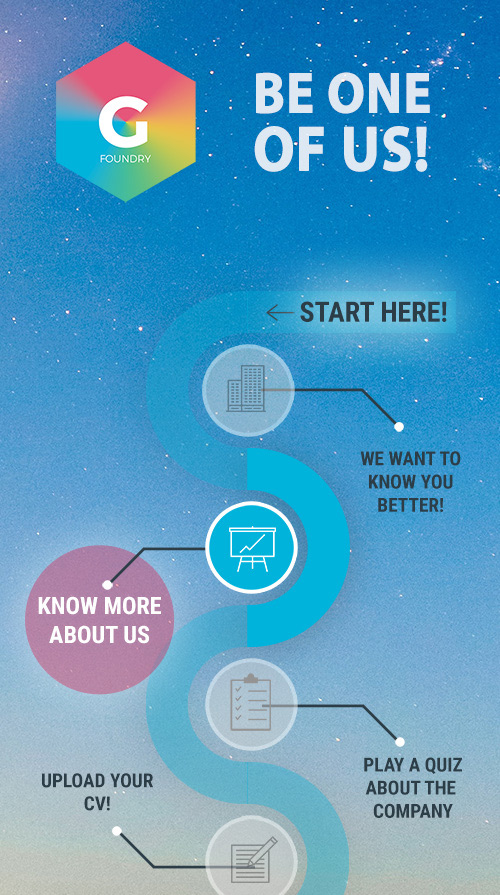
An attraction Mission example: discover the company, take part in a quiz and submit an application.
Introduce the organisation.
Company content, questions and activities turn an introduction to the employer brand into an experience candidates can participate in. The purpose is to give the opportunity context and create an informed connection beyond a job advertisement.
Involve people who know the company.
Employee referral programmes allow colleagues to recommend candidates for a position. A reward following a successful hire can form part of the programme’s rules, recognising the community’s contribution to recruitment.
Connect interest to the next step.
A journey can bring someone closer to applying by gathering information about the organisation and what it expects. The attraction strategy should reflect the culture the candidate will experience after joining.
Recruitment and assessment
A clear process.
A relationship taking shape.
During recruitment, clarity about the stages helps candidates understand the process and stay in contact with the organisation. The app experience can bring together information, a personal introduction and assessment activities.
Follow each stage.
Candidates can follow where they are in the process. Understanding what comes next gives the experience continuity and builds a connection with the brand from the start of the recruitment journey.
Present more than a CV.
A profile can bring together experience, motivations and education, alongside a CV and introduction video. This context helps the recruitment team get to know the person and prepare a better-informed conversation.
Assessment with a purpose.
The journey can include psychometric tests and other assessment activities defined for the project. The information supports recruitment work; the responsible team interprets the results and decides the next steps.
Pre-onboarding and onboarding
From the first contact
to feeling part of the team.
Onboarding continues the relationship that began during recruitment. Onboarding Missions connect content, learning and tasks in a visible journey, helping new colleagues understand what to do and how to move forward.
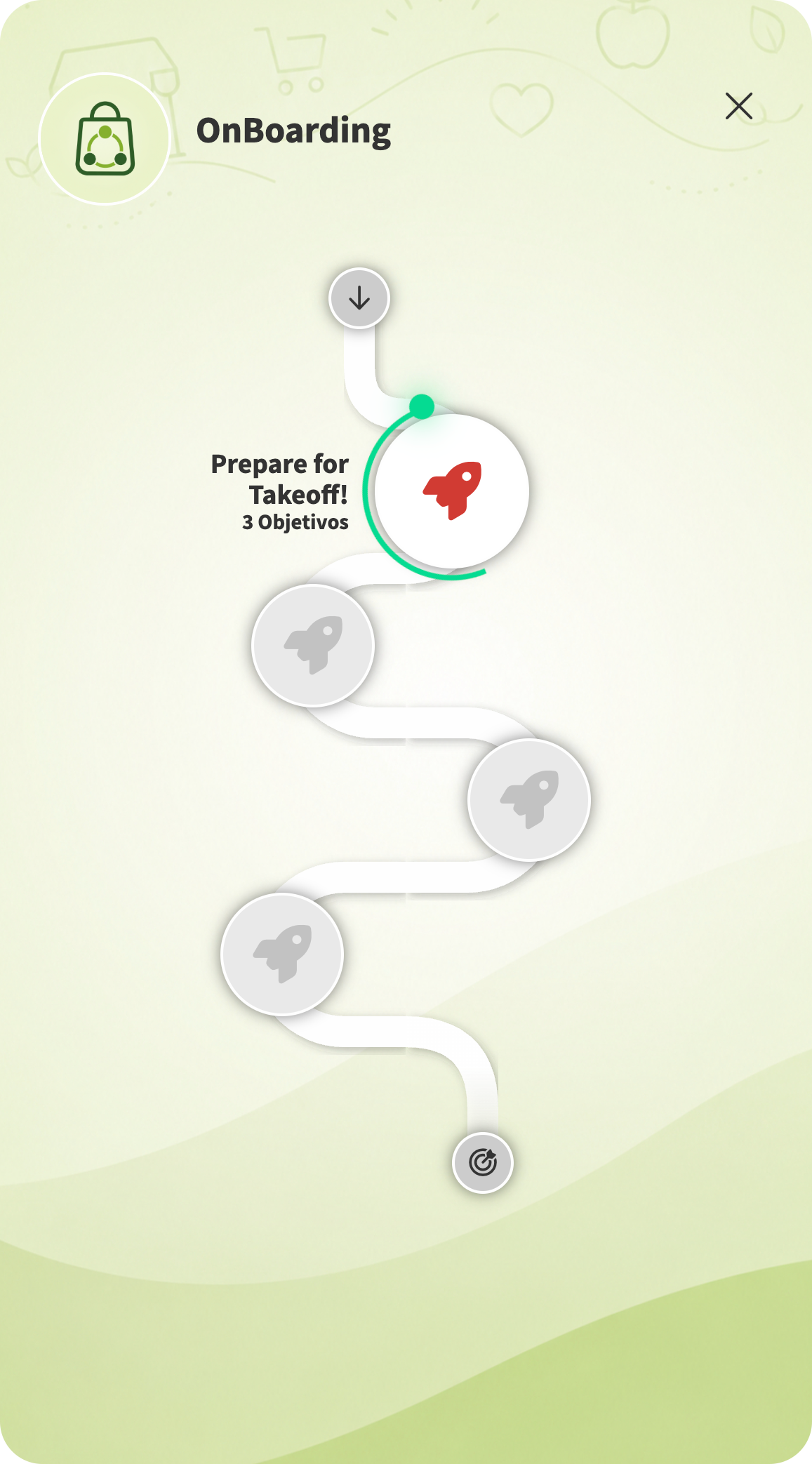
A visual journey connecting stages and showing progress in the Mission.
Prepare for the first day.
Pre-onboarding can introduce the company, culture and people before someone starts. With hybrid login, SSO and LinkedIn can coexist: people without corporate access can join activities through LinkedIn, according to the project configuration.
Journeys suited to the role.
You can create different journeys for teams, roles or audiences. A Mission brings milestones and goals together and can combine digital and in-person activities, giving structure to learning the new working context.
Follow the integration.
Progress shows what has been completed and where support is needed. Gamification can make achievements visible and encourage participation; relationships with colleagues and managers remain essential to confidence, involvement and retention.
Learning and development
Develop skills.
Prepare for new responsibilities.
Development depends on tools, training and opportunities to apply learning. Programmes can address specific gaps in leadership, communication or technical skills and support a person’s growth throughout their career.
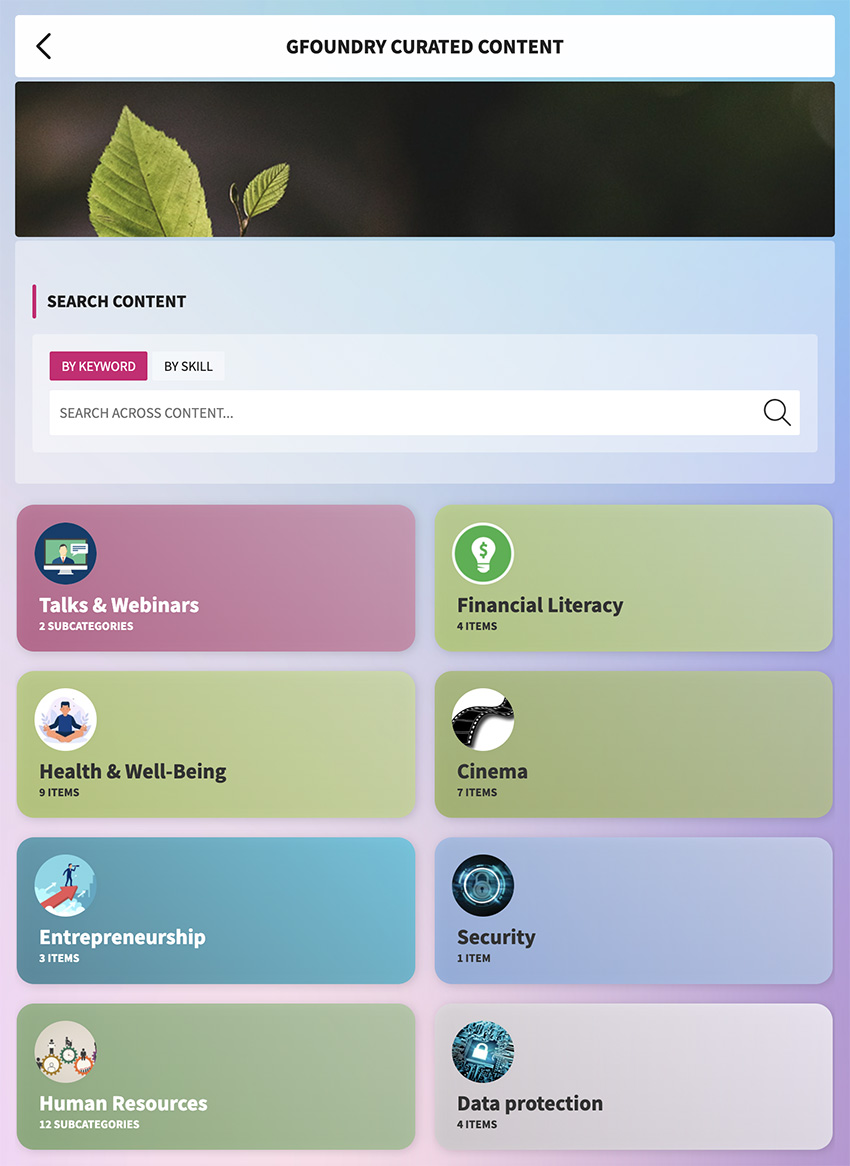
A learning catalogue organised by topic, with search by keyword and skill.
Training with structure.
GFoundry is an LMS for organising courses, training programmes and curricula. Formal training, microlearning and blended learning can form part of the same strategy, with activities and assessments suited to the objective.
Formats that support learning.
Quizzes, video, audio and podcasts, e-books, PDFs and content from other sources provide different ways to approach a subject. Immersive experiences, including VR and AR, can form part of initiatives defined for the project; the format should serve the skill being developed.
From learning to practice.
Missions can connect training with tasks and activities at work. Role-play provides conversation practice with feedback, while Learning Designer supports content preparation with review before publishing, according to the plan and configuration.
Performance, skills and careers
Understand your talent.
Give decisions context.
Talent management gains depth when goals, assessments and development are connected. Understanding the organisation’s skills and following performance helps identify training needs, prepare responsibilities and discuss opportunities for growth.
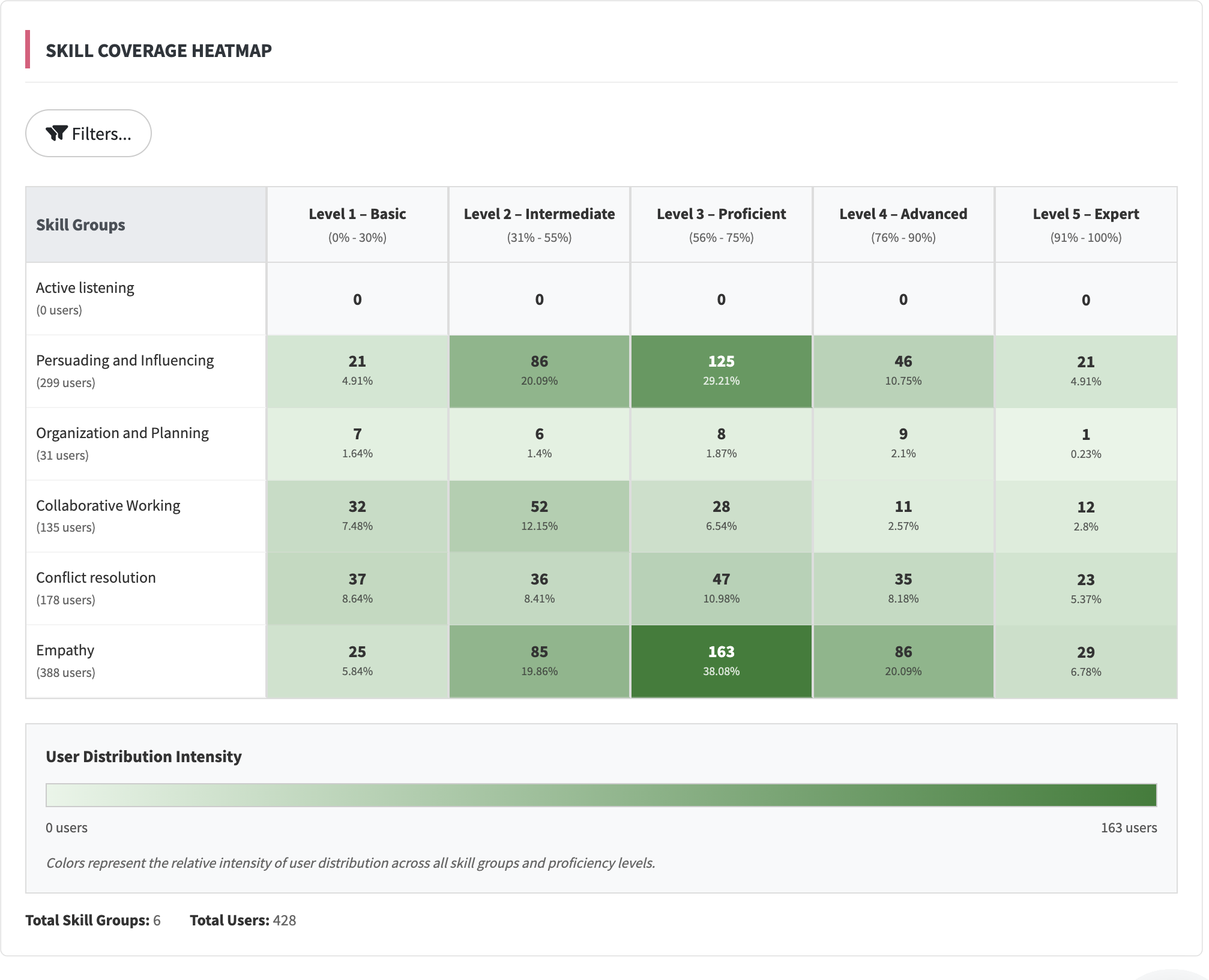
A view of competency coverage across the organisation.
Continuity between performance and development.
Assessments, goals, feedback and career plans give employees and managers a shared view of the next steps. Indicators provide context for conversations about performance, potential and retention; they require interpretation rather than being treated as certainties about a person.
A skills map informed by evidence.
Mapping allows you to explore competency coverage across the organisation. Learning, peer recognition, assessment processes and role-plays can contribute to that view. Completing an activity and demonstrating a skill are different forms of evidence.
Talent management in Premium
The organisational view.
The context of each person.
In Premium, intelligence services complement talent management processes. People Intelligence provides the organisational view; Talent Insights adds individual context to profiles, and Talent Strategist helps explore the available data.
People Intelligence and Talent Insights.
The aggregate view and individual context help connect performance, skills and development. Information access depends on permissions and the scope configured for the service.
Talent Strategist and mentoring.
Talent Strategist allows people to explore data through questions in natural language. In mentoring projects, automatic pair suggestions supported by Talent Insights are reviewed by HR, which follows the suitability of the pairs and programme.
Gamification throughout the lifecycle
Visible progress.
Reasons to take part.
The Gamification Engine supports different moments in your talent strategy: an attraction Mission, an onboarding journey, a learning programme or a culture initiative. The rules should connect participation to the programme’s objectives.
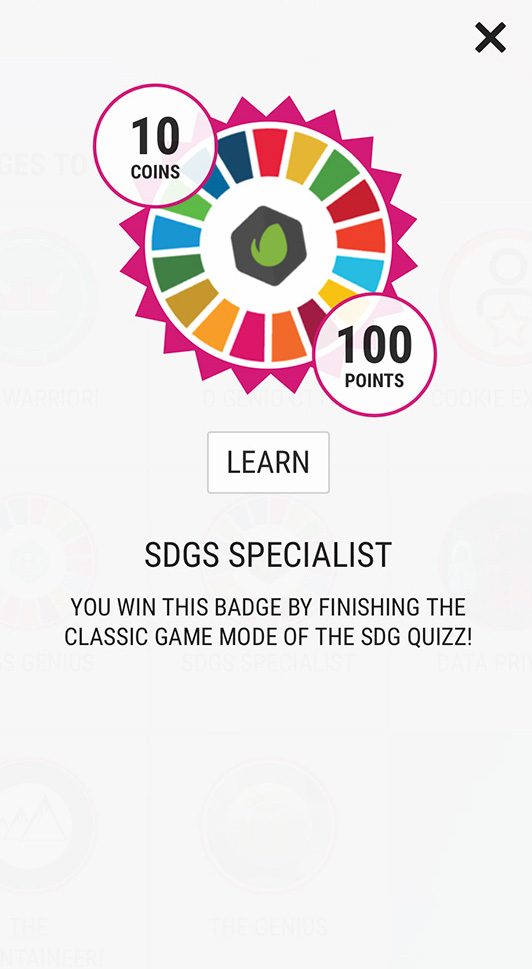
A learning badge example that awards points and virtual coins.
Milestones, points and badges.
Milestones give the journey structure and badges mark achievements. Points make activity and progress visible, according to the criteria defined for each programme.
Individual and collective rankings.
Leaderboards can show results for people, teams or Communities. Competition should have clear criteria and support involvement and collaboration, according to the initiative’s purpose.
Virtual coins and rewards.
Coins earned through activities can give access to items in the internal Marketplace. A rewards catalogue connects effort with something people value, within the programme’s rules.
Quizzes, challenges and Missions.
Quizzes, including battle mode, add an interactive dimension to learning. Missions connect content, activities and tasks, giving participation a sequence and a purpose.
From strategy to implementation
Start with a priority.
Connect the stages as you grow.
An integrated strategy can develop in phases. Module selection begins with objectives, audiences and the experience the organisation wants to create; technology provides structure, while content, support and leadership provide continuity.
A concrete objective to start with.
An onboarding programme, a training need or an assessment cycle can be the starting point. Defining the audience, responsibilities and outcomes to follow helps select the right modules and activities.
Communication and relationships at work.
News, Communities, recognition and feedback keep programmes present in people’s experience. Communication gives objectives context and creates room for participation between formal milestones.
Evaluate and refine the programme.
Following participation and progress, listening to people and reviewing what works helps improve the experience. For example, a need identified during an assessment can guide training and return to the development conversation.
Frequently asked questions
Your talent lifecycle.
Your questions, answered.
Do we need to implement every stage at once?
No. You can start with a priority and combine modules as your strategy evolves. The important part is defining objectives, audiences and connections between stages. Explore the solutions for each need.
Is GFoundry also an LMS?
Yes. GFoundry is an LMS and can replace your organisation’s LMS. It brings together formal training, microlearning and blended learning, with courses, training programmes and curricula. Content migration and implementation requirements are defined for the project.
Can gamification support the whole lifecycle?
Yes. Missions, badges, points, rankings and virtual coins can support different programmes, from attraction to development. Each initiative should have rules and rewards suited to its purpose.
Which plan should we choose?
The choice depends on the modules and services needed for your programme. Plus and Premium serve enterprise programmes; People Intelligence, Talent Insights and Talent Strategist form part of the Premium offering. Compare plans and discuss the implementation scope in a demonstration.