

Performance Evaluation: The Key to Organisational Success
In today’s business landscape, performance evaluation is not just an annual formality; it is an essential strategic tool for the sustainable growth of any organisation. This process goes beyond simply measuring results, focusing on aligning employees’ individual objectives with the company’s overall goals. If you are looking for a performance evaluation platform that applies any of these methods without manual work, get to know the GFoundry solution.
In this article, we explore 10 different performance evaluation methods, from the most traditional to the most innovative approaches, with a detailed analysis of how each one can be applied to identify talent, correct course and, above all, create a more productive and rewarding work environment.
In addition, we present the emerging trends and the latest technological innovations that can optimise this vital process for any organisation.

What is Performance Evaluation?
Performance evaluation is a structured process used by organisations to measure and analyse the performance of their employees against previously defined objectives and competencies. This process, which can take place annually, half-yearly or even continuously, is essential to align expectations between management and employees, identify areas for improvement, recognise efforts, and promote professional development.
Performance Evaluation: A Strategic Instrument
Traditionally, performance evaluation was seen as a moment of static analysis, where the manager assessed the employee based on the results obtained over a specific period. However, this practice has evolved significantly. Today, performance evaluation is regarded as a strategic instrument that not only measures past performance but also guides future development.
Integrating organisational objectives with individual goals is one of the main benefits of this process. When well implemented, performance evaluation enables employees to better understand their role in the organisation and how their work contributes to the company’s overall success.
Key Components of Performance Evaluation
There are several components that make up an effective performance evaluation system:
– Objectives and Goals: A clear definition of objectives that are SMART (Specific, Measurable, Achievable, Relevant and Time-bound). These objectives should be aligned with the company’s strategy.
– Evaluation Criteria: Establishing objective and subjective criteria to measure performance, including technical and behavioural competencies and the results achieved.
– Feedback: A critical component, feedback should be continuous and constructive, enabling employees to know where they are succeeding and where they need to improve.
– Development Plans: Based on the evaluation results, personalised development plans should be created to help employees improve their competencies and achieve their objectives.
The effectiveness of a performance evaluation is directly linked to the clarity of its components and the way it is conducted. When well managed, it can be one of the most powerful instruments for talent development and organisational success.

The Importance of Performance Evaluation
Performance evaluation plays a fundamental role in the strategic management of people and in organisational success. It is not just a tool for measuring past results, but a continuous process that makes it possible to align expectations between the organisation and employees, foster personal and professional development, and ensure that everyone is working towards the same objectives.
Alignment with Organisational Objectives
One of the main advantages of performance evaluation is the ability to align employees’ individual objectives with the strategic goals of the organisation. When employees understand how their work contributes to the company’s larger objectives, there is a natural increase in engagement and productivity. This alignment is crucial to ensure that the company is moving in the right direction and that all team members are contributing effectively.
Identifying Talent and Developing Competencies
Through a robust performance evaluation process, organisations are able to identify emerging talent and areas of competence that need to be developed. Based on these insights, it is possible to create personalised development plans that help employees reach their full potential. This focus on continuous development not only improves individual performance but also strengthens the company’s ability to compete in an increasingly competitive market.
Studies show that companies that implement performance evaluations effectively manage to reduce employee turnover and significantly improve job satisfaction levels.
Promoting a Culture of Continuous Feedback
An effective performance evaluation promotes a culture of continuous feedback, where employees receive regular information about their performance. This kind of culture not only helps to correct problems before they become critical, but also strengthens the relationship between managers and employees. Constructive feedback is essential to ensure that employees know where they are succeeding and where they need to improve, creating a more transparent and collaborative work environment.
Benefits of Performance Evaluation for Employees
For employees, performance evaluation offers several advantages. First, it provides clarity about the expectations of their role, which helps to set clear and realistic goals. In addition, regular feedback allows employees to identify their strengths and areas for improvement, facilitating their professional development. This practice is also an opportunity for recognition of their efforts and contributions, which can increase motivation and commitment to the organisation.
Benefits of Performance Evaluation for the Organisation
For the organisation, the benefits are equally significant. A well-implemented performance evaluation contributes to building a more competent workforce that is aligned with the company’s objectives. It makes it possible to identify competency gaps and provides a solid basis for decisions on promotion, compensation and career development. In addition, performance evaluation can improve talent retention, as employees feel more valued and supported in their growth within the company.
When carried out effectively, performance evaluation is not just a management tool, but a key element for the growth and sustainability of any organisation. By promoting continuous development, aligning objectives, and providing regular feedback, companies are investing in their most important asset: their people.
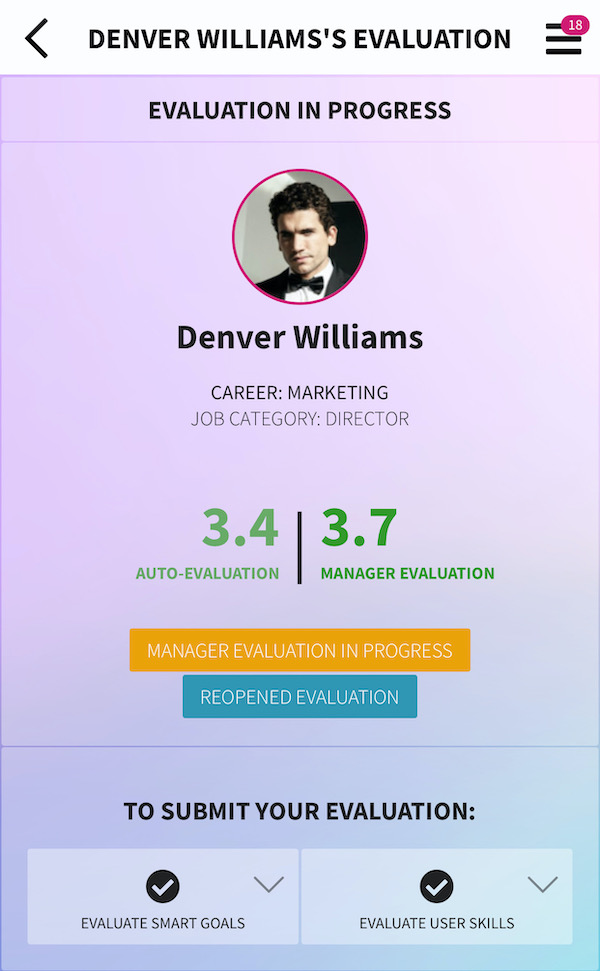
Performance Evaluation Methods
Performance evaluation can be carried out through different methods, each with its own characteristics, advantages and disadvantages. Choosing the most suitable method depends on the needs of the organisation, the objectives of the evaluation process and the corporate culture. Below, we detail 10 popular methods used by organisations around the world.
360-Degree Evaluation
The 360-Degree Evaluation is one of the most comprehensive approaches, as it involves feedback from various sources, including managers, peers, subordinates and even customers. This method provides a complete view of the employee’s performance, taking different perspectives into account.
Advantages:
– Comprehensive and holistic perspective.
– Promotes self-development through multiple feedback sources.
Disadvantages:
– It can generate conflicts if the feedback is not well managed.
– It requires organisational maturity to be effective.
When to Use: Ideal for environments where collaborative feedback is valued and interactions between different hierarchical levels are frequent.
Competency-Based Evaluation
Competency-Based Evaluation focuses on the key competencies required for the effective performance of a specific role. This method assesses both the technical and behavioural competencies of employees.
Advantages:
– Aligns employee development with the strategic needs of the organisation.
– Helps to identify competency gaps and training needs.
Disadvantages:
– It can be subjective if the evaluation criteria are not clear.
– It requires a deep understanding of the competencies needed for each role.
When to Use: Appropriate when the organisation aims to develop specific competencies in its employees and align them with the overall strategy.
Management by Objectives (MBO)
Management by Objectives is based on setting specific, measurable, achievable, relevant and time-bound goals (SMART) that the employee must reach. Performance is assessed based on the success in achieving these objectives.
Advantages:
– Clarity and objectivity in the evaluation.
– Focus on concrete and measurable results.
Disadvantages:
– It can neglect behavioural aspects and competencies.
– It requires a precise definition of objectives and metrics.
When to Use: Ideal for roles where results are easily quantifiable and where the main focus is on achieving specific goals [Read more: MindTools]
Graphic Rating Scale
The Graphic Rating Scale involves assigning a score to the employee across various performance dimensions, such as productivity, quality of work, punctuality, among others. The scores are usually represented on a scale of 1 to 5 or 1 to 10.
Advantages:
– Simple and easy to implement.
– Allows performance to be compared between different employees.
Disadvantages:
– It can be subjective and prone to bias.
– It focuses on quantifying, potentially ignoring important nuances of performance.
When to Use: Suitable for organisations that need a simple and quick evaluation method, with a focus on quantitative comparison.
Self-Assessment
Self-Assessment places the employee at the centre of the evaluation process, allowing them to assess their own performance. This method is often used together with other forms of evaluation to obtain a more balanced view.
Advantages:
– Promotes self-reflection and self-awareness.
– Can increase the employee’s commitment and accountability.
Disadvantages:
– It can be biased, with employees overvaluing or undervaluing their performance.
– It requires maturity and honesty on the part of the employee.
When to Use: Effective in environments where self-reflection and self-development are valued, and as a complement to other forms of evaluation.
Critical Incident Evaluation
This method focuses on recording significant incidents (positive or negative) that occurred throughout the evaluation period. Analysing these incidents provides insights into the employee’s performance.
Advantages:
– Focuses on concrete and specific events.
– Useful for assessing performance in critical or exceptional situations.
Disadvantages:
– It can ignore day-to-day performance.
– It requires careful documentation over time.
When to Use: Suitable for environments where performance in critical situations is of great importance and where analysing specific events can provide valuable insights [Read more: MindTools]
Peer Evaluation
In this method, co-workers evaluate one another. This method can provide a more accurate view of performance, since colleagues have a unique perspective on each other’s day-to-day activities.
Advantages:
– Internal and detailed perspective on day-to-day performance.
– Can promote cooperation and accountability among colleagues.
Disadvantages:
– It can lead to conflicts or rivalries.
– Personal bias can influence the evaluation.
When to Use: Suitable for collaborative teams where colleagues have a close view of one another’s work and where transparency is a priority.
Continuous Feedback
Continuous Feedback involves regular and constant communication between managers and employees about performance, rather than focusing only on annual or half-yearly reviews.
Advantages:
– Allows for quick adjustments and continuous improvements.
– Reduces the anxiety associated with formal, one-off evaluations.
Disadvantages:
– It requires a constant commitment on the part of managers.
– It can be difficult to implement without an established feedback culture.
When to Use: Ideal for dynamic environments where performance needs to be adjusted regularly and where continuous feedback is valued.
Evaluation by the Immediate Supervisor
In this traditional method, the employee’s direct manager is responsible for assessing their performance. This method continues to be widely used due to its simplicity and the manager’s familiarity with the employee’s work.
Advantages:
– The manager’s view is grounded in daily contact with the employee’s work.
– Simple to implement and manage.
Disadvantages:
– It can be subjective and biased.
– It depends heavily on the relationship between manager and employee.
When to Use: This method is most effective in organisations with a well-defined hierarchy and where managers have a deep understanding of their subordinates’ roles.
Results-Based Evaluation
Results-Based Evaluation focuses exclusively on the results achieved by the employee in relation to previously established objectives. This method is particularly useful in roles where results can be measured clearly and objectively.
Advantages:
– Clarity and objectivity in the evaluation.
– Focus on real performance and the results achieved.
Disadvantages:
– It can ignore behaviours and competencies.
– An excessive focus on results can lead to burnout.
When to Use: This method is ideal for roles where results are clearly measurable, such as in sales or production, and where the main focus is on delivering results.
Comparison Table of Performance Evaluation Methods
| Method | Advantages | Disadvantages | When to Use |
|---|---|---|---|
| 360-Degree Evaluation | Comprehensive perspective, promotes self-development | Can generate conflicts, requires organisational maturity | Collaborative environments with frequent interaction between hierarchical levels |
| Competency-Based Evaluation | Aligns development with the company’s strategy | Can be subjective, requires clear criteria | When specific competencies need to be developed |
| Management by Objectives (MBO) | Clarity and focus on results | Neglects competencies and behaviours | Roles with measurable goals |
| Graphic Rating Scale | Simple and easy to implement | Can be subjective and prone to bias | When a quick quantitative comparison is needed |
| Self-Assessment | Promotes self-reflection and accountability | Possible tendency to overvalue or undervalue | Environments that value self-development |
| Critical Incident Evaluation | Focus on concrete and specific events | Can ignore day-to-day performance | Environments with an emphasis on performance in critical situations |
| Peer Evaluation | Detailed perspective on day-to-day performance | Can lead to conflicts or rivalries | Collaborative teams with transparency |
| Continuous Feedback | Quick adjustments and continuous improvements | Requires constant commitment | Dynamic environments needing regular adjustment |
| Evaluation by the Immediate Supervisor | Manager’s familiarity with the employee’s work | Can be subjective and biased | Organisations with a well-defined hierarchy |
| Results-Based Evaluation | Clarity and objectivity | Ignores behaviours and competencies | Roles with clearly measurable results |

Implementing a Performance Evaluation Strategy
Effectively implementing a performance evaluation requires a structured process and tools that support the entire evaluation cycle.
The GFoundry platform offers a wide range of features that make it possible to implement, monitor and adjust the process dynamically.
Below is a step-by-step guide to the implementation, with examples of how GFoundry can support each stage.
Step 1: Define the Objectives of the Evaluation
The first step is to define the main objectives of the evaluation, such as identifying competency gaps, improving performance or preparing promotions. GFoundry supports this process with its Evaluation and Performance Module together with its Competency Mapping solution, enabling managers to create specific evaluation cycles, with clear objectives aligned to the company’s strategy.
Use GFoundry’s Evaluation and Performance Module to create evaluation cycles, monitor progress and align SMART objectives (Specific, Measurable, Achievable, Relevant and Time-bound) with the organisational strategy.
Step 2: Choose the Evaluation Method
Choosing the right method is crucial to ensuring the relevance of the results. GFoundry supports various evaluation methods, including 360-degree evaluation, management by objectives (MBO), self-assessment, among others.
Configure 360º evaluations or self-assessments directly on the platform to collect feedback from various sources and obtain a holistic view of employee performance.
Step 3: Develop Questionnaires for Feedback
Create questionnaires that reflect the performance criteria you want to evaluate. GFoundry makes it easy to create customised questionnaires with various types of questions, such as rating scales and open-ended responses, all integrated into the platform.
Create and distribute questionnaires using GFoundry’s Feedback and Questionnaires Module. Configure questions for regular or ad-hoc evaluations, using scales, open-ended responses and multiple choice to collect detailed insights.
Step 4: Set SMART Goals
Goals should be clear and well defined. GFoundry allows managers to set SMART goals for their employees, making it easier to continuously track progress through dashboards and reports.
In the Objectives and OKRs Management Module, managers can set SMART goals and link them to corporate objectives, ensuring that each employee contributes to the organisation’s success.
Step 5: Train Managers and Evaluators
Train managers so that they know how to conduct effective evaluations. GFoundry’s Learning Module can be used to create training courses, covering topics such as providing constructive feedback and managing evaluations.
Use GFoundry’s Learning Module to create training courses for managers on effective feedback practices and performance evaluation.
Step 6: Track all the Evaluation Processes
During the evaluation, create an open and transparent environment to ensure that employees receive constructive feedback. Use GFoundry’s tools to track structured evaluations, based on established criteria.
Track evaluations using the talent management dashboards, where managers can view employee progress and provide feedback directly through the platform.
Step 7: Develop Development Plans
Based on the evaluation results, create personalised development plans. GFoundry offers tools that make it possible to track continuous development and ensure that employees are progressing in their careers.
Example in GFoundry: Create personalised Individual Development Plans (IDP) in GFoundry, aligned with employees’ career goals and competency development, with continuous monitoring through the Talent Dashboard.
Step 8: Review and Continuous Improvement
Review the evaluation processes periodically to ensure that they remain relevant and effective. GFoundry provides detailed reports and analysis tools to optimise the evaluation process.
Use GFoundry’s reports and dashboards to carry out detailed analyses of the evaluation results and identify areas for improvement in the process.
Continue reading:
- 200 Performance Review Comment Examples
- Best Performance Management Platforms
- The Importance of Feedback as a Performance Tool
- The End of Annual Reviews: The Strategic Shift to Continuous Feedback
- Feedback: What it is, its Importance and How to Do it (Complete Guide)
- The DNA of Talent: How to Identify and Evidence Competencies