GFOUNDRY SOLUTIONS BY INDUSTRIES

Talent Management for Energy and Utilities

The energy transition runs on a workforce the office never sees.

A wind turbine technician 80 metres up at first light. A line crew at a substation in the middle of an Iberian heatwave. A gas-distribution team responding to a leak at 2 a.m. A control-room operator on a 12-hour shift watching the load curve. A meter reader walking the suburb. The work that keeps the lights on is done by people who never sit at a corporate desk.
In the boardroom, the same company is talking about the energy transition. New solar plants. Battery storage. Hydrogen. The grid that has to absorb it. NIS2 cybersecurity audits and ISO 45001 safety certifications. Investors asking about ESG. Regulators asking about decarbonisation pathways. New skills the workforce must acquire while still keeping the lights on.
Two clocks running at the same time. The field shift that has to happen safely tonight, and the strategic transformation that has to be delivered over the decade. Two audiences, one brand, one regulator, one accident report.
Generic HR software was built for one office, one shift, one country. Energy is none of those.
GFoundry was built for that.
Illustration depicting two shoppers, one carrying shopping bags and the other holding boxes and items.

Why generic HR platforms fail in energy and utilities.

Five failure modes you will recognise in any utility, generation company, transmission operator or distribution network.

The field technician arrives at the substation with an outdated risk-assessment document. Central EHS publishes a new lock-out / tag-out procedure on Tuesday after a near-miss in another country. The PDF is on the corporate HR portal by Wednesday. The field technician driving to a substation on Friday morning has not opened the corporate HR portal since onboarding. The new procedure reaches her in a WhatsApp group from her foreman on Saturday, after the crew has already finished the inspection. If the auditor asks for the trail, half the field acknowledged the procedure on the right week.
NIS2 cybersecurity training reaches HQ in week one. The field crew is still doing the same module four months later. NIS2 makes critical operators cyber-accountable. Every employee with access to OT systems needs role-specific cybersecurity training, audit-visible, with refreshers. The classic LMS records 78% completion in the IT and corporate departments by end of Q1. Field operations: 24%. The reason is not motivation. The classic LMS expects an hour at a desktop. The technician who repairs distribution lines does not have an hour at a desktop. The auditor is unimpressed.
The control room’s night shift never opens the engagement survey. The pulse goes out by corporate email on Monday at 9 a.m. The control-room operators on the 8 p.m. to 8 a.m. shift do not open corporate email. The 12-hour shift on a watch screen ends and they go home. Response rate from the office tower: 78%. From the control room and the field: 12%. The team that runs the grid 24/7 is invisible to the same tool that decides where wellbeing investment goes.

The senior transmission expert retires. Nobody captured what she knew. Thirty years of fault diagnosis on the same 400 kV ring leaves the company in a single goodbye lunch. Her successor will rebuild the same intuition over five years and three avoidable outages. There is no internal mentoring programme that scales. There is no structured way for her to record the patterns she sees in the data. There is no career path she could see for the talent she could mentor before she stops. The grid loses three years of fault response time.
The energy transition is on the slide deck. The crew installing the battery storage hears nothing about it. The CEO presents the decarbonisation pathway at the all-hands. The investor relations team rebuilds the same slide for ESG roadshows. The crew commissioning the new 100 MWh battery storage at the substation hears about the project from the engineering work order. They never see how their work fits the company narrative. The talent the company needs to retain through a decade of transition is the talent that does not feel part of it.

The field, the control room and the head office. One platform.

The same gamification engine. The same AI. The same mobile app. One platform that reaches the line technician on the substation at 9 a.m. and the trading floor in the head office at 11 a.m., in the language each one actually speaks, with the same recognition, the same career, the same audit trail the regulator expects.

Front 1: in the field and in the control room.

Line technicians, gas operators, wind and solar field crews, meter readers, network controllers, EHS officers, customer field agents. A 24/7 deskless workforce, multi-region, multi-language, asset-critical. The platform reaches them on a personal smartphone, in their language, in the five-minute window between two interventions or two control-screen alerts.

1. Pre-onboarding mapped to the asset, the role and the language.

A new line technician, gas operator, wind technician or control-room operator gets a journey built around the asset she will work on, the certifications the role requires, the EHS protocols of the specific operating company, and the language she actually speaks. Mandatory safety, electrical, gas and working-at-height modules completed on her phone before her first shift. By day one she is certified, the EHS officer has the trail, and the foreman knows who is cleared for what intervention. Read more here.

2. Safety, electrical, gas and cybersecurity microlearning that gates the right to enter the asset.

A full LMS, with the full breadth. Training programmes, curricula, certifications, missions, AI-generated content. From a structured 60-minute course on a new high-voltage protocol or a battery-storage commissioning procedure, to 5-minute micro-quizzes the morning after a near-miss in another region. The right to enter the asset can be gated by passing the assessment. Mobile-first because the technician is at the substation, not behind a desk. Audit log built in. Each course tracked per worker, per language, per certification expiry, ready for NIS2, ISO 27001, ISO 45001 and the energy regulator. Read more here.

3. Recognition for the safety call and the incident-free streak, not just for the meter installed.

Peer-to-peer and top-down. Hard skills (the line technician who diagnosed an intermittent fault on a 220 kV ring at 3 a.m., the gas operator who closed a leak before it reached evacuation threshold) and safety wins (the crew that refused to work without proper grounding, the controller who escalated an anomaly the algorithm missed). Public, converted to virtual currency, redeemable in the marketplace. The day shift sees the night shift, the field sees the control room. Doubling weekly recognition lifts productivity 9% and cuts absenteeism 22% (Gallup/Workhuman). In utilities, that translates to fewer outages and fewer regulatory fines. Read more here.

4. Weekly pulse, by asset, by shift, by region, in three minutes.

Three minutes, anonymous, 0 to 10 scale. Nine engagement metrics in real time: well-being, alignment, recognition, work-life balance, peers, manager, career, eNPS. The gamification engine pushes response rates to 80%+ instead of 12%, because the survey lives in the same app the technician uses for her certification refresh and her shift acknowledgement. The control-room night shift and the field crew finally have a voice the system listens to. Read more here.

5. Cross-asset and cross-country mobility for the talent the transition needs.

Quarterly assessment touchpoints, not annual. 360 reviews, 9-box matrix and exit-risk matrix. Internal mobility marketplace, so the senior gas-distribution technician with the right certifications can move into a hydrogen pilot, the wind technician in Galicia can see the Mozambique opening in onshore wind, and the control-room operator in Lisbon can move to the new battery-storage control desk. The energy company that shows the transition path keeps the people the transition needs. Read more here.

Front 2: at HQ. Strategy, regulatory affairs, trading, IT, ESG, central support.

Where the transition strategy is decided, the regulatory submission is written, the wholesale trade is closed, the cybersecurity perimeter is governed, the ESG report is produced. The same platform connects the head office to every asset, every shift, every operating company.

6. Internal communications that reach all field crews, all control rooms, all languages on the same morning.

News feed, push notifications, announcements segmented by asset, region, business unit or function. The new lock-out / tag-out procedure lands on every technician’s phone on the same morning, in the language each one chose, with an acknowledgement quiz that produces an auditable trail. The corporate HR portal stops being the channel that reaches half the workforce twice late.

7. Continuous learning for engineers, IT, regulatory affairs, trading, ESG and customer experience.

Skill paths for high-voltage engineering, distributed energy, hydrogen, wholesale trading, NIS2 and ISO 27001 cybersecurity, regulatory affairs, ESG reporting, customer journey design. Internal certifications running on the platform. Peer mentoring with AI matching, so the senior trader can mentor the junior across borders and the senior network engineer can transfer fault patterns to the next generation before retirement. Read more here.

8. NIS2, ISO 27001, ISO 45001 and energy-regulator compliance training that produces an audit trail in seconds.

NIS2 cybersecurity awareness for every role with OT or IT access. ISO 27001 controls for the cyber team. ISO 45001 occupational health and safety for the field. Energy-regulator-specific training for transmission and distribution operators. Each course tracked per worker, per language, per version, per assessment threshold, per certification expiry. The audit log is the system, not a quarterly export. The regulator asks; you produce a verifiable record by worker, by training, by date, in seconds.

9. Innovation from the field, not from the slide deck.

The line technician sees patterns of grid stress the central engineering team does not. The control-room operator sees algorithmic blind spots before the data-science team. The customer field agent hears the friction the digital channel never registers. Open submissions, peer voting, leadership dashboards, the best ideas funded. Real change, not slideware. The grid is improved by the people who actually run it. Read more here.

10. Multi-business-unit, multi-country, multi-language, multi-asset. One platform.

Multi-container architecture. Each business unit, country, asset class or operating company runs in its own segmented container, with its own branded app, content, communities and dashboards, all consolidating up to the parent group for unified analysis. The Iberian distribution operator can run separately from the Brazilian generation business. The renewables business can have its own programme separate from the regulated network. 26 languages supported. The group ESG and risk functions still get one consolidated view across every asset, every certification, every NIS2 control.

ONE PLATFORM. EVERY SHIFT. EVERY ASSET.

The same engine. The substation at 9 a.m. or the trading floor at 11 a.m.

The same five-minute micro-module that updates a line technician on a new lock-out / tag-out protocol runs the same way on her phone at the substation and on the screen of the new analyst on the trading floor.
The same recognition that lets a peer celebrate a flagged anomaly in the control room reaches the field technician on the night intervention the same minute it lands at HQ.
The same career conversation that decides whether the senior gas operator moves into the hydrogen pilot happens on the same platform, whether the manager is in the head office or on the asset.
The same audit log that satisfies the NIS2 supervisor satisfies the ISO 45001 auditor and the energy regulator.
One platform. From the substation to the boardroom.
Interface of the sales competitions module displaying rankings and competition details.

The closest public case maps directly.

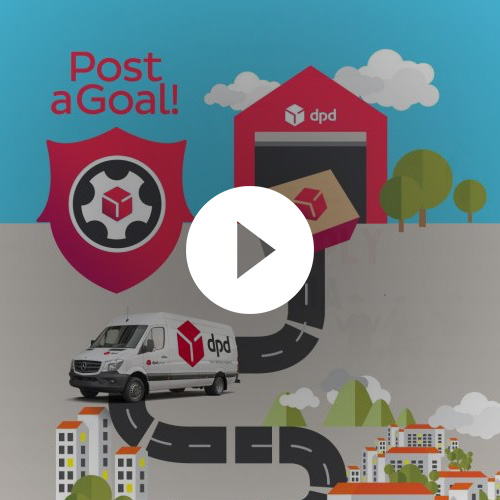
We do not yet have a public energy or utilities reference customer. The closest mapped pattern is a 24/7 deskless field workforce running on real KPIs: DPD Portugal (Geopost group), 1,400 employees including 700 drivers across 15 distribution stations. They built Post a Goal on GFoundry: internal communications, e-learning academy, onboarding and KPI competitions. Drivers see their Predict score in real time, ranked by station, every morning, on their personal phone. Replace “driver” with “line technician”, “delivery accuracy” with “incident-free intervention rate”, “station” with “operating region”, and the workflow is the same: a deskless field workforce running on real operational KPIs, with a head office that finally has signal from the field. We are open to building the first public energy and utilities case with a launch partner.

Frequently asked questions.

The questions that HR Directors, EHS Directors, CISOs and Operations Directors of utilities, generation companies, transmission and distribution operators actually ask before a demo.

How does GFoundry reach a line technician on a substation or a control-room operator on a 12-hour shift?

Mobile-first by design. iOS and Android apps with full feature parity to the web version. Push notifications, micro-modules, gamified missions, weekly digests. Branded as your group’s app, so the technician sees the company brand, not a third-party tool. Adoption is voluntary; the gamification engine pulls the participation curve. Multi-language, so each colleague opens the app in her own language, not the corporate one.

How does GFoundry handle NIS2, ISO 27001, ISO 45001 and energy-regulator compliance training?

Each course is tracked per worker, per role, per language, per version, per assessment threshold, per certification expiry. The system can gate access to OT systems or to specific assets when a course or a certification is missing. NIS2 cybersecurity awareness for every role with OT or IT access. ISO 27001 controls for the cyber team. ISO 45001 occupational health and safety for the field. Energy-regulator training for transmission and distribution operators. The audit log is the system, not a quarterly export. The regulator asks; you produce a verifiable record by worker, by training, by date, in seconds.

Can we run separate programmes per business unit, per country, per asset?

Yes. Multi-container architecture. Each business unit, country, asset class or operating company runs in its own segmented container, with its own branded app, content, communities and dashboards, all consolidating up to the parent group for unified analysis. The Iberian distribution operator can run separately from the Brazilian generation business. The renewables business can have its own programme separate from the regulated network. 26 languages supported.

Does GFoundry replace our HRIS, LMS, or Workday and SuccessFactors?

It depends on the layer.

GFoundry is a full LMS in its own right. Training programmes, curricula, certifications, missions, AI-generated content, audit-ready compliance training. Many of our clients in regulated and field-heavy industries use it as the primary LMS, especially for asset-floor training where mobile delivery and multi-language matter, and for compliance training where the audit trail matters.

GFoundry also replaces standalone tools for performance management, engagement and pulse surveys, recognition, mentoring, innovation management and internal communications. If a utility group has one tool per use case today, GFoundry tends to consolidate them.

What GFoundry does not replace is the core HRIS / HCM, the system of record for master employee data, payroll and benefits administration. Workday HCM, SuccessFactors HCM, SAP HR, ADP keep that role. GFoundry integrates with them via SAML, Active Directory, LDAP, SSO and an open API, and runs the daily experience on top, including the field, the control room and the contractor layer the HCM does not even know about.

Does it integrate with our SCADA, GIS, ERP, Microsoft Teams or SAP?

Yes. Connects to Slack and Microsoft Teams via webhooks. Open API for everything else (SCADA, GIS, asset management, ERP, work order management, CRM, BI). SSO via SAML, Active Directory, LDAP, Google and LinkedIn. Skills, recognition events, training completions, certification expiries and operational KPI events (incident-free streaks, intervention response time, SAIDI / SAIFI, customer NPS) can be surfaced in Teams or exported to your BI tool. KPI imports via API or XLS upload run on a defined schedule.

How is AI used inside GFoundry, and how is privacy protected for a regulated utility?

GFoundry Intelligence (Gi) is trained on each organisation’s documents, not on a generic public dataset. Each client has its own isolated Gi instance. For predictive analytics (Gi Talent), personal identifiers are anonymised before any AI processing; names and PII are resolved server-side after the model returns the answer. Suitable for tenants subject to GDPR, NIS2 and ESG-reporting controls.

How long does implementation take in a utility or energy group?

Typical first go-live is 6 to 10 weeks for a focused use case: an onboarding journey for new field technicians, a NIS2 cybersecurity academy across the group, a recognition rollout for one operating company, an innovation challenge in the control rooms. Full transformation rollouts (multiple business units, multiple countries, multiple assets) run in waves over 6 to 18 months. Implementation is supported by a certified GFoundry partner.

How much does GFoundry cost for a utility or energy group?

Three plans: BASE (self-service, up to 5 users free), PLUS (enterprise, minimum 250 users, includes partner consulting), and PREMIUM (enterprise, all modules, minimum 250 users). For a tailored proposal scaled to your business units, your countries, your assets and your operating companies, book a demo and we will come back with a number.

Ready to get started?

Take the next step and learn more about how GFoundry can help you.

Talent management platform to boost employee engagement