Performance and careers
Evaluate and develop your talent.
Connect reviews, objectives, potential and career plans. Track each cycle and give managers the context to act.
Development with context
Reviews matter
when they help people develop.
A rating tells only part of the story. Connecting objectives, competencies, conversations and potential helps HR and managers understand performance today and prepare for what comes next. GFoundry brings these dimensions into the same process.
Who could grow into a new role?
Potential assessment complements performance and helps identify employees with room to grow. That understanding supports career plans and the preparation of successors for important roles.
Where is more support needed?
Review results and conversations between employees and managers help explain what is working, where support is needed and how to shape the next development objectives.
Where is exit risk higher?
Relating exit likelihood to business impact helps prioritise follow-up. The risk matrix presents signals for analysis, with interpretation and decisions remaining with HR and managers.
Performance appraisals
Objectives and competencies.
Different perspectives.
In GFoundry, an appraisal can cover both what a person achieves and the competencies they use. Assessment models let you bring together different perspectives according to the purpose of each cycle.
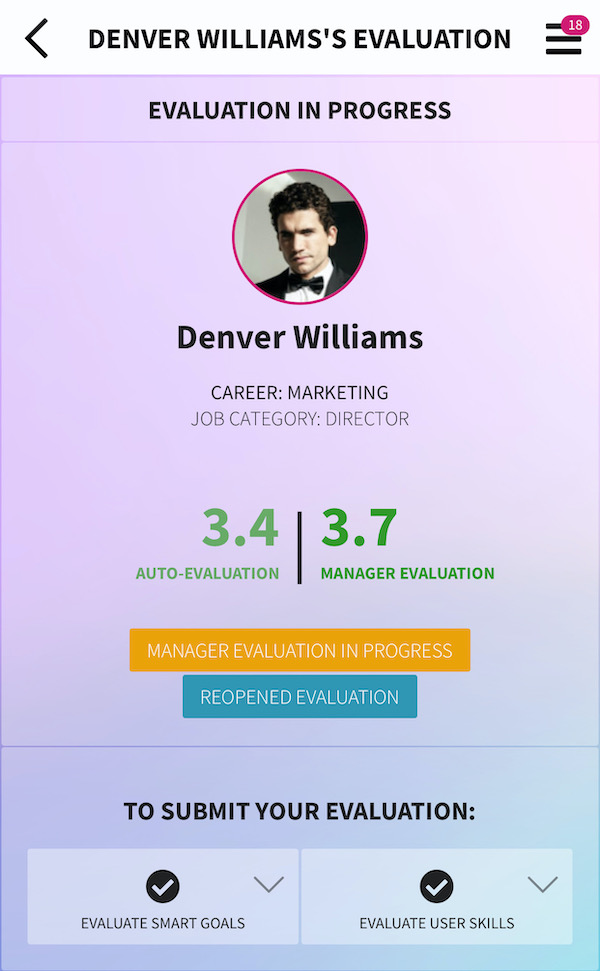
An appraisal view: results, objectives and competencies together.
Self-assessment.
Employees make their own assessment of performance and competencies. Their perspective gives context to the conversation with their manager and helps surface differences in perception.
Manager assessment.
In a Top-Down evaluation, managers assess the employees in their teams, connecting the performance review with ongoing support and development.
360º feedback and evaluation.
Bring together perspectives from different participants to understand behaviours and competencies across several points of contact.
Objectives evaluation.
Assess results against the objectives set for the period. Together with competencies, they help explain both the outcome and how it was achieved.
Touchpoints
The conversation continues
between reviews.
A formal appraisal provides a reference point. Touchpoints create opportunities for follow-up throughout the year, keeping objectives and development present in the relationship between employee and manager.
Revisit objectives.
During each Touchpoint period, employees can review their objectives. The conversation helps put progress and difficulties since the last appraisal into context.
Follow the development plan.
Individual development plans give continuity to the appraisal. Reviewing the journey during the year helps keep follow-up connected to what the person needs to develop.
Give the conversation structure.
A form can guide the conversation between employee and manager and capture feedback. Follow-up then extends beyond a single meeting at the end of the cycle.
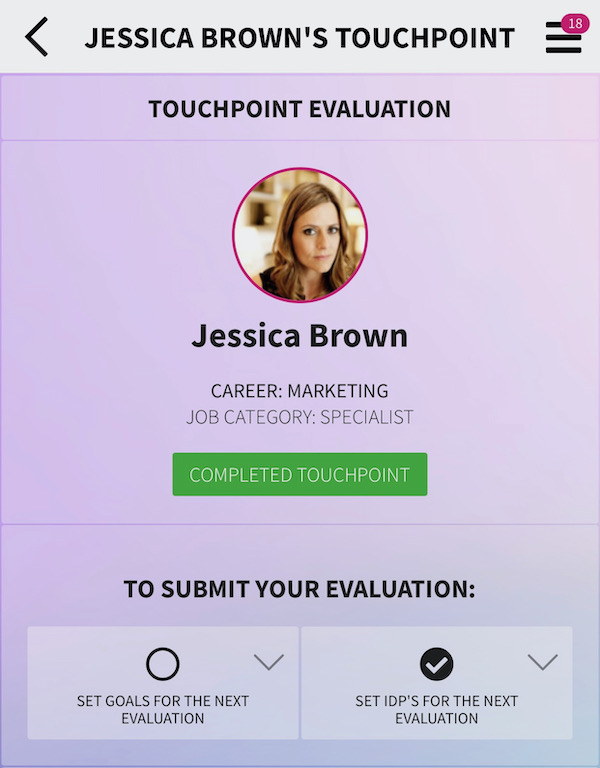
Touchpoints: objectives, individual development plans and feedback throughout the year.
Potential and careers
Understand the present.
Prepare for the next opportunities.
Performance and potential answer different questions. Performance reflects current contribution; potential adds the manager’s assessment of an employee’s capacity to grow within the organisation.
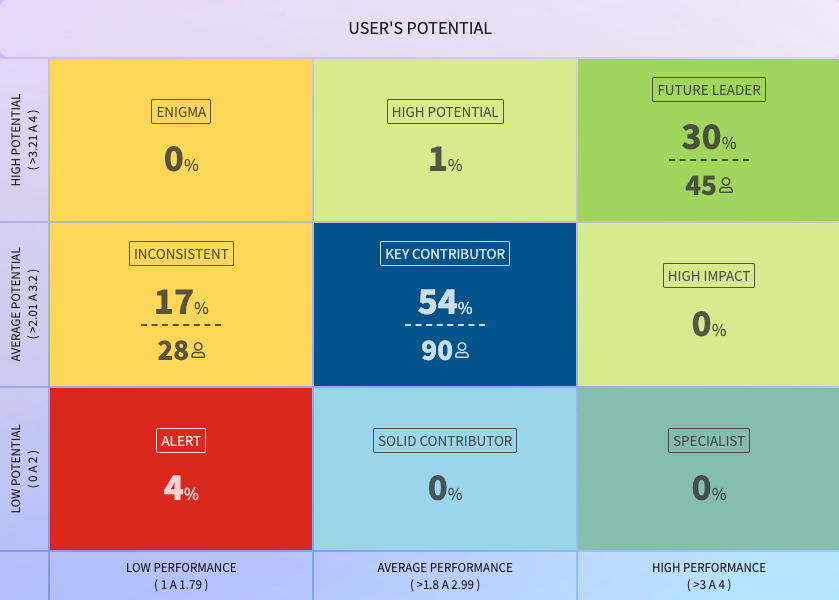
An example of the performance and potential matrix; figures are illustrative screenshot data.
A combined view.
The matrix brings performance and potential together to help visualise the position of teams. The managers responsible for each team provide the context needed to interpret that distribution.
Development, careers and succession.
Understanding potential supports the identification of people to develop and possible successors for particular roles. Career plans can then be discussed with clearer objectives and development needs.
Monitoring each cycle
Employees complete the cycle.
HR follows its progress.
The dashboard brings together participation and completion indicators for the different appraisal stages. That overview helps monitor the process and identify where assessments or follow-up are still needed.
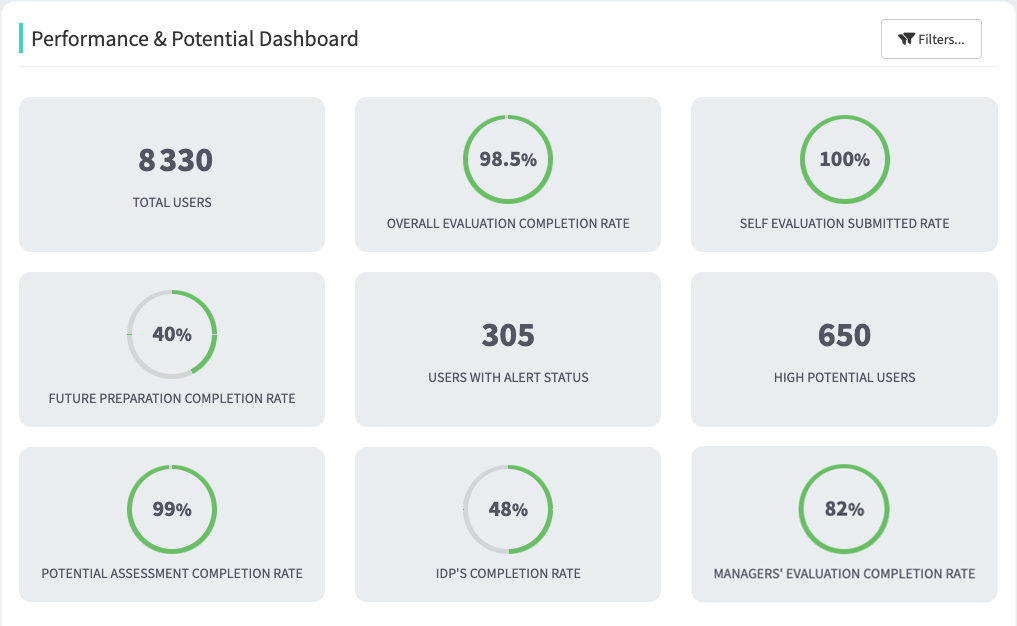
A view of appraisal cycle progress; figures are illustrative screenshot data.
Exit risk
A matrix to guide
follow-up.
GFoundry combines assessments entered by HR and managers with automatic estimates based on available signals. The matrix relates exit likelihood to the impact that departure would have on the business.
A high likelihood with a high impact calls for different attention from a lower-impact situation. Reading the matrix helps prioritise conversations and follow-up, alongside managers’ knowledge of their teams.
To interpret each reading, identify the source of the assessment or estimate, its cycle and the population it covers. These signals do not determine that someone will leave; decisions remain human.
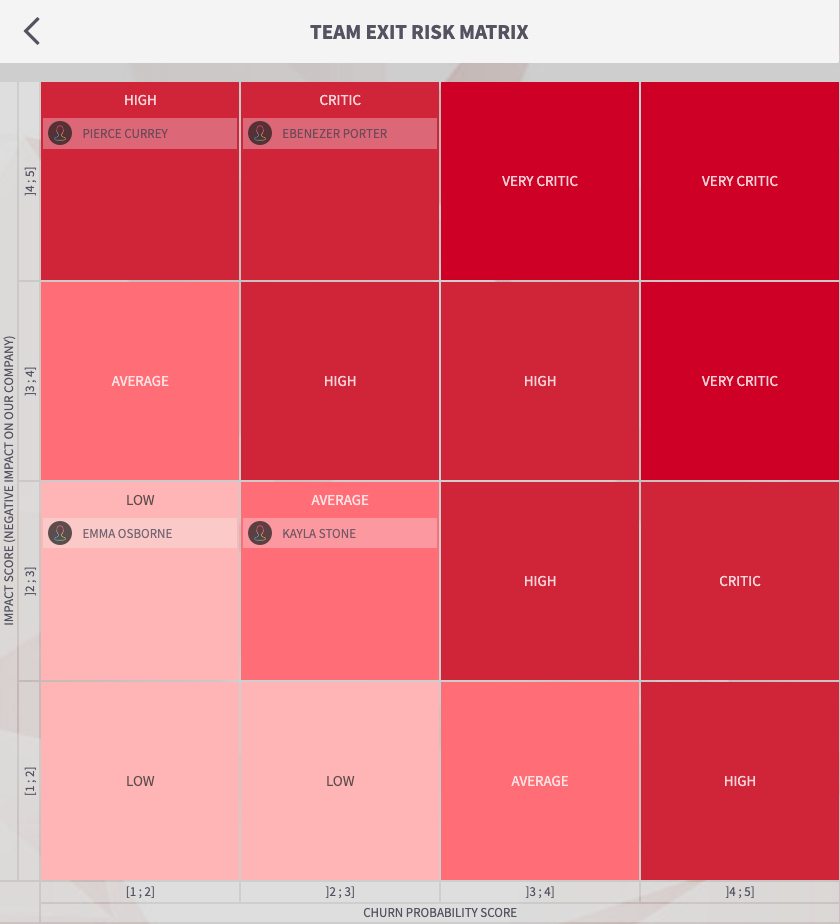
An example of the risk matrix: exit likelihood and business impact.
Intelligence in Premium
From the organisational view
to each person’s context.
People Intelligence, Talent Insights and Talent Strategist provide different ways to explore talent context. They help HR and managers deepen their understanding of available data, according to the scope and configuration of the services.
People Intelligence.
Provides the organisational view for analysing people and talent in a broader context.
Talent Insights.
Brings individual context into employee profiles, including mentoring support. Exit-risk assessments stay outside these profiles.
Talent Strategist.
Lets you explore data through questions in natural language, helping you examine an issue before deciding on the next steps.
Check the dates, coverage and limits of each insight. These services are part of Premium; availability depends on configuration and the agreed scope.
Explore further
The concepts. The application.
The customer experiences.
Explore the appraisal guide and its connection with competency mapping. Customer stories show how GFoundry fits into different talent management programmes.
Guides and competencies.
Performance appraisal guide
GFoundry’s competency mapping engine
Customer experiences.
Frequently asked questions
Evaluation and development.
Your questions, answered.
Which assessment models can we use?
GFoundry lets you create models that include self-assessment, Top-Down manager evaluation, 360º feedback and evaluation, and objectives evaluation. Cycles can cover objectives and competencies according to the approach defined for your organisation.
How do we maintain follow-up between appraisals?
Through Touchpoint periods throughout the year. Employees can review objectives and individual development plans and complete a form that guides the conversation with their manager.
Is potential assessment the same as performance assessment?
No. Performance helps explain current contribution; potential adds the manager’s perspective on an employee’s growth within the organisation. The matrix combines the two dimensions to support development, career and succession conversations.
Does the risk matrix predict that someone will leave?
It does not determine that someone will leave. It relates risk assessments and estimates based on available signals to business impact, helping HR and managers prioritise follow-up. Each reading needs to be understood alongside its source, cycle and population.
Which plan suits our programme?
Performance and potential assessment are available exclusively in the Premium plan. This plan also includes People Intelligence, Talent Insights and Talent Strategist. In a demonstration, we can discuss the cycles, audiences and implementation needs of your evaluation and development programme.