Construction & civil engineering
Talent management
in construction.
Connect site teams, subcontractors and head office through role-based onboarding, learning and knowledge sharing.

Programmes for your industry
Keep knowledge moving with the project.
Teams, trades and locations change as a project develops. Organise essential knowledge by role and site, and give those responsible for training a view of progress across the workforce.
Prepare people for the site
Build onboarding Missions around the project, role and working procedures. Combine essential information, learning and tasks for employees and defined external audiences.
Structure technical and safety learning
Use reviewed content in training programmes with deadlines and evaluations. Keep completion records available to the teams responsible for training and operational validation.
Bring site experience into improvement
Collect ideas from site teams and organise their evaluation. Share the initiatives selected for follow-up and recognise useful contributions across projects.
Talent management in Premium
Connect learning
to talent decisions.
Connect performance evaluation, objectives, development plans and careers with learning and feedback. Premium brings these processes together so people development has continuity.
People Intelligence provides the organisation view. Talent Insights brings individual context into profiles, including support for mentor-mentee matching. Talent Strategist helps explore data in natural language.
Published experience
A reference from industrial operations.
Cork Supply illustrates learning and development across industrial and commercial teams. This is a manufacturing case, useful when exploring a programme across locations, rather than a construction implementation.
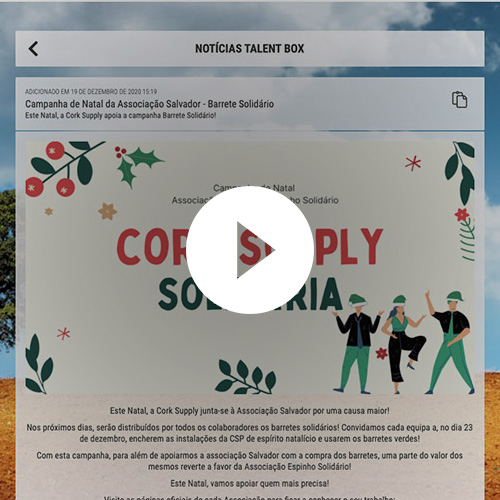
Discover how Cork Supply implemented GFoundry digital solution to support a set of HR processes in an innovative way, starting with onboarding, through training and development, not forgetting all the management of objectives and performance evaluation. [vc_row css=".vc_custom_1641558275075{margin-top: -30px !important;}"][vc_column][vc_column_text] A business rooted in tradition makes a strong bet on innovation. And why? [/vc_column_text][vc_empty_space][sc_youtube height=”700″…
Before you start
Frequently asked questions
Answers to help define the scope and next steps for your project.
Can subcontractor teams take part in training?
Yes. GFoundry can support programmes for external audiences as well as employees. Define users, access, content and reporting responsibilities for each subcontractor in the project.
Does a completed course automatically grant site access?
Training records can inform your authorisation process, but physical access is managed through your site’s procedures and systems. An automated connection requires a separately scoped and tested integration.
Can we organise programmes by project and trade?
Yes. Configure audiences, content and Missions for the relevant groups or teams. Review the access rules when people move between projects or responsibilities change.
Does GFoundry replace our LMS or HRIS?
GFoundry brings learning, performance, objectives, feedback, recognition and engagement into one platform. It can replace separate tools for these processes and connect to your HRIS/HCM. Payroll and administrative HR remain in that system; integration scope is agreed in the project.
How is AI used?
Learning Designer helps create courses from a briefing or PDF, with review before publication. Role-Play Coach supports conversation practice, and Talent Strategist helps explore talent data. These agents use the available context and configured access. People Intelligence and Talent Insights are separate intelligence services.
Which plan fits our project?
Compare Base, Plus and Premium against the processes you want to launch. Premium includes performance and career management, People Intelligence, Talent Insights and MCP access. The proposal defines the audience, configuration, integrations and partner services.
How do we start an implementation?
Choose a first programme, agree the audience and objectives, prepare the content and configure the experience. A GFoundry partner can support design, implementation and follow-up. Timing depends on the scope, content readiness and integrations.
Can we include mentoring?
Yes. GFoundry can suggest mentor-mentee pairs automatically, with HR reviewing and approving them. Talent Insights adds individual talent and development context to support matching. Mentoring projects using Talent Insights require Premium.