
 The Imperative of Skills Gap Analysis in the Digital Era
In today’s macroeconomic landscape, the stability of job descriptions is a relic of the past. What once defined a role for a decade now evolves in cycles of 18 to 24 months. Conducting a Skills Gap Analysis has ceased to be an annual administrative HR exercise and has become a strategic survival imperative. Organisations that cannot map, in real time, the skills they have versus the skills they need face an existential risk: operational obsolescence.
The urgency is driven by the pace of technological change. According to the Future of Jobs Report by the World Economic Forum, an estimated 44% of workers’ core skills will be disrupted over the next five years. For a Chief Human Resources Officer (CHRO), this means that nearly half of their organisation’s intellectual capital is at risk of accelerated depreciation. The cost of this inaction is visible not only in lost productivity, but also in the exorbitant costs of external recruitment to fill vacancies that could have been bridged through internal mobility, had there been visibility into hidden talent.
This paradigm shift requires moving away from managing static “jobs” to embracing the management of “skills portfolios”. In Portugal and across Europe, the shortage of qualified talent in critical areas – such as data analysis, artificial intelligence and adaptive leadership – is forcing companies to look inward. The Skills Gap Analysis is not only about identifying what is missing; it is about designing the navigation map that allows the organisation to pivot its workforce towards future business objectives, minimising friction and maximising team engagement.
Diagnosis: Identifying What We Have vs. What We Need
An effective skills diagnosis operates across two distinct timeframes: the present (AS-IS) and the future (TO-BE). The most common mistake in talent audits is an over-reliance on subjective self-assessment or on a manager’s assessment based solely on past performance. To obtain reliable data, mapping the current state must cross-reference multiple sources of information, validating the real proficiency of teams. However, the true strategic value lies in defining the future state: which skills are needed to execute the company’s three-year strategic plan?
This exercise requires a rigorous balance between Hard Skills (technical competencies, such as programming or financial literacy) and Soft Skills (behavioural competencies, such as emotional intelligence and complex problem-solving). Frequently, the most critical and hardest-to-fill gaps lie in the behavioural domain, where automation has the least impact. The granularity of the analysis is equally vital: departmental averages hide individual talent. It is necessary to drill down to the employee level to identify who is ready for immediate upskilling.
- ❌ Annual or Ad-hoc Frequency
- ❌ Backward-looking (Performance Reviews)
- ❌ Data isolated in silos (Excel/PDF)
- ✅ Continuous and Real-Time
- ✅ Forward-looking (Potential and Learning Agility)
- ✅ Integrated, AI-actionable data
 The Technological Revolution: AI-Powered Competency Mapping by GFoundry
Manually managing skills matrices in spreadsheets becomes unmanageable as soon as an organisation grows beyond a few dozen employees. The exponential complexity of the interactions between profiles, projects and competencies demands a robust technological solution. This is where GFoundry’s Competency Mapping stands apart, using Artificial Intelligence to turn an administrative process into a competitive advantage.
The GFoundry platform solves the chronic problem of outdated data. Through Gamification mechanics, employees are encouraged to keep their skills profiles up to date, receiving recognition and immediate feedback. The AI engine (GFoundry Intelligence) analyses this data to suggest relevant skills based on the employee’s history, their role and market trends, automating the construction of the organisation’s taxonomy. This allows HR to move from “data entry” to “data analysis”.
Furthermore, the AI-Powered Competency Mapping in GFoundry solution offers visual dashboards that allow leaders to identify critical gaps within a single, intuitive interface. Whether to find an internal specialist for an urgent project or to design a succession plan, the technology makes it possible to visualise the distribution of talent in real time, ensuring that decisions are based on evidence rather than intuition.
Strategies to Close the Gaps: From ‘Gap’ to Action
Once the gaps are identified, the organisation must activate the most appropriate talent strategy. The classic “Build, Buy or Borrow” decision gains new precision with mapping data. If the skill is strategic and long-term, the path is internal development (Build). If it is an urgent, temporary need, turning to freelancers or partners (Borrow) may be more efficient.
With GFoundry, Upskilling and Reskilling plans are no longer generic. The platform makes it possible to create personalised learning journeys, where AI recommends specific content and missions to close each employee’s individual gap. Internal mobility is another powerful lever: often, the skill the company is looking for externally already exists internally, but in a different department. Cross-functional mapping exposes this hidden talent, facilitating lateral moves that increase retention.
In addition, the technology facilitates Social Learning and Mentoring. By identifying who the “Masters” are (those with advanced skills) and the “Apprentices” (those who need development), GFoundry can suggest mentoring pairs automatically, accelerating the transfer of tacit knowledge within the organisation.
Monitoring and KPIs: Securing the Return on Investment (ROI)
The effectiveness of a Skills Gap Analysis programme should be measured by its impact on the business, not merely by the number of training hours delivered. A key KPI is Time-to-proficiency – the speed at which an employee can apply a new skill autonomously. Integrated platforms make it possible to correlate the completion of learning journeys with the improvement in subsequent performance reviews.
Another crucial metric is the Critical Gap Coverage Rate, which tracks the percentage of high-risk skills that have been mitigated over the quarter. According to McKinsey & Company, organisations that link skills development directly to business strategy show significantly higher success rates in their transformation programmes. Continuous feedback, gathered through pulse surveys and peer reviews in GFoundry, serves as a qualitative validation mechanism, ensuring that skills acquisition translates into observable behaviours and tangible results.
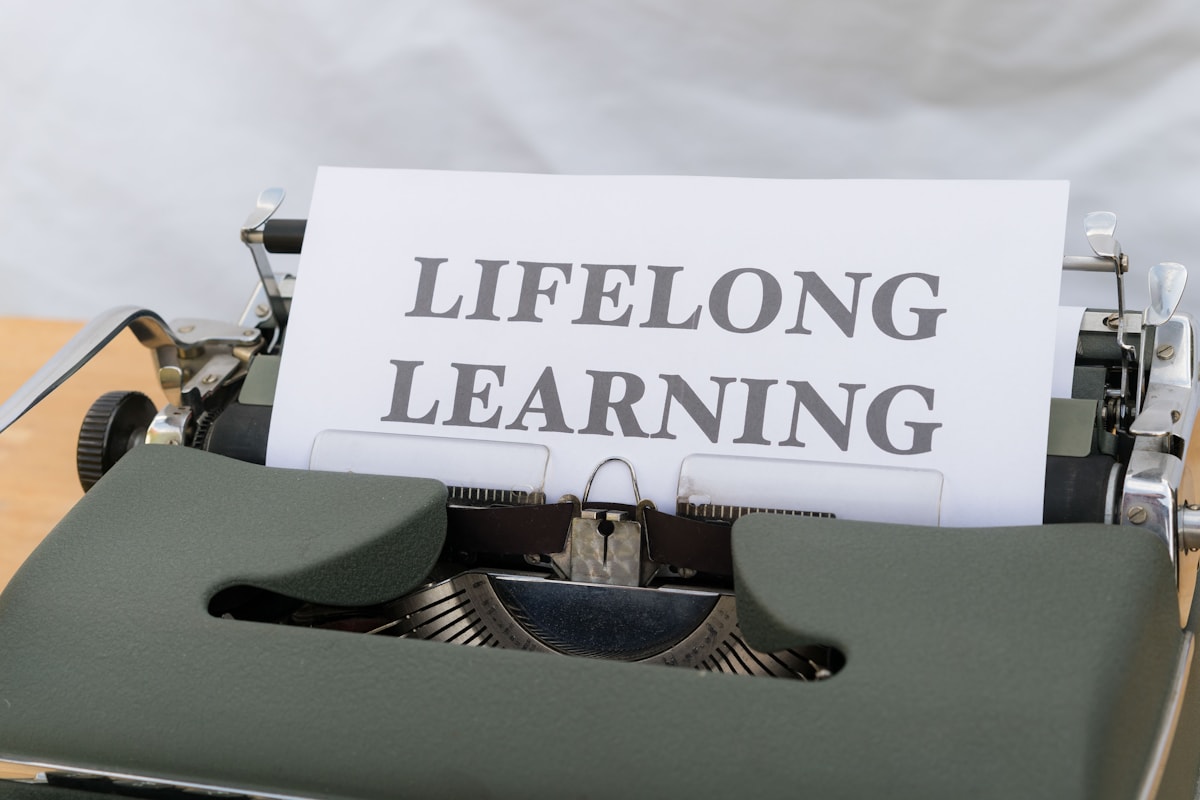 Conclusion: A Culture of Continuous Learning
Skills gap analysis is not a one-off event, but rather a cyclical, living process. As the market evolves, new gaps will emerge, demanding constant adaptation. The transition to a Skills-based Organization requires more than technology; it demands a cultural shift in which learning is valued as an integral part of daily work.
Tools like GFoundry are the enablers of this culture, providing the infrastructure needed for talent management to be transparent, fair and data-driven. By giving employees visibility into their own development and possible career paths, companies not only close skills gaps, but also dramatically increase the engagement and retention of their human capital.
From Strategy to Execution with GFoundry
To turn the theory of Skills Gap Analysis into practice, it is essential to rely on a platform that integrates diagnosis with action. GFoundry makes it possible to operationalise this strategy, linking competency mapping directly to personalised development plans and internal mobility opportunities. Examples such as Cork Supply, which rolled out global qualification programmes overcoming geographical barriers, or DSPA, which used the technology as the backbone for certifying Data Science skills, demonstrate how the platform adapts to complex knowledge management challenges. With the Competency Mapping module, your organisation can identify hidden talent and prepare teams for the future today. Request a demo to see AI in action.
Further reading:
- How to operationalize a dynamic skills-based talent strategy
- Upskilling and Reskilling: micro-learning and AI for new skills
- The DNA of talent: how to identify and evidence competencies and values
- Digital career path: how to show employees they have a future
- Strategic microlearning: the science of learning in the flow of work
- Best LMS and e-learning platforms