
 The Invisible Power of Peer Recognition
In the modern corporate ecosystem, team motivation and commitment are frequently treated as the exclusive responsibility of managers. However, this traditional model hides a deep structural flaw: managers cannot be everywhere. Top-down recognition, while valuable, systematically fails to capture the “invisible work” – the small daily wins, the silent help on a complex project or the positive attitude toward a difficult client.
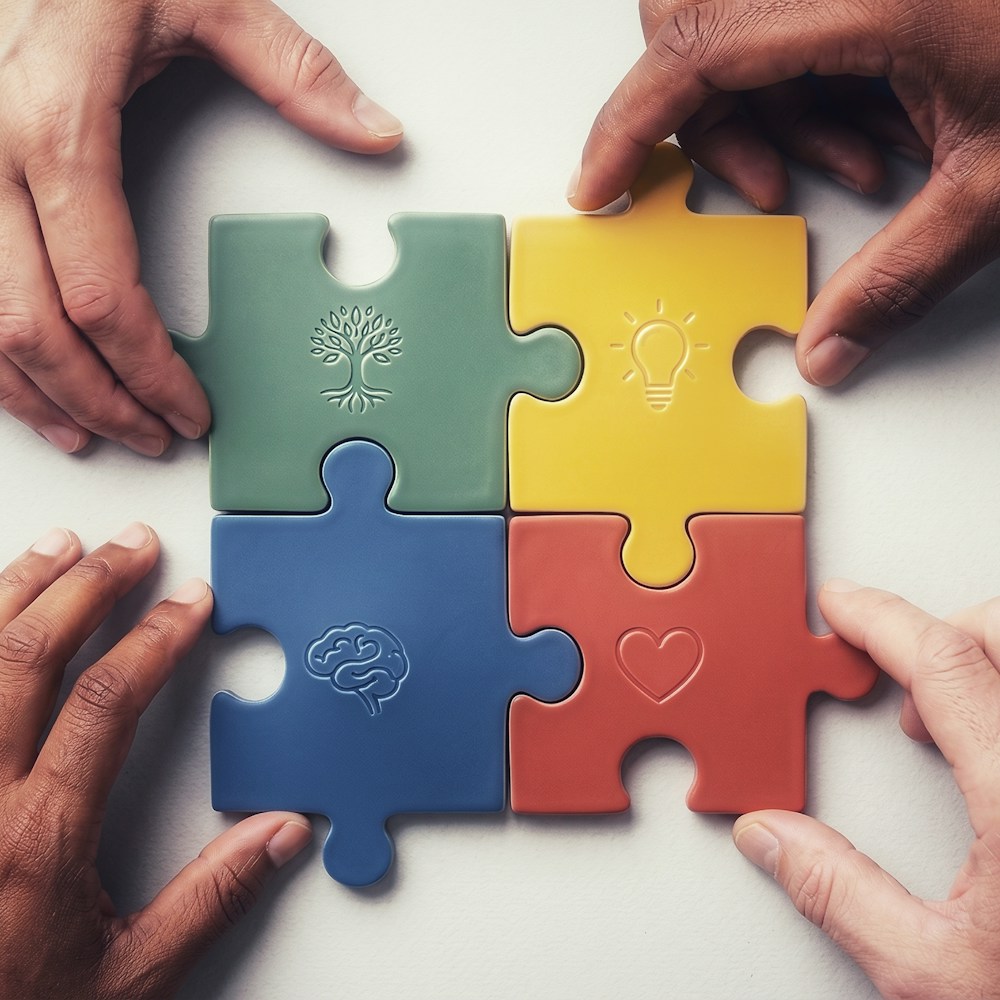
This is where peer-to-peer recognition emerges as the most underrated and powerful tool for scaling organizational motivation. By definition, peer recognition occurs when co-workers validate, celebrate and publicly praise each other’s effort, without any hierarchical intervention or approval. It is about democratizing praise, transferring the power of appreciation to those who share the day-to-day trenches.Credibility from the Ground
The effectiveness of horizontal recognition lies in its unquestionable authenticity. Praise coming from a colleague who intimately understands the technical or emotional challenges of a specific task is, in the overwhelming majority of cases, perceived as more specific and credible than generic praise from top management. When a peer says “your data analysis saved our presentation”, the psychological impact is immediate and profound.
Peer recognition turns praise into a daily, decentralized habit immune to bureaucracy, capturing the real value that sustains the company’s daily operation.
By deconstructing the myth that validation must flow exclusively from the top down, organizations unlock a massive potential of psychological safety. Employees stop working merely to impress management and start genuinely collaborating for collective success, knowing that their effort will be seen and valued by those standing beside them.
Why Decentralize Praise? The Direct Impact on Retention
The transition from an exclusively hierarchical recognition model to a decentralized system is not just a matter of cultural modernization; it is a strategic imperative with a direct impact on the business bottom line and on talent retention. When praise is democratized, the tangible benefits multiply at a speed that traditional management simply cannot keep up with.
Exponential Increase in Volume and Relief for Management
By empowering the whole team to recognize, the frequency of positive feedback increases exponentially. Instead of waiting for the semi-annual performance review, the employee receives validation in real time. At the same time, this represents critical relief from the pressure on managers. Leaders stop being the sole bottleneck of motivation, allowing them to focus their energy on the team’s strategic development and on removing operational obstacles.
Organic Reinforcement of Culture and Impact Data
When peers recognize behaviors that are intrinsically aligned with the company’s values, organizational culture is reinforced horizontally, in a natural and continuous way. It is not a poster on the wall, but actions lived and celebrated. The numbers support this thesis unequivocally: according to Gallup data, doubling weekly recognition in an organization can increase productivity by 9% and reduce absenteeism by 22%. In a large company, this translates into savings in the order of millions of euros in unplanned absences and unwanted turnover.
The Implementation Playbook: From Concept to Daily Practice
Understanding the value of peer recognition is only the first step. The real challenge for HR Directors lies in execution. A poorly structured program can quickly fall into oblivion or, worse, generate cynicism. To ensure that praise becomes a daily and sustainable habit, a rigorous implementation playbook supported by the right technology is required.
1. Define Clear and Aligned Criteria
Recognition should be neither random nor purely transactional. To have strategic impact, it must be intrinsically linked to the company’s core values or to specific competencies (hard and soft skills). If innovation is a core value, employees must know that they can and should recognize colleagues who present out-of-the-box solutions. This clarity turns recognition into a behavioral compass for the entire organization.
2. Ensure the Right Tool (Mobile-First)
The greatest enemy of adoption is friction. Abandoning email, complex forms or the static intranet is crucial. It is imperative to adopt a digital platform, preferably mobile-first, that puts recognition one click away on the phone. If the process takes more than 30 seconds, spontaneity is lost and the praise never gets recorded.
3. Promote Social Visibility
Recognition must live in a public feed (a social wall) where other colleagues can see, comment on and amplify the praise. This network effect generates positive contagion. When an employee sees a peer being recognized for a collaborative attitude, the likelihood of replicating that behavior increases dramatically. Visibility turns an individual moment into a collective victory.
4. Invisible, Bureaucracy-Free Moderation
It is necessary to establish common-sense rules and ensure monitoring by HR, but without creating bureaucratic approval processes. If a piece of praise has to be approved by a manager before being published, the initiative dies at birth. Moderation must be invisible, acting only after the fact in case of obvious deviations, ensuring that the platform remains a safe and dynamic space.
How to Avoid the ‘Friends’ Club’ and Other Frequent Mistakes
Despite the undeniable benefits, implementing peer-to-peer programs frequently raises legitimate concerns among Human Resources professionals. The fear that the system will degrade, losing its strategic purpose, is real. However, with the right safeguards, these risks are easily mitigated.
The Popularity Contest Risk
One of the most common fears is the formation of a “friends’ club”, where the same colleagues praise each other merely out of sympathy or to accumulate points, ignoring real merit. To avoid this scenario, the platform should limit the number of recognitions an employee can give to the same peer within a given period. In addition, requiring praise to be linked to a specific competency or value acts as a natural filter against trivialization.
Fighting Empty Recognition
Banning vague praise such as “thanks for existing” or “you’re the best” is essential. Corporate recognition requires context. Employees must be educated to explain: what was done, how it was done and what impact it had on the business or the team.
As the Harvard Business Review argues in the article “The Feedback Fallacy“, feedback is most effective when it is specific and oriented toward concrete behaviors, helping people recognize what they did well and repeat those practices in the future.
The Critical Role of Leading by Example
If managers and directors do not use the tool to recognize their peers (other directors) and their teams, the initiative will quickly lose traction. Leadership has to be the first to adopt the system, demonstrating that public recognition is valued at the highest level of the organization. Top-down adoption of the peer-to-peer tool legitimizes its use across the entire base.
Monitoring Patterns and Silos
HR should use the platform’s analytical data to identify anomalous patterns. It is possible to detect organizational silos (departments that only praise themselves and never interact with other areas) or identify chronically forgotten employees (who never receive recognition). This data enables surgical interventions, such as interdepartmental team-building activities or alignment sessions with direct managers.
The GFoundry Approach: Social Recognition Allied with Gamification
The theory of continuous recognition only comes to life when supported by a technological infrastructure designed specifically for engagement. GFoundry materializes peer-to-peer best practices through an integrated ecosystem that turns praise into a rewarding, measurable habit aligned with talent development.
360º Recognition Module
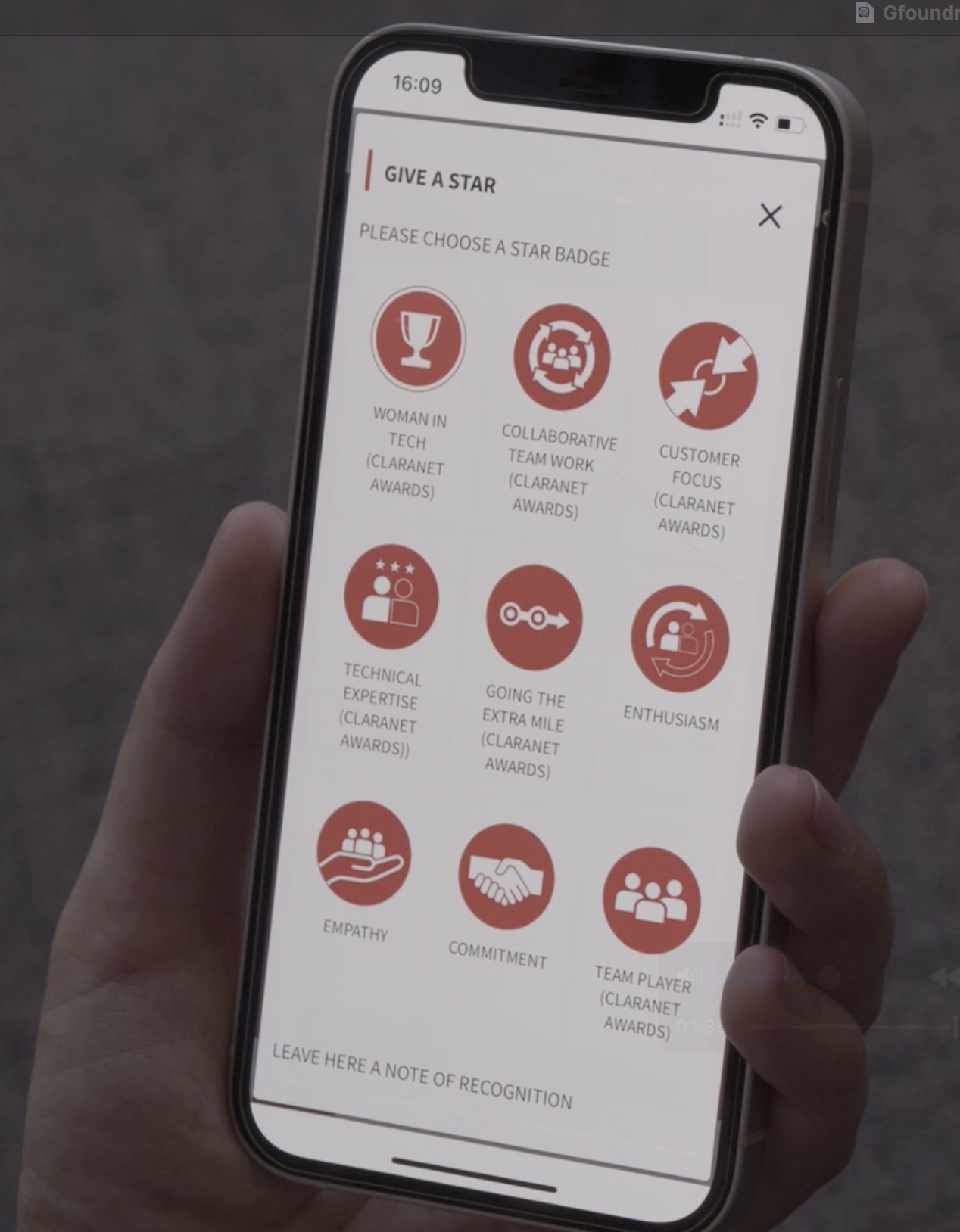
At the heart of this dynamic is GFoundry’s Recognition Module. The platform allows any employee to award a star and a public comment to a colleague, categorizing the praise into two fundamental dimensions: Soft Skills (e.g. empathy, leadership, resilience) or Hard Skills (e.g. mastery of a specific software, project management). This categorization ensures that recognition is not just a “thank you”, but a concrete validation of competencies.
Integration with the Gamification Engine
GFoundry’s true differentiator lies in its native gamification. Giving and receiving recognition generates automatic triggers in the Gamification Engine. Employees earn badges (digital medals) and virtual coins (Virtual Coins) for actively participating in the culture of praise. This game mechanic creates a positive reinforcement loop: recognizing others becomes as rewarding as being recognized, driving the organic adoption of the platform.
From Digital to Real with the Marketplace
Virtual motivation gains real-world impact through the Market module. The virtual coins accumulated through peer-to-peer recognition can be exchanged in a fully customizable internal Marketplace. Employees can redeem extra vacation days, company merchandise, experience vouchers or even convert their coins into donations to social causes supported by the organization. Praise turns into a tangible benefit.
Competency Mapping with AI (Gi)
Recognition in GFoundry is not an isolated data point; it feeds the organization’s intelligence. The endorsements received from peers feed the platform’s AI engine (GFoundry Intelligence – Gi). This data helps design the organization’s Skill Coverage Heatmap, identifying hidden talents validated by colleagues. Based on this, the AI suggests personalized development plans and training content (via Gi Learn), linking daily recognition to the strategic management of careers.
 Turning Recognition into an Organizational Habit
Peer recognition is not an HR campaign with a start and end date; it is a profound paradigm shift in the way the organization values, retains and develops its talent. When implemented correctly, it breaks silos, relieves the burden on leadership and creates a work environment where excellence is celebrated daily by those who understand it best: colleagues themselves.
Technology as a Strategic Enabler
Technology is the indispensable enabler of this transformation, but the clarity of the criteria and alignment with corporate values are the engine that ensures the program’s long-term relevance. Without an agile platform, recognition gets lost in the noise of the day-to-day. Without clear values, it becomes empty. The combination of both is what generates measurable results in retention and productivity.
Start Simple and Scale
For organizations taking their first steps, the recommendation is to start simple. Launch the initiative with a pilot group or focus recognition on a core company value during the first quarter. It is essential to measure engagement and team sentiment through Pulse Surveys (available in GFoundry’s Engagement Thermometer) and, based on the data, scale gamification and rewards progressively.
If your organization is looking to modernize its internal culture and turn recognition into a real performance engine, GFoundry offers the complete infrastructure to do so. From the Recognition Module to the Gamification Engine and Gi’s artificial intelligence, we have the tools to connect your team’s talent. Book a demo with our team and discover how we can boost your organizational culture today.