Assessment with GFoundry
Assessment programmes. From insight to development.
Create tailored assessment programmes with self-assessment, 360° feedback, case studies, interviews, simulations and psychometric tests from external platforms. Organise each stage, track participation and connect the evidence to skills and development in GFoundry.
Leadership · Internal mobility · Upskilling · Team development
The GFoundry assessment solution
Create and manage your
assessment programmes.
GFoundry enables you to create and manage assessment programmes for skills, leadership and preparation for new roles. Organise the whole programme, from activities and instruments to reminders, debriefs and development.
Combine questionnaires, 360° feedback, exercises, simulations and links to external psychometric tests, using the methodology defined by your organisation or specialist partners. Track stages, participation, pending actions and deadlines.
Connect the evidence collected to Skills Management and to the feedback, performance, potential and learning information available in GFoundry. Use this context in assessment debriefs and when defining development plans, training and practice.
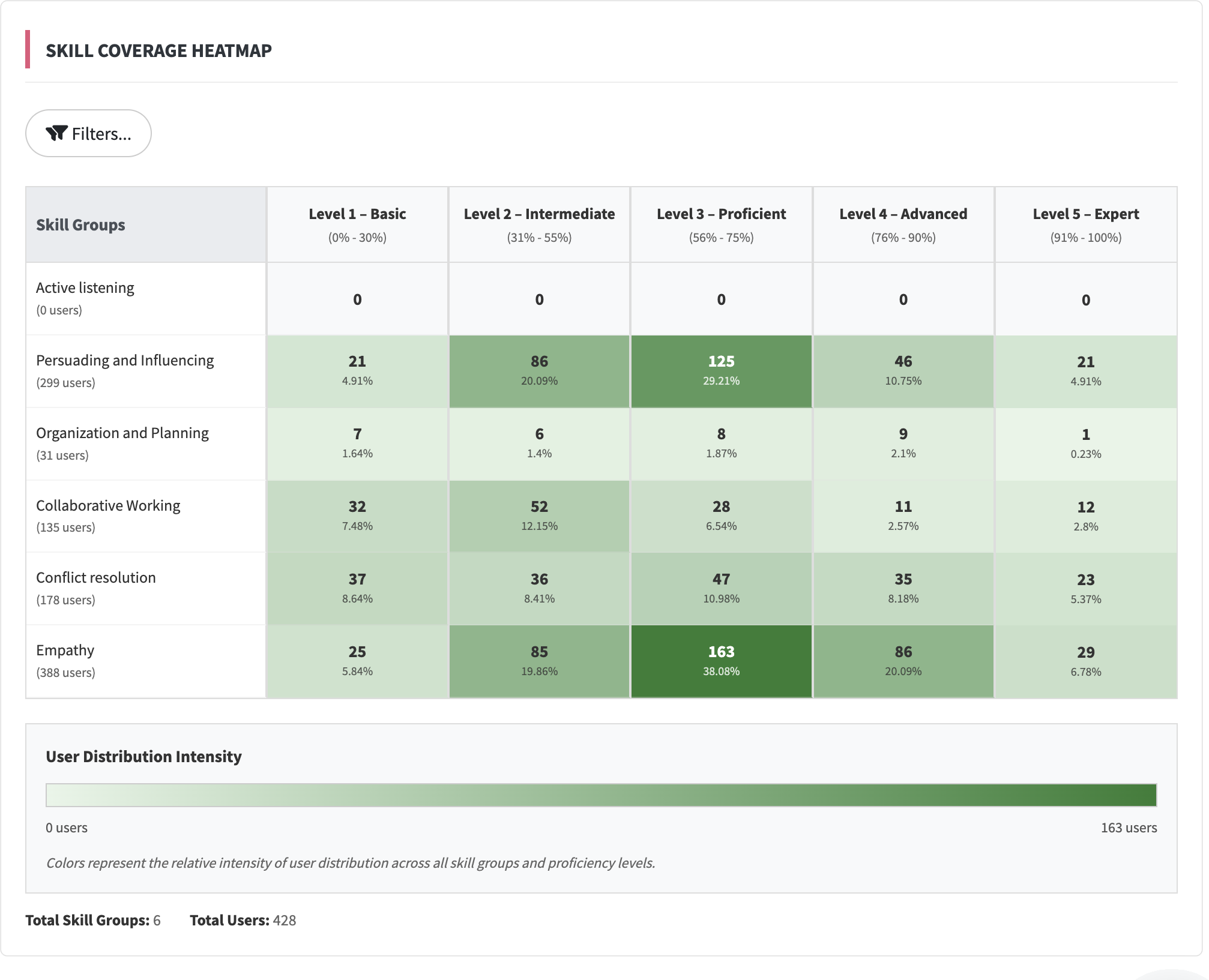
Skills Management in GFoundry: skills coverage across the organisation. Illustrative data in the screenshot. Open the image to view it in detail.
Explore a programme
What do you need to understand
about your talent?
Open an example to see how methods, the participant experience and development connect. Each programme is configured around the organisation’s objectives and methodology.
Develop leadersLeadership skills, different perspectives and practice in conversations.
The starting question
How do I lead — and how do others experience my leadership?
A programme to understand leadership behaviours and choose specific priorities: delegating, giving feedback, managing conflict or supporting the team.
Example skills
Prepare
Introduce the programme and identify the challenges the participant wants to work on.
Listen
Combine self-assessment with feedback from managers, peers and direct reports.
Observe
Add a case study, an interview or a role-play of a team conversation.
Develop
Discuss the evidence in a debrief and agree learning, practice and follow-up.
What participants take away
Strengths, differences in perception and development priorities agreed with the individual.
In GFoundry
360° Feedback · Performance evaluation · Role-Play Coach · Development plans
Prepare for a new roleSkills, potential and the demands of the next challenge.
The starting question
What evidence can help us prepare for this move?
A programme to explore a move into a role with new responsibilities. The criteria reflect the demands of the role and the organisation’s context.
Example skills
Define
Choose the skills and criteria relevant to the role.
Collect
Bring together assessments and exercises; include external psychometric instruments where appropriate.
Contextualise
Consider performance, recorded judgements of potential and the available evidence about skills.
Prepare
Hold a debrief and define the experiences and support needed for the next step.
What participants take away
An evidence-informed view of the skills to draw on and the preparation needed for the role.
In GFoundry
Skills Management · Performance and potential · Forms · External platforms
Guide upskillingDiagnosis, learning, application and reassessment.
The starting question
Where should we invest in learning — and what changed afterwards?
A programme to identify needs before training and revisit skills after learning and practice.
Example skills
Diagnose
Use questionnaires, quizzes or assessments to establish a starting point.
Learn
Organise content and activities linked to the skills to develop.
Apply
Offer exercises, role-plays or a review with the manager of how learning is being applied.
Reassess
Collect new evidence and discuss progress against the agreed criteria.
What participants take away
Learning priorities and evidence of knowledge and its application after the programme.
In GFoundry
Learn · Training Programs · Role-Play Coach · Skills Management
Develop collaborationWorking expectations, feedback and team agreements.
The starting question
What do we need to understand to work better together?
A programme to explore differences in communication, autonomy and coordination. Responses provide material for a facilitated conversation about ways of working.
Example skills
Explore
Collect self-reported preferences and examples of workplace situations.
Connect
Add feedback on behaviours and team expectations.
Discuss
A facilitated session helps explore complementary approaches and points of friction.
Experiment
Agree ways of working and collect feedback again once they have been put into practice.
What participants take away
Areas to work on as a team and specific agreements on communication, decisions and support between colleagues.
In GFoundry
Forms · Feedback · Missions · Learning
Illustrative examples. Instruments, criteria, access permissions and sessions with specialists are defined for each project.
Tracking, alerts and reminders
What needs doing.
By when.
Where to act.
An assessment programme involves participants, managers, peers and specialists. GFoundry notifications and reminders help each person keep track of their responsibilities throughout the journey. This example email shows how pending actions and deadlines can be presented in one place.
Each person’s pending actions
A personalised reminder email brings together unfinished actions and identifies the people still waiting for feedback.
Clear deadlines
Activity dates and waiting times make it clear what needs attention.
From message to action
Direct access to feedback helps participants move from the reminder to the task they need to complete.
With your organisation’s identity
The programme and its communications can reflect the client’s identity. In this example, we use “Example Company” to illustrate that personalisation.
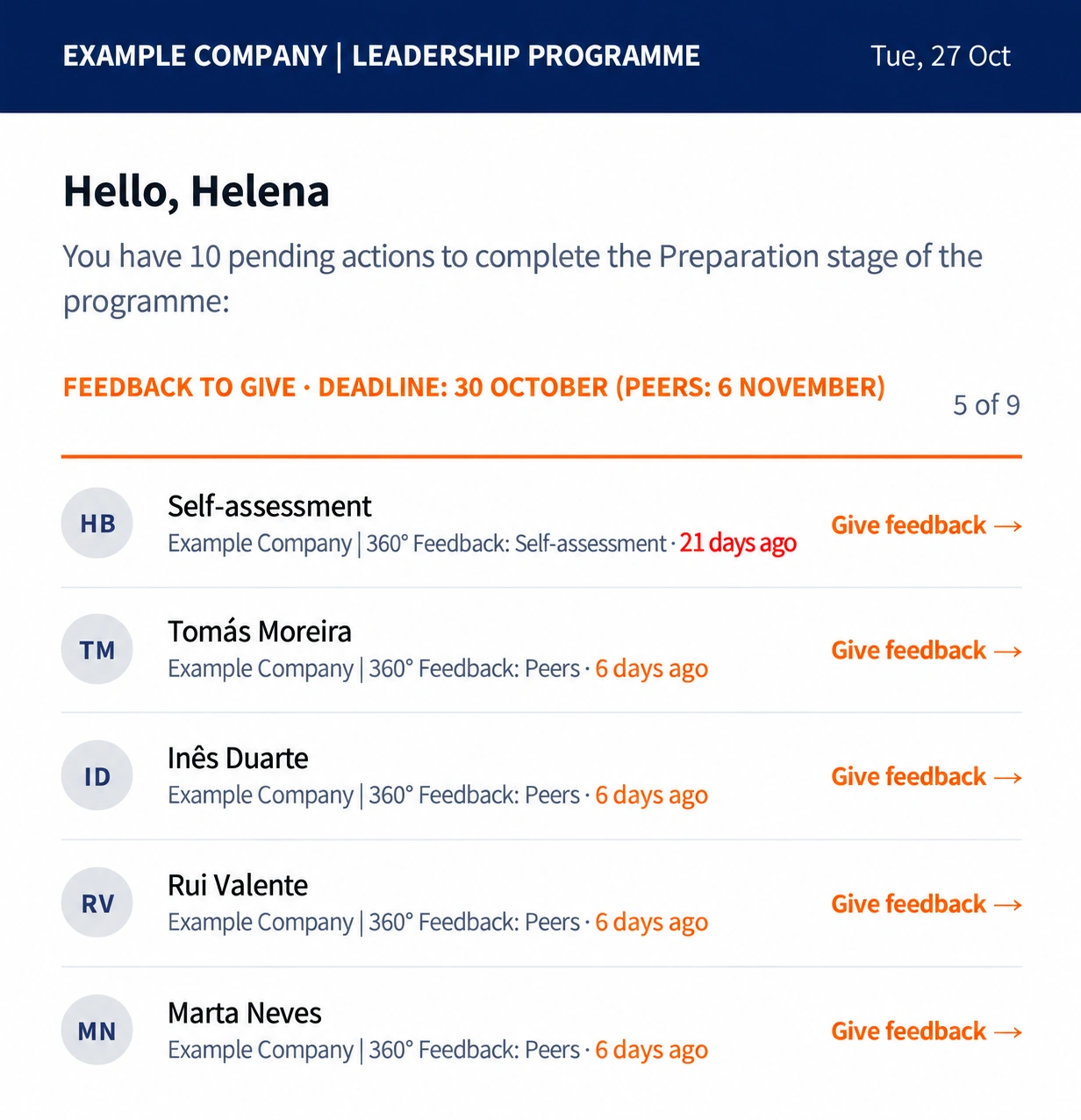
Example of a reminder email sent as part of a GFoundry assessment programme. Fictional company and people. Open the image to view it in detail.
One skill, different perspectives
See what each source
adds to the conversation.
Choose the skills that matter for the programme. GFoundry enables you to bring together evidence from assessment and practice and connect it to feedback, learning and development context.
The skill we are exploring
Communication
Self-assessment
My perspective
How do I explain a difficult decision and check that I have been understood?
Performance evaluation360° feedback
Other people’s experience
How do the people I work with perceive my clarity?
Feedback and evaluationRole-play
Application in a situation
How do I listen and respond in a demanding conversation?
Role-Play CoachLearning
The development journey
What training have I completed and what do I need to apply in practice?
Learn
From interpreting evidence to action
Which behaviour do we want to develop — and where will we practise it?
Each source retains its meaning. Completed learning, observed skills and judgements of potential provide different perspectives.
The context already available in GFoundry
From the person to the organisation.
More context for interpretation.
Connect assessment to skills, feedback, performance, potential and development. Intelligence services help you consult this context in an individual’s profile and explore the organisation-wide view.
The individual
Prepare an assessment debrief
with more context.
Talent Insights brings together the latest evaluation, objectives, development plans, training, succession, recognition and feedback in the employee’s profile. Sources and dates help frame the conversation.
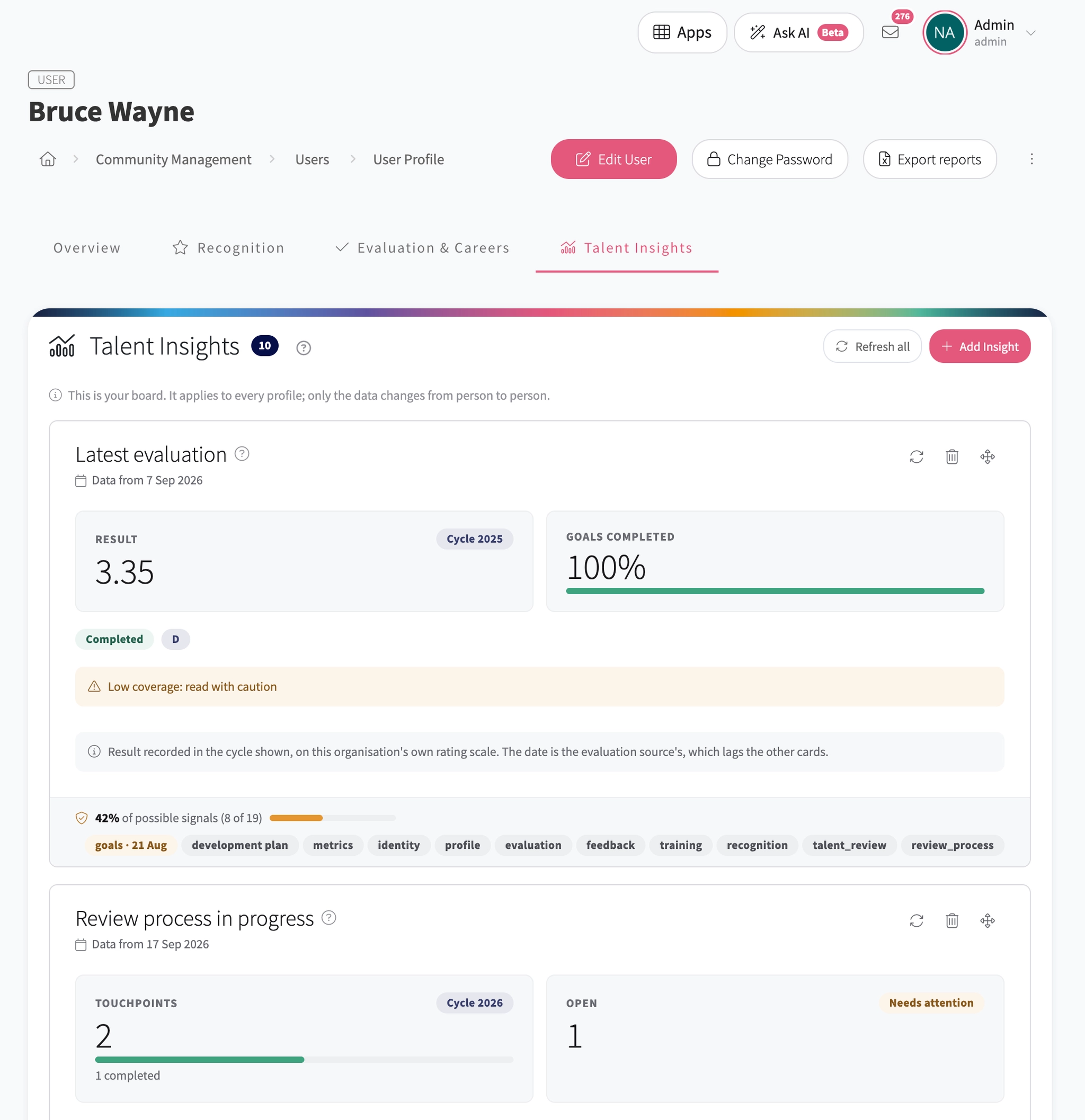
Talent Insights in a GFoundry demonstration profile. Open the image to view it in detail.
The organisation
See the coverage.
Identify priorities.
People Intelligence enables you to monitor evaluation processes and explore performance, potential and follow-up needs. The Insights catalogue adapts to the data and modules available.
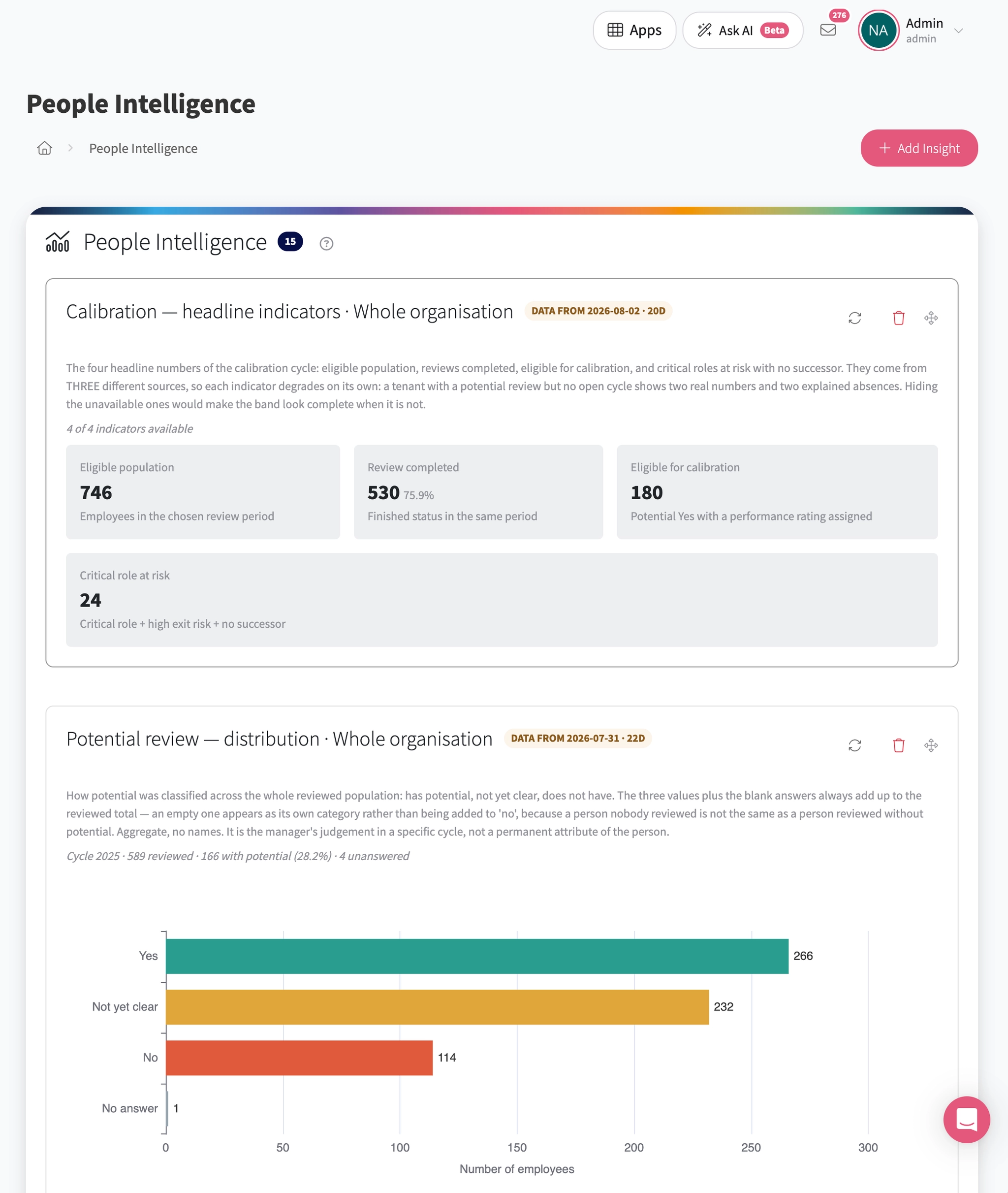
People Intelligence: an example GFoundry dashboard. Open the image to view it in detail.
Methods and instruments
Your methodology.
The right instruments.
Combine methods in GFoundry with links to external psychometric testing platforms. The technology gives the programme its structure; your organisation and specialists define what to assess and how to interpret the evidence.
In GFoundry
- Questionnaires and formsCollect context, responses, documents and evidence.
- Self-assessment and 360° feedbackBring together different perspectives on skills and behaviours.
- Exercises and role-playsExplore application in relevant situations, using defined criteria.
- Interviews and debriefsOrganise preparation and sessions with specialists.
Connecting specialist instruments
Psychometric tests
from other platforms.
Include the tests selected for the programme in the journey, with clear instructions and access for each participant.
Completion tracking and the exchange of results are defined according to the platforms and integrations available in the project.
Choose and use tests according to the programme’s purpose and each instrument’s requirements. See the International Test Commission guidelines on test use.
From assessment to development
Evidence gains value
through what happens next.
After the debrief, priorities can become a development plan. On the same platform, organise learning, opportunities to practise and follow-up conversations.
An example of an agreed priority
Give clearer, more useful feedback.
A need identified in the leadership programme leads to specific actions.
Learn
Content about feedback, linked to the communication skill.
LearnPractise
A conversation with an AI counterpart and feedback against the scenario’s criteria.
Role-Play CoachApply
A real conversation with the team and reflection on what worked.
Development planFollow up
A Touchpoint with the manager to review progress, difficulties and next steps.
Performance and careers
An illustrative journey defined with the people responsible for the programme. Progress is tracked through new evidence.
From design to follow-up
A clear programme
for participants and facilitators.
Personalise the experience with the organisation’s identity and organise audiences, activities and communications. Configuration reflects the methodology and each person’s responsibilities.
Participants
A journey that explains the purpose, provides instructions, gives access to instruments and shows what still needs to be completed.
HR and the project team
Organisation by group and audience, tracking of pending actions, configured reminders and information exports for analysis.
Consultants and specialists
Space for their methods, instruments and criteria, with preparation for interviews, interpretation of evidence and assessment debriefs.
Before you start
Assessment with GFoundry.
Your questions, answered.
What types of assessment programmes can we create?
You can design programmes for leadership development, preparation for new roles, skills diagnosis, upskilling and team development. Methods, criteria and activities are configured for the purpose of the project.
Can we use our own methodology and work with a consultancy?
Yes. Your organisation or specialist partner can define skills, questionnaires, criteria, exercises and sessions with assessors. GFoundry organises the digital experience and evidence collection around that design.
Can GFoundry connect to external psychometric testing platforms?
Yes. You can include access to external platforms in the journey and coordinate it with the other activities. How completion is tracked and results are used depends on the instrument and the integrations available in the project.
How do results connect to Skills Management?
Skills assessments and evidence from practice can contribute to the profile when they are associated with the skills catalogue. Learning and recognition provide other signals. The connection depends on tags, criteria and module configuration; completing a course does not, on its own, constitute a proficiency assessment.
Can we connect feedback, performance, potential and learning?
Yes. GFoundry enables you to consult and relate these dimensions in the talent context. Talent Insights brings individual information together in the profile; People Intelligence lets you explore the organisation-wide view. Available information depends on sources, access permissions and active modules. A potential rating is a judgement recorded in the process, distinct from performance and learning activity.
Who can see responses and results?
Access permissions and confidentiality are defined for the programme and each instrument. Feedback responses can be configured as private. Before launch, you define who has access and how results will be shared in the debrief.
Can the programme continue after the assessment?
Yes. Priorities can guide development plans, learning content, exercises, role-plays and follow-up with the manager. Touchpoints help keep the conversation going throughout the cycle when the programme includes performance and career management.
Which plan do we need and how do we start?
Start with the objective, participants and methods you want to use. Programmes that include performance and potential evaluation, People Intelligence or Talent Insights require Premium. The team helps define the modules, external connections, configuration and support appropriate to the programme.