Goals and OKRs
Give work direction. Make progress visible.
Connect objectives, key results and initiatives to your organisation’s strategy. Follow progress through roadmaps, check-ins and gamification, in a platform that connects goals with talent management.
From strategy to individual contribution
A shared direction. Goals that make sense.
An objective explains what you want to achieve; key results show how progress will be measured. Initiatives represent the work that contributes to those results. GFoundry brings these dimensions together so people can understand how their contribution connects to company priorities.
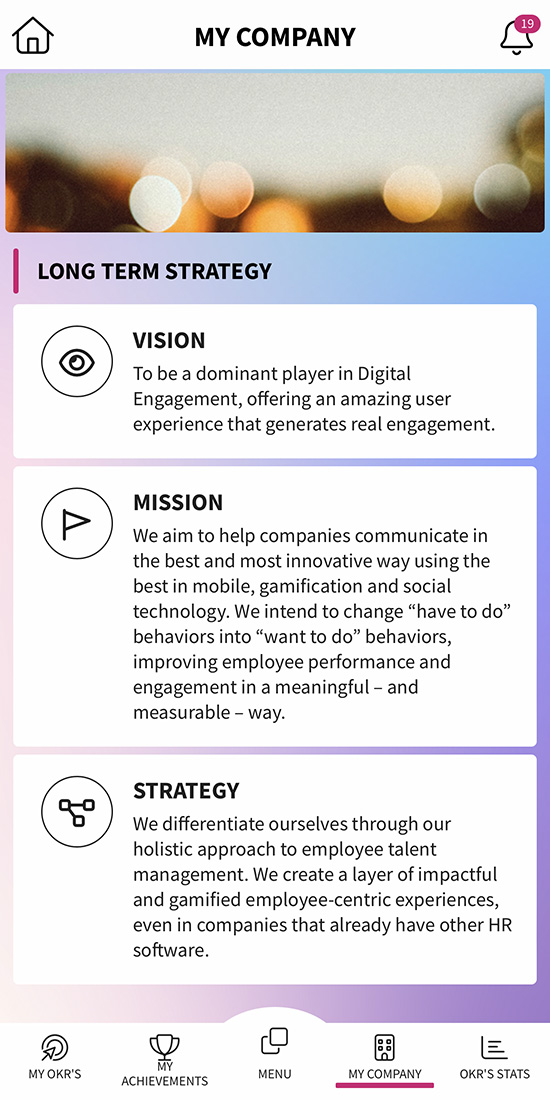
Vision, mission and strategy alongside objectives.
Strategy people can see.
Your vision, mission and strategy give goals context. Making that context visible helps teams and individuals understand why a priority matters and how their work contributes to it.
Personal and professional objectives.
Define objectives for people and teams, with key results and initiatives that support follow-up. Bulk creation and management help organise cycles involving multiple employees.
Alignment throughout the cycle.
A visual roadmap helps people follow the journey and the status of objectives. Alignment continues beyond the initial meeting, remaining visible as priorities and results evolve.
Follow-up and check-ins
Progress needs a regular conversation.
Setting an OKR starts the cycle. Check-ins provide a way to update key results, understand what is moving forward and discuss what needs attention. Due dates and automated reminders help maintain that rhythm.
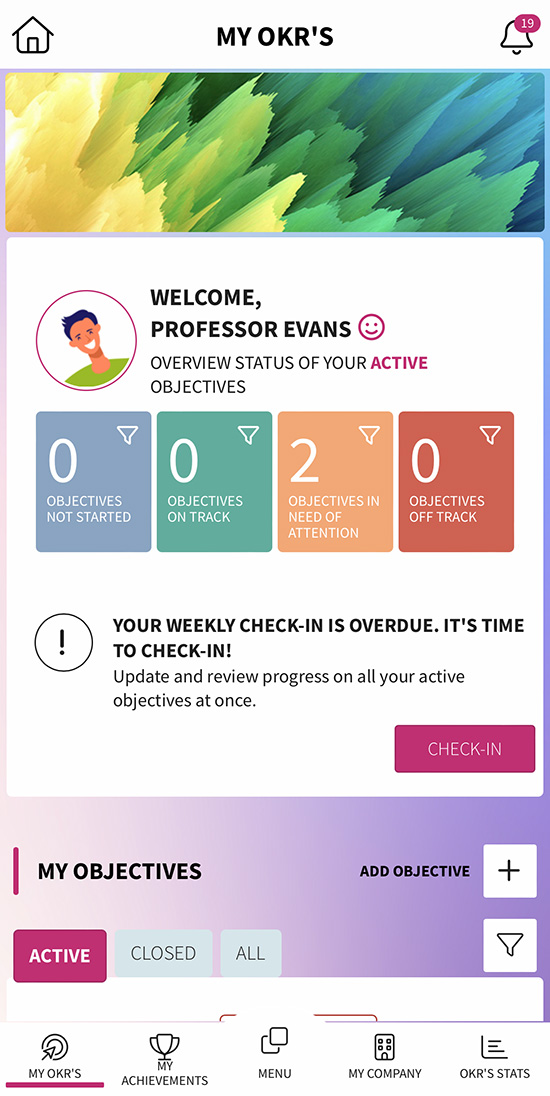
Active objectives and check-in reminders in GFoundry.
Updates with context.
Each key result’s activity stream brings its updates together. That record helps people understand its evolution and gives feedback context, beyond a final value at the end of the cycle.
Dates and reminders.
Deadlines make the cycle clear. Check-in reminders support regular updates and help people and managers keep their goals present in everyday work.
An opportunity to adjust.
A check-in also provides space to identify obstacles and discuss next steps. The platform makes progress visible; the team’s conversation helps decide where to focus effort.
Roadmaps, dashboards and statistics
See how work is progressing. Understand where to act.
Visual roadmaps, progress dashboards and statistics with filters help you follow objectives at different levels. A shared view helps teams and managers understand the cycle’s status and prepare better-informed conversations.
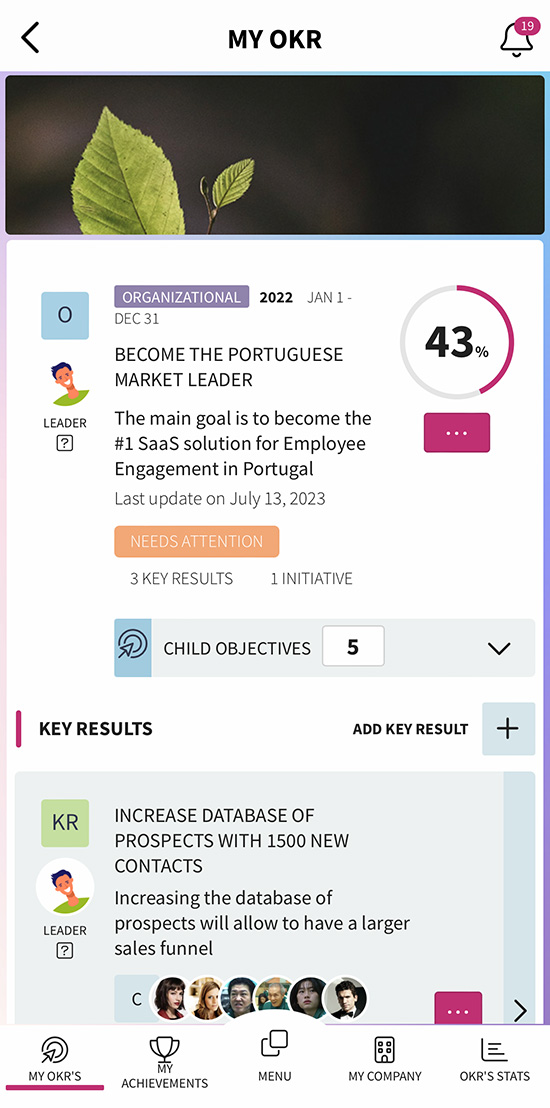
Tracking objectives and key results.
A visual view of the cycle.
Follow progress and objective status without relying on scattered spreadsheets. Visualisation helps distinguish what has moved forward from what still needs follow-up.
Statistics with filters.
Explore available indicators and use filters to focus your analysis. This supports key-result tracking and helps identify areas that deserve a closer conversation.
Transparency and accountability.
Visible updates help each person understand their contribution. Shared follow-up supports feedback and makes responsibility for next steps clearer.
Gamification with purpose
Value progress. Encourage participation.
Gamification brings recognition into goal tracking. Badges and rewards can make milestones and participation more visible, giving people reasons to keep the cycle active and celebrate work together.
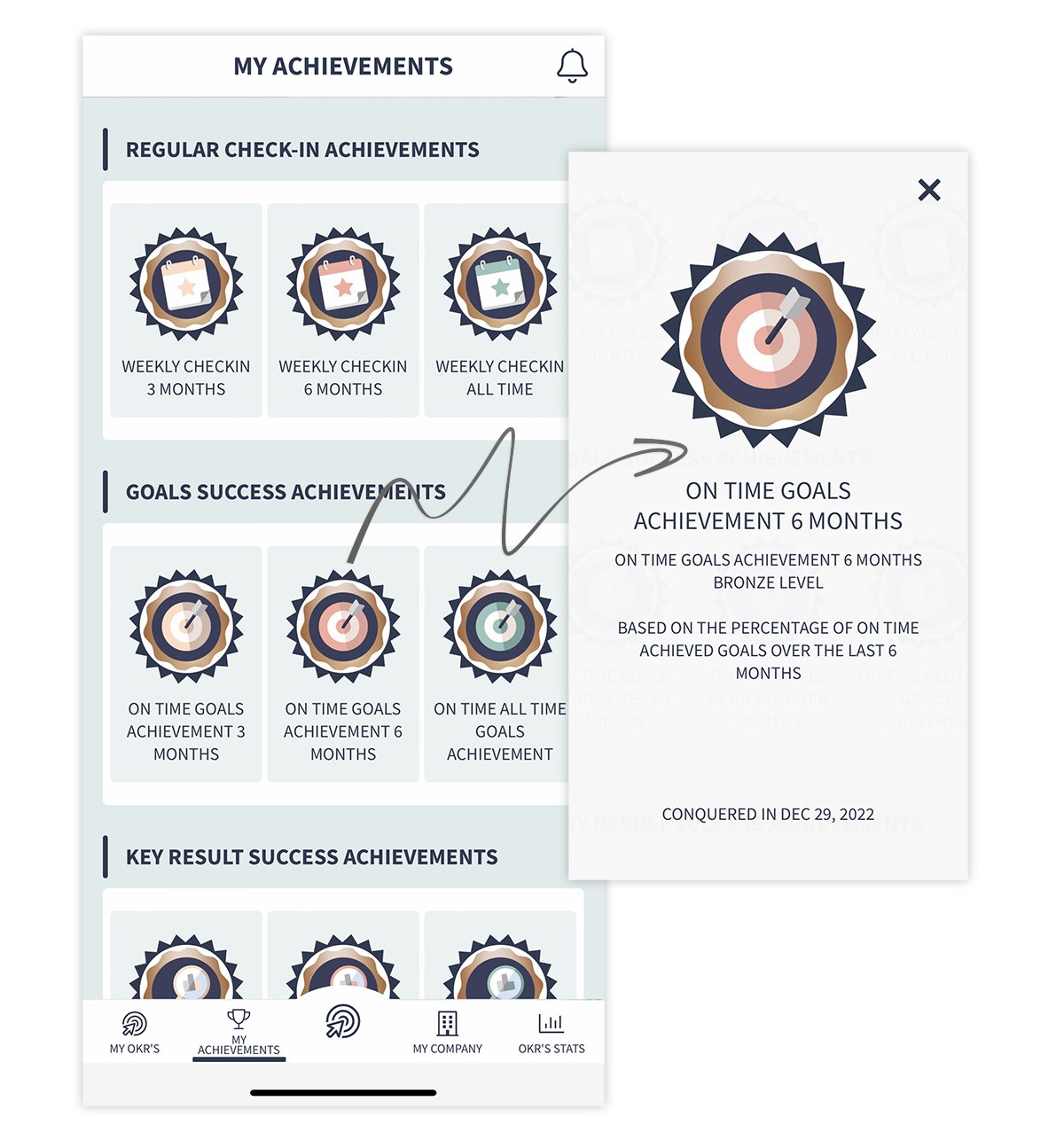
Badges associated with milestones and goal follow-up.
Recognise milestones.
Badges give programme achievements a visual expression. Recognition helps make effort visible throughout the journey, rather than waiting until the cycle closes.
Sustain involvement.
An engaging experience can support check-in participation and regular follow-up. Incentives should reflect the programme’s purpose and what the team values.
Collaboration and clear criteria.
Gamification can support cooperation and mutual help. Criteria should value relevant contributions and meaningful progress; a score does not replace a conversation about the quality of results.
One connected experience
Goals are part of people’s development.
The goals module connects with other GFoundry modules. Learning, evaluations, feedback and recognition can give follow-up context, connecting work on objectives with each person’s development experience.
On desktop and mobile.
The iOS and Android apps let people view and update OKRs wherever they work. Mobile access supports sharing updates, collaboration and continuous progress tracking.
A connection to talent management.
An objective can reveal a learning need or inform a development conversation. Bringing these processes into one platform helps connect work follow-up with people’s growth.
Connections to other systems.
GFoundry can exchange information with external systems through integrations. Connections, available data and permissions depend on the configuration and the scope defined for the project.
Further reading
The methodology deserves context too.
A clear strategy gives an organisation vision and direction. Explore OKR principles and The Office of Strategy Management to understand the methodology and the challenge of strategic alignment.
Frequently asked questions
Your goals. Your questions, answered.
Can we manage goals without applying OKRs to everything?
Yes. GFoundry supports setting and following personal and professional objectives, alongside objectives, key results and initiatives in an OKR cycle. The methodology and follow-up should suit your organisation’s programme.
How do we keep track throughout the cycle?
Check-ins, each key result’s activity stream, due dates and automated reminders support regular updates. Roadmaps and dashboards provide a visual view of progress; feedback helps teams discuss obstacles and next steps.
Can people view and update goals on mobile?
Yes. GFoundry’s iOS and Android apps allow people to view and update OKRs, share updates and follow progress.
Which plan should we choose for goal management?
Compare the modules and services included in the current plans. The choice depends on your follow-up needs, integrations and programme scope; a demonstration can help explore the configuration that fits.