
What are OKRs?
- OKRs are defined as inspiring and ambitious objectives in such a way that they excite people to change and leave their comfort zone;
- OKRs are measurable because of their link to key results, easy to measure outcomes accomplishments;
- Everybody should acknowledge them. They are communicated to all the organization;
- There’s a classification in which 60% to 70% is an acceptable milestone (when higher than this could be that the objective is too easy or poor in ambition).
What OKRs are NOT?
- OKRs are not individual appraisal objectives;
- OKRs are not tasks checklists (else what teams want to accomplish);
- Ambiguities or utopies, because the outcomes are like math in the way they allow a great progress on the long term – they are realistic and achievable.
What is the success rate of OKR?
The success rate of OKRs (Objectives and Key Results) can vary widely depending on the organization’s implementation and the specific goals set. However, studies have shown that when implemented effectively, OKRs can lead to significant improvements in employee engagement, productivity, and overall business performance.
One study found that organizations that effectively use OKRs achieve 2.5 to 4 times greater growth than those that do not. Another study found that organizations using OKRs saw a 10-15% improvement in employee engagement.
OKRs have been used successfully by many leading companies such as Google, LinkedIn, and Twitter to drive growth and innovation. In these organizations, OKRs are reported to have improved alignment, focus, and transparency.
Does OKR replace KPI?
No, OKRs (Objectives and Key Results) do not replace KPIs (Key Performance Indicators). While they might seem similar, they serve different purposes and can often be used together effectively.
OKRs are a goal-setting framework used to set, track, and achieve ambitious and measurable goals. The “Objective” is what one wants to achieve and the “Key Results” are the measurable steps to reach that objective. OKRs are typically set on a quarterly basis and encourage teams to strive for stretch goals.
On the other hand, KPIs are metrics that track the ongoing performance of an organization, team, or individual. KPIs are used to measure the effectiveness of various tasks and activities in meeting organizational objectives.
In practice, KPIs can actually feed into OKRs. For example, if an OKR is to increase website traffic by 25%, KPIs such as unique visitors, page views, and bounce rate could be monitored regularly to assess progress towards this OKR.
So, rather than replacing KPIs, OKRs can provide a framework for determining which KPIs are most important to focus on for a given time period, thus allowing for strategic alignment and focus.
Why OKRs should not be used for performance evaluation?
OKRs they are not typically recommended for performance evaluation for several reasons:
- Innovation risk: When OKRs are tied to performance evaluations, it can discourage employees from setting ambitious goals. They may tend to choose safer, more achievable objectives to ensure they receive positive evaluations, thus stifling innovation and risk-taking.
- Focus on learning and growth: OKRs are meant to encourage continuous learning and growth. Using them for performance evaluations can shift the focus away from this and towards achieving specific outcomes, potentially at the cost of long-term development.
- Promotes a culture of fear: Tying OKRs to evaluations can create a culture of fear and competition rather than collaboration. Employees might be hesitant to help others, worrying that it could negatively affect their own performance.
- Biased evaluations: The achievement of OKRs may not accurately reflect an individual’s performance because many external factors can influence their realization. This could lead to biased or unfair evaluations.
- Short-term focus: If OKRs are tied to performance evaluations, employees may focus on short-term objectives to the detriment of long-term strategic goals.
While OKRs are an effective tool for aligning and motivating teams around common objectives, they should ideally be decoupled from performance evaluations to maintain their effectiveness and purpose.
How often should OKRs be changed?
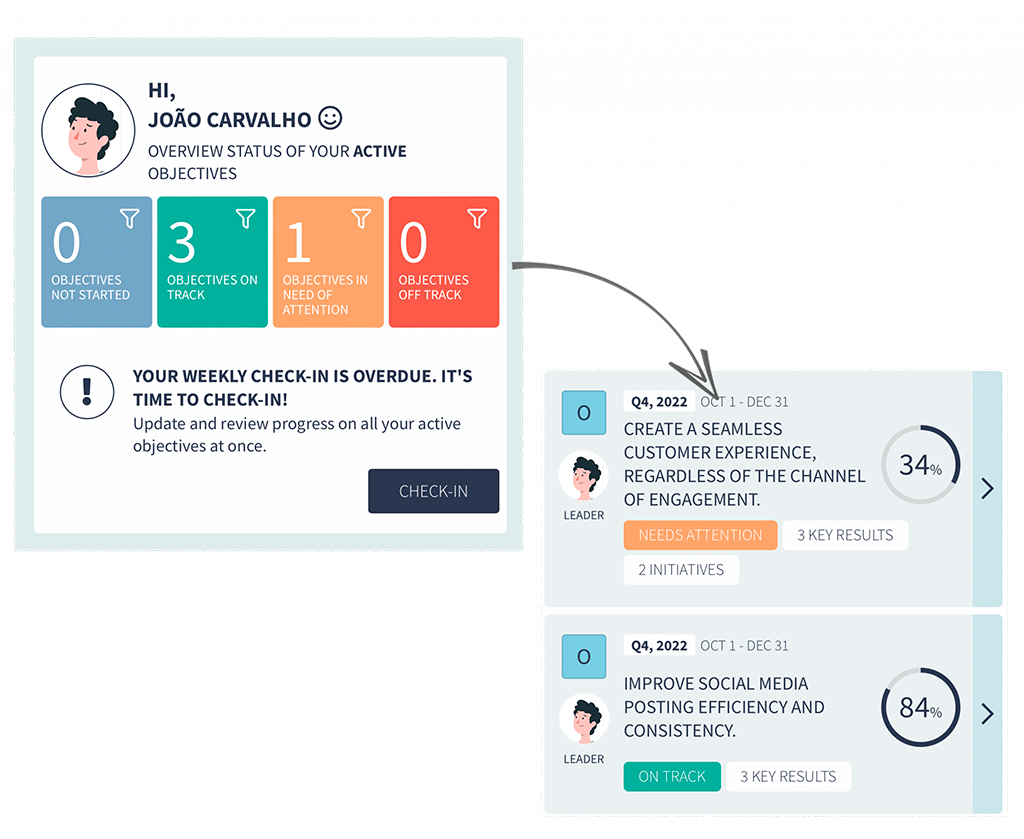
OKRs should not be changed too frequently, as this can disrupt progress towards the goals. However, they should also not be set in stone for long periods of time, as the business environment can change rapidly.
A good rule of thumb is to review and update OKRs on a quarterly basis, with the possibility of making minor adjustments as needed.
However, the frequency can depend on the nature of the organization and its objectives. For example, a start-up in a fast-paced industry might need to adjust their OKRs more frequently, while a more established organization in a stable industry might choose to set OKRs on a semi-annual or annual basis.
It’s important to remember that while the specific Key Results might change each quarter, the overarching Objective often remains more stable, reflecting the organization’s long-term strategic goals.
Moreover, it’s also crucial not to change OKRs too frequently within a single quarter (or set period) because doing so can cause confusion, disrupt focus, and make it difficult to measure progress.
At the end of each quarter, there should be a review process to assess the success of the previous OKRs and to set new ones for the next period.
What are the disadvantages of OKRs?
Overemphasis on short-term results
OKRs can incentivize teams to prioritize short-term goals over long-term objectives, leading to neglect of important goals that may take longer to achieve.
Excessive focus on metrics
Setting and tracking metrics can be helpful, but it can also lead to an overemphasis on numbers rather than qualitative factors that may be harder to measure.
Can be demotivating
If employees feel like they are constantly falling short of their goals, it can be demotivating and lead to burnout.
Can lead to a lack of creativity
When employees are too focused on achieving their OKRs, they may be less likely to take risks and try new things.
Can create a culture of danger competition
While some competition can be healthy, an excessive focus on OKRs can lead to a cutthroat culture where employees are more concerned with outperforming each other than with achieving the company’s overall objectives.
How can an OKR tool spot unmotivated staff?

Our OKR tool helps bosses spot employees lacking drive. It does this by checking their goal progress. If a worker always misses goals, they might be lacking motivation.
Another method is using surveys. GFoundry solutions have survey features that gather employee feedback. This information can show where staff feel unnoticed or unsupported. Managers can then fix these problems.
Regular meetings can also help. In these sessions, progress, feedback, and issues can be discussed. This helps find reasons why an employee may be uninvolved or unmotivated.
Our OKR platform is a strong tool for spotting inactive or unmotivated staff. It tracks goal progress, collects feedback via surveys, and supports regular meetings. Managers can then quickly see who’s struggling. This lets them act fast to solve issues and boost engagement and motivation.
Why gamify the OKR experience?
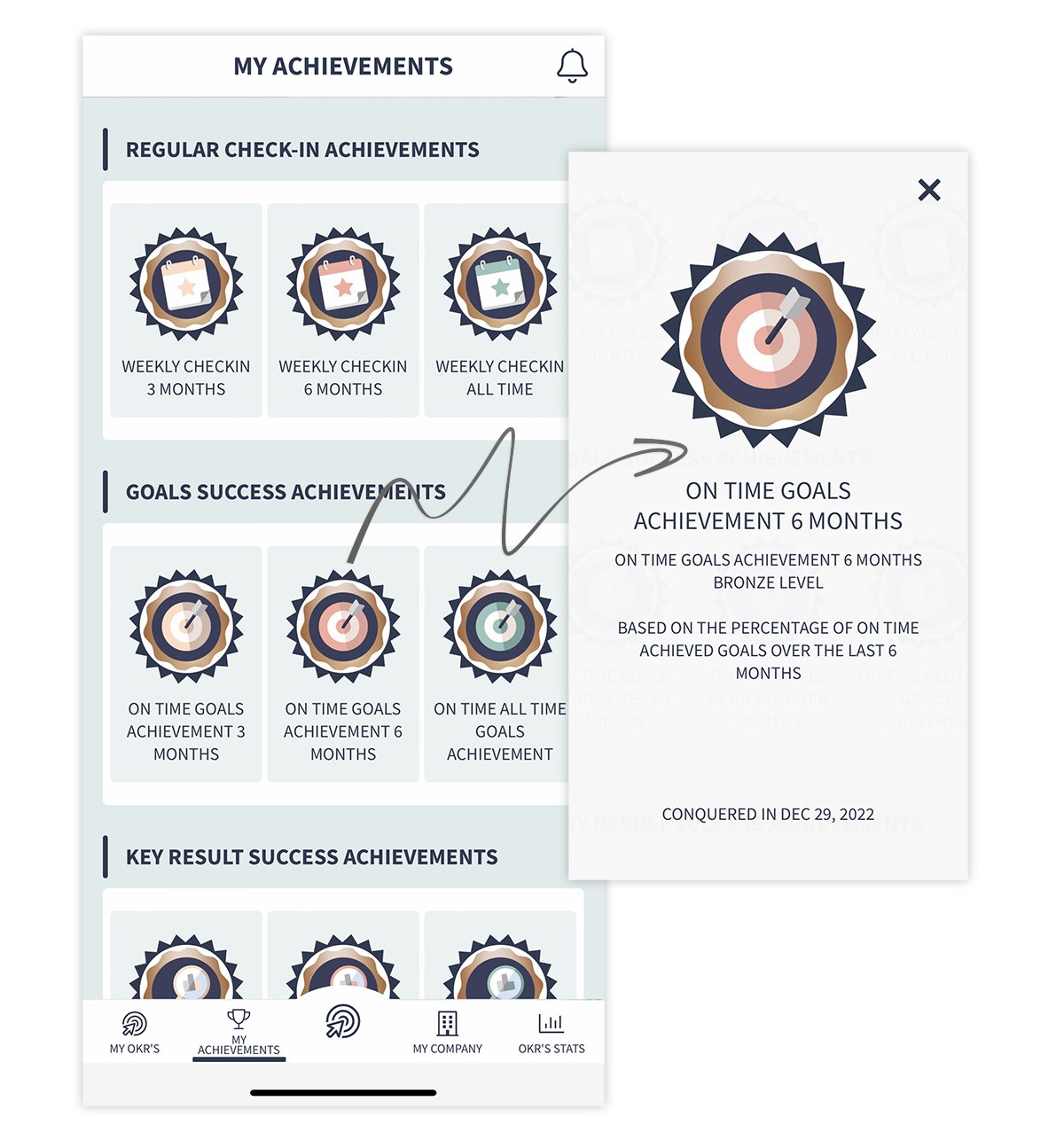
You should gamify the OKR experiences because that can bring a fun, engaging element into the process of setting and achieving objectives and key results. This approach not only boosts employee engagement but also promotes collaboration. Plus, gamification simplifies the tracking of progress, fostering accountability among team members. In essence, gamifying OKRs can lead to a more energized, effective, and transparent work environment.
The OKR (Objectives and Key Results) approach can be made more fun with gamification. This makes achieving goals more exciting for employees. Here are some ways gamification improves OKRs:
- Boosted Engagement
- Gamification adds fun to goal-setting. This keeps employees more involved and eager.
- Improved Teamwork
- It encourages employees to join hands and help each other in reaching goals.
- Enhanced Performance
- By making goal-setting enjoyable, gamification can boost work efficiency and output.
- Better Tracking and Accountability
- Gamification can simplify progress tracking for employees and supervisors alike.
OKR Examples: Driving Business Success

Google OKRs
Google is known for its culture of innovation and focus on ambitious goals. A famous example of OKRs implemented by Google was during the development of Chrome, their web browser. The objective was to “Capture 20% of the browser market by the end of the year,” while the key results included “Launch three unique features in Chrome” and “Increase loading speed by 30%.” These challenging OKRs encouraged the team to pursue innovative solutions and focus on delivering value to users.
Netflix OKRs
Netflix is a leading company in the video streaming industry, and its OKR approach has been instrumental in its global expansion. An example of an OKR they used was the objective to “Increase customer satisfaction by 10%.” The key results included “Reduce loading time by 20%” and “Personalize recommendations based on viewing history.” These OKRs allowed Netflix to direct their efforts towards improving the customer experience while driving business growth.
Airbnb OKRs
Airbnb revolutionized the hospitality industry, and their success is also tied to effective OKR implementation. During their rapid growth, one of the objectives was to “Expand to 50 new cities by the end of the year.” The key results included “Achieve 1000 new listings in each city” and “Increase revenue by 30% in these new locations.” These OKRs helped Airbnb maintain a rapid pace of expansion and establish itself as a global hosting platform.
Tesla OKRs
Tesla, a leading electric vehicle company, is renowned for its vision of transforming the automotive industry. A notable example of Tesla’s OKRs was the objective to “Produce 500,000 electric vehicles by the end of the year.” The key results included “Reduce production costs by 20%” and “Increase vehicle energy efficiency by 10%.” These OKRs directed the company’s focus toward production scalability and continuous technology improvement, enabling them to achieve ambitious goals.
Bring your OKR methodology to life with GFoundry
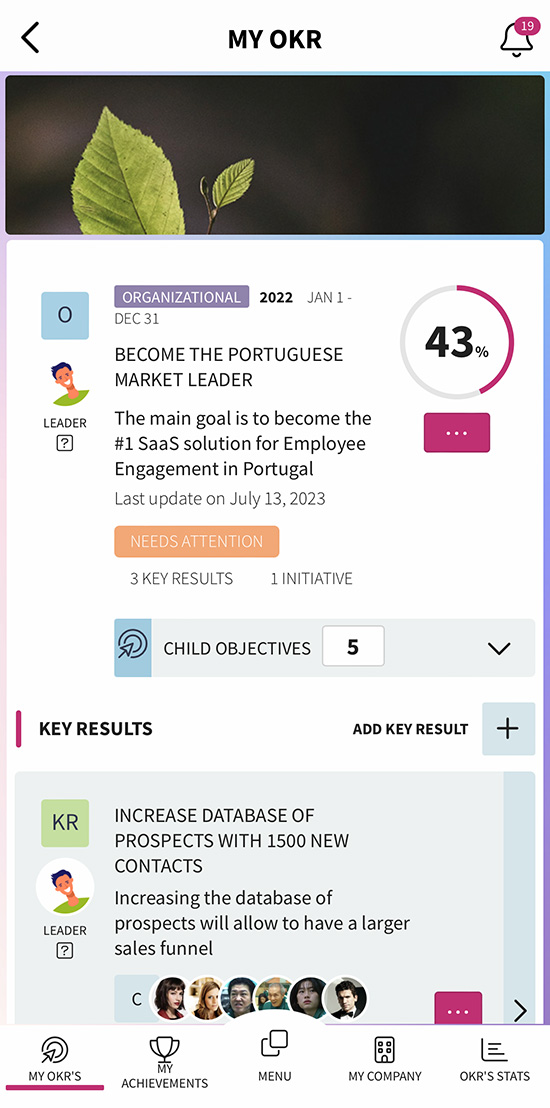
With our OKR software, teams and individuals can easily set and track their objectives and key results (OKRs).
They can also visualize the roadmap and see how their work aligns with organizational goals.
GFoundry’s OKR software with gamification ensures progress tracking, regular check-ins, and motivating rewards for a more productive and motivated workforce.
Key Features of GFoundry’s Dynamic OKR Software:
- Robust OKRs and Initiatives: Use our OKR framework and OKR methodology to set impactful objectives and key results, backed by real-world OKR examples. Ensure your team’s alignment with business goals and corporate strategy.
- Visual Roadmap: An intuitive representation of your strategic planning journey, highlighting the alignment between individual tasks and broader business outcomes.
- Effective Due Dates: Streamline your goal setting process with clear timelines, ensuring that all objectives are in sync with the overall corporate strategy.
- Innovative Gamification: Boost employee performance by motivating and engaging teams through playful elements, encouraging them towards achieving their set OKRs and business goals.
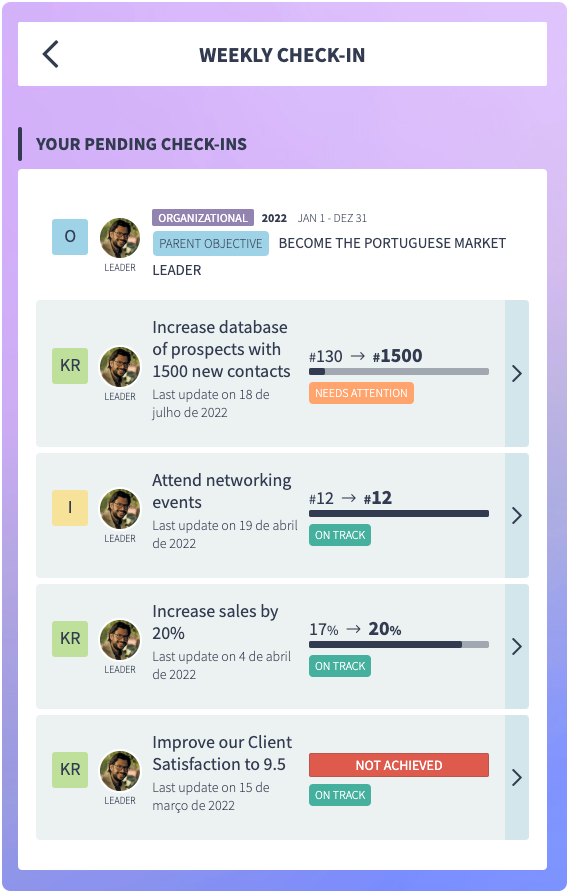
- Automated Check-In Reminders: Automated prompts that aid in consistent performance tracking and keep teams on track with their set objectives and key results.
- Advanced Statistics with Filters: Dive deep into performance management data, allowing for insightful performance feedback and strategic decision-making.
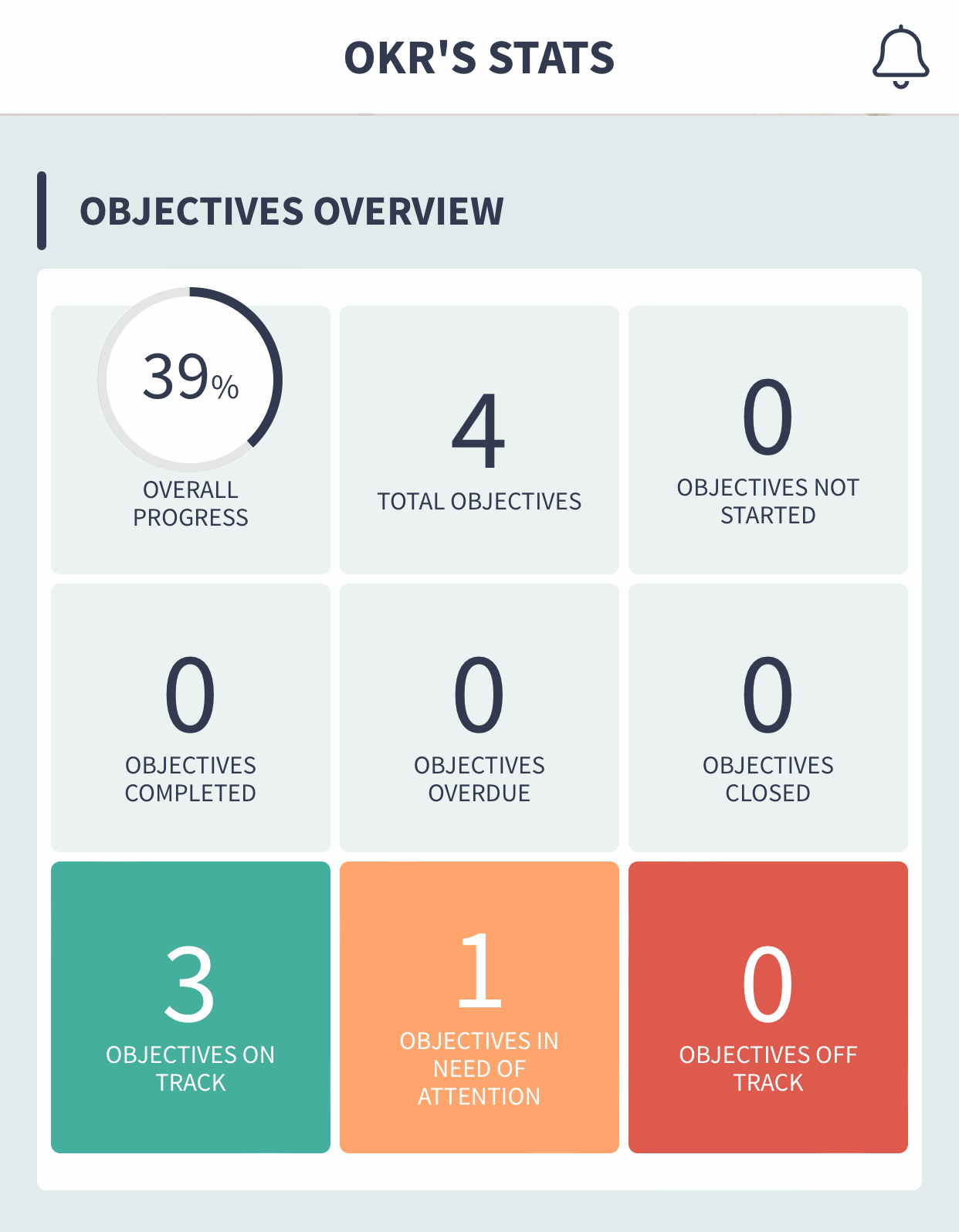
- Progress Dashboards: A real-time overview of employee performance, ensuring timely interventions and alignment with business outcomes.
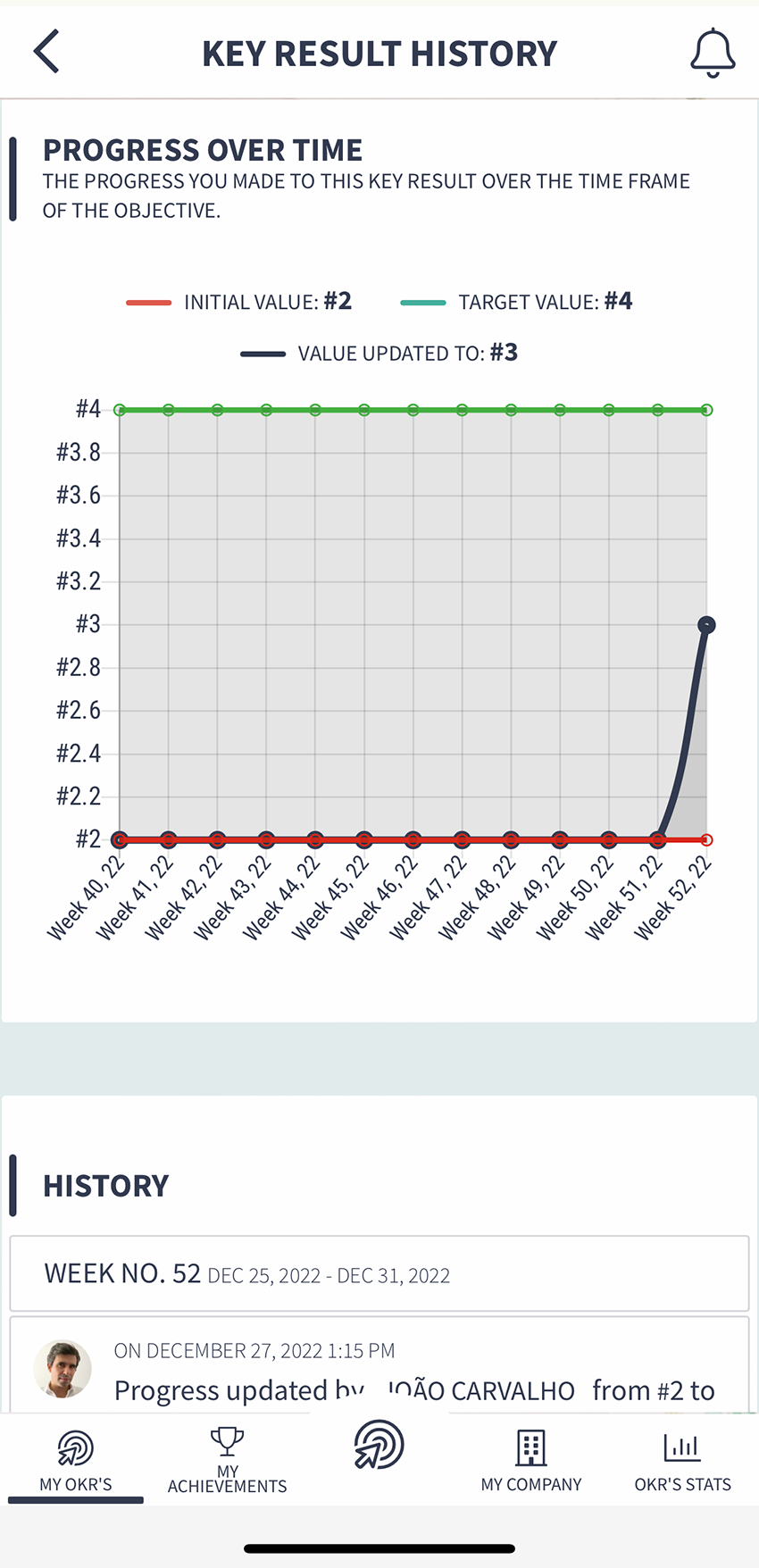
- KR’s Activity Stream: Stay updated with the latest developments in objectives and key results, promoting effective performance tracking and feedback loops.
- Personal and Professional Objectives Setting: Enable both individual and team-centric goal setting, ensuring holistic alignment with the overarching corporate strategy.
- Mass Objectives Creation and Management: Simplify strategic planning by creating and managing multiple objectives simultaneously, ensuring they align with the overarching business goals.
- Efficient Objectives Status Follow-Up: Stay updated on objectives’ progress and ensure they’re on track, promoting effective performance tracking and performance management.
- Holistic Talent Management & Integrations: Comprehensive solutions that encompass employee performance, feedback mechanisms, and seamless integrations, ensuring optimized alignment with the broader corporate strategy.
In wrapping up, many ask, “Are OKRs really effective?” The answer isn’t black and white.
While some companies thrive using OKRs, it’s crucial to understand the success rate of OKR is varied. Notably, OKRs come with some disadvantages that could impact their efficiency. And for those pondering if OKR replaces KPI, the two often work in tandem.
Consider looking at OKR examples to grasp how they function in real-world scenarios. In the end, the efficacy of OKRs depends on proper implementation and alignment with a company’s unique goals.
 Some of the most common questions about OKRs, segmented into 5 areas:
1. Definition and Basics of OKR
What is OKR?
OKR stands for Objectives and Key Results. It’s a framework used by companies to set and track objectives and their outcomes. OKRs help organizations align goals and ensure that everyone is moving in the same direction.
What does OKR stand for?
OKR stands for “Objectives and Key Results”. It is a goal-setting system that has been adopted by many businesses and organizations to help them achieve success.
What does OKR mean?
OKR means setting clear and measurable objectives and then defining the key results that indicate the achievement of that objective. It emphasizes focusing on measurable outcomes rather than tasks.
What is the OKR method/framework/process?
The OKR method is a continuous process of setting, tracking, and refining objectives and their associated key results. This iterative cycle helps teams stay aligned and focused on strategic goals, ensuring clarity and cohesion across the organization.
What’s the difference between OKR and KPI?
OKR is about setting objectives and defining measurable results to achieve them. KPI, or Key Performance Indicator, is a measurable value that demonstrates how effectively a company is achieving business objectives. While OKRs drive forward progress and outcomes, KPIs track the success of ongoing operations or processes.
What are the two parts of an OKR?
The two main parts of an OKR are the Objective, which defines a clear goal, and the Key Results, which are specific and measurable outcomes indicating the achievement of the objective.
What is a key result in OKR?
A key result in OKR defines what success looks like for an objective. It is a measurable outcome that provides clarity on whether the objective has been achieved.
What are OKR objectives and key results?
Objectives in OKR set a clear direction or goal. Key results are the specific, measurable outcomes that indicate success towards achieving the objective.
What is an objective in OKR?
An objective in OKR is a clearly defined goal that an organization or individual wants to achieve. It provides direction and purpose, and is qualitative in nature.
2. OKR in Context
What is OKR in business?
In business, OKR is a framework that helps companies set, communicate, and monitor their goals. By defining objectives and measurable key results, businesses can align their teams, foster focus, and drive growth.
What is OKR in project management?
In project management, OKR can be used to set clear objectives for a project and then define measurable outcomes to achieve these objectives. It ensures that all team members understand the project’s goals and aligns their efforts accordingly.
What is OKR in agile?
In agile methodologies, OKR complements the iterative and incremental approach by providing clear objectives and results for each iteration or sprint. It ensures alignment of agile teams with the broader organizational goals.
What is OKR in software development?
In software development, OKRs help teams focus on delivering features or improvements that have a meaningful impact. By setting objectives and measurable results, development teams can prioritize work that aligns with business goals.
What is OKR in performance management?
OKR in performance management involves setting clear objectives for employees and teams, and measuring their performance against defined key results. It facilitates transparent feedback and ensures alignment with organizational goals.
What is OKR in HR?
In Human Resources (HR), OKRs are used to align team efforts with the overall company goals, manage employee performance, and drive initiatives that contribute to organizational success.
What is OKR in product management?
Product managers use OKRs to set clear objectives for product development, ensuring that the product aligns with company goals and meets market demands.
What is OKR in marketing?
In marketing, OKRs guide teams to focus on campaigns and strategies that align with the company’s overall objectives, ensuring measurable results that drive growth and brand visibility.
3. Using and Implementing OKR
How to write an OKR?
To write an OKR, start by defining a clear, qualitative objective that outlines what you want to achieve. Then, specify 2-5 key results which are quantifiable and indicate the successful achievement of the objective.
How to set OKR?
Setting OKRs involves collaboration between teams and leadership. Start with the company’s strategic goals, then create aligned objectives for teams or individuals. Ensure key results are specific, measurable, and time-bound.
How to implement OKR?
Implementing OKRs begins with top management setting the organization’s strategic OKRs. These are then broken down into departmental or team OKRs, ensuring alignment. Regular check-ins, feedback sessions, and reviews are essential to track progress and make necessary adjustments.
How to track OKR?
Tracking OKRs involves regular check-ins, where teams review their progress towards the key results. Many companies use OKR software to monitor progress and ensure transparency across the organization.
How to measure OKR?
Measure OKRs by evaluating the progress made towards the key results. Each key result should have a quantifiable metric, which can be tracked over a specified period to determine success or areas for improvement.
How to facilitate an OKR session?
Facilitating an OKR session involves gathering teams, setting clear agendas, discussing past OKRs, and collaboratively setting new objectives and key results. It’s a forum for alignment, feedback, and collective goal setting.
How to align OKR?
Aligning OKRs involves ensuring that individual or team objectives support the broader organizational goals. Regular communication, collaboration, and transparency are essential to maintain alignment across all levels.
How to cascade OKR company to teams?
Cascading OKRs means breaking down company-wide objectives into smaller, actionable objectives for departments, teams, or individuals. This ensures that all levels of the organization are aligned and working towards the same overarching goals.
How many OKRs should an organization have?
While there’s no one-size-fits-all number, most organizations find that 3-5 OKRs per team or individual per quarter strikes a balance between focus and achievability.
4. Significance and Benefits of OKR
Why use OKR?
Using OKRs helps organizations maintain alignment, clarity, and focus. It ensures that teams work towards meaningful objectives and provides a framework for tracking and measuring success.
Why OKR is important?
OKR is crucial as it ensures that organizations have a clear direction, with all teams and members aligned to the same goals. It fosters transparency, accountability, and drives results-oriented actions.
Why OKR is better than KPI?
While KPIs measure performance of ongoing processes, OKRs drive progress towards specific outcomes. OKRs provide direction and focus, making them more dynamic and adaptable to changing business environments compared to KPIs.
How do companies benefit from OKR?
Companies benefit from OKRs by gaining clearer direction, improved team alignment, and measurable outcomes. OKRs also promote accountability, transparency, and foster a results-driven culture.
How does OKR work?
OKR works by setting clear objectives and associated key results. Organizations then track progress towards these key results, ensuring that efforts align with strategic goals. Regular reviews and feedback sessions help refine and adjust OKRs as needed.
5. Miscellaneous OKR Related
Who invented OKR?
The OKR framework was popularized by Andy Grove during his time at Intel. Later, it was adopted by many leading tech companies, including Google, which played a significant role in its widespread adoption.
Who uses OKR?
Many leading companies, from startups to Fortune 500 firms, use OKRs. Notably, Google, LinkedIn, and Twitter have implemented OKRs to drive growth and innovation.
OKR software: What is it and what does Google use?
OKR software helps organizations set, track, and review their OKRs. Google initially used spreadsheets but later developed its internal tools. Several OKR software solutions are available today, each with its features and benefits.
Measure What Matters book related queries.
“Measure What Matters” is a book by John Doerr that delves into how OKRs can drive focus, alignment, and engagement in organizations. Doerr shares insights from his experience and showcases how leading companies use OKRs to achieve success.
OKR vs. KPI vs. SMART goals comparison.
While OKRs set and track objectives and results, KPIs measure ongoing performance. SMART goals (Specific, Measurable, Achievable, Relevant, Time-bound) align closely with the principles of OKRs, ensuring goals are clear and measurable.
OKR planning, training, certification, and related concepts.
OKR planning involves defining the strategic goals and cascading them throughout the organization. Training ensures everyone understands and uses the OKR framework effectively. Several institutions offer OKR certification for professionals looking to master the methodology.
Keep on reading
- Real-world OKR examples across different industries
- How to Crush Your OKRs with This One Weird Trick
- Free OKR software with gamification
- The Role of OKRs in Software Development and Delivery
- HR Trends: What Will HR Look Like in 2024?
- Benefits of a Good Organizational Climate: Productivity and Talent Retention
- When do teams engage?
- Churn Rate