

Empathetic Leadership: How to Inspire Diverse and Hybrid Teams
Diversity and hybrid models are the norm. Empathetic leadership has stopped being a desirable quality and become a critical competency. This article explores the role of empathy in contemporary leadership, focusing on how to inspire, unite and empower teams made up of people with different backgrounds, styles and working contexts.
What is empathetic leadership?
Empathetic leadership is a leadership style centred on the ability to understand, recognise and value the emotions, perspectives and needs of team members. It goes beyond simply listening or showing sympathy: it involves acting on that understanding to create a more human, inclusive and productive work environment.
Why is empathy the most valuable competency in modern leadership?
According to a study by Catalyst, empathetic leaders boost their teams’ engagement by up to 76%. Empathy is not just an emotional soft skill — it is a catalyst for productivity, well-being and innovation. Hybrid and diverse teams require more than coordination: they need leaders who know how to listen, adapt and create psychological safety.

What is empathetic leadership?
Empathetic leadership is the ability to understand, recognise and act on the emotions, motivations and contexts of others. It is a human-centred approach, but one applied with strategic intent.
Empathy ≠ Sympathy
It is essential to distinguish empathy from sympathy. Empathy implies active listening, understanding someone else’s point of view and inclusive action. Sympathy, on the other hand, can be limited to superficial compassion. Empathetic leadership combines compassion with considered decisions that have both relational and business impact.
Three dimensions of empathy in a leadership context
- Cognitive empathy: intellectually understanding what the other person feels
- Emotional empathy: feeling closely what the other person feels
- Behavioural empathy: adjusting your actions based on that understanding

The new context: diversity and hybrid environments
Today, teams are made up of people from different generations, nationalities, genders, cognitive styles and personal backgrounds. On top of that, many of these people work remotely, in hybrid models or on flexible schedules.
The challenge of distributed leadership
Leading from a distance means losing visual and emotional context. Physical absence calls for a new grammar of closeness — made up of active listening, frequent check-ins, inclusive language and two-way trust.
Diversity: more than representation, real inclusion
Diversity only translates into a competitive advantage when it is matched by genuine inclusion. Empathy is the bridge that turns difference into collaborative power, respecting distinct experiences, histories and realities.

Core competencies of empathetic leadership
Leading with empathy requires competencies that go beyond emotional instinct. These are skills that can (and should) be trained.
Framework of empathetic competencies
| Competency | Impact on the Team |
|---|---|
| Active listening | Increases the sense of recognition and belonging |
| Inclusive communication | Reduces the fear of exclusion and marginalisation |
| Self-awareness | Avoids projections and biased judgements |
| Emotional management | Strengthens trust and relational stability |
| Empathetic curiosity | Encourages intergenerational and intercultural dialogue |
<!– CTA-PULSE-EMPATHY –>
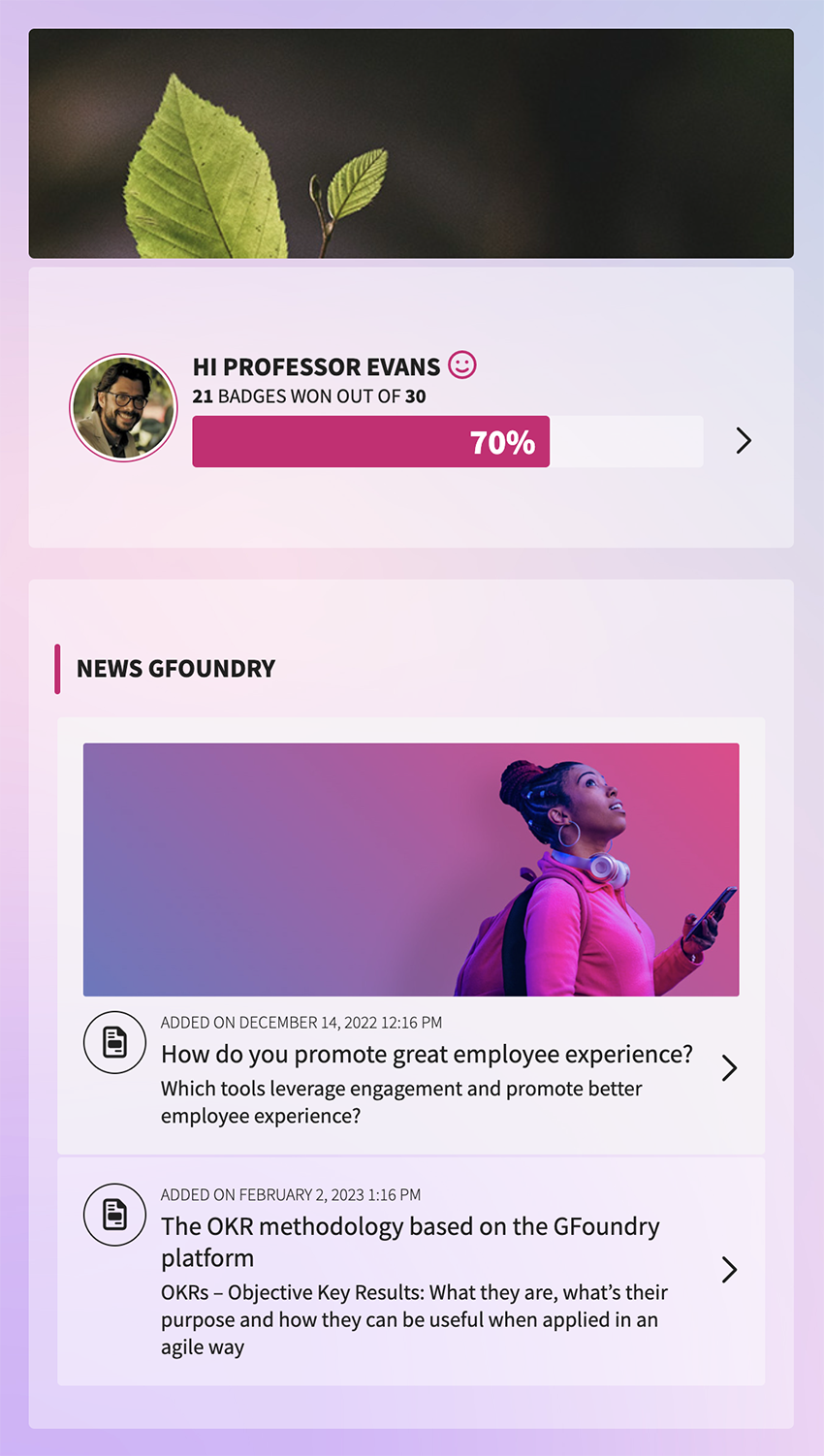
How the GFoundry platform can foster empathetic leadership
GFoundry offers a set of tools that enable, systematise and reinforce empathetic leadership practices, even in complex organisational contexts.
Relevant features
- Feedback module: encourages active-listening cycles with an emphasis on recognition between peers and leaders
- Pulse Surveys: capture real-time perceptions of the emotional climate within teams
- Leadership missions: drive the development of competencies such as listening, inclusion and humanised communication
- Recognition and social wall: create positive, appreciative environments where empathetic gestures become visible
Gamification to develop empathy
Through gamified journeys, it is possible to design learning experiences that encourage the intentional practice of empathy as a critical leadership competency. Empathetic behaviour stops being spontaneous and becomes modelled, measurable and rewarded.

Practical strategies to cultivate empathy in leaders
Empathy can be trained and reinforced through systematic practices that become part of leaders’ daily routines.
Recommended practices
- Schedule regular one-on-one check-ins to listen without judgement
- Use open-ended questions in meetings to explore feelings and motivations
- Adopt self-reflection journals on difficult decisions or conflicts
- Include empathy topics in training, workshops and leadership development plans
- Celebrate acts of empathy in team meetings or on digital platforms such as GFoundry

Future trends: the impact of empathy on organisational performance
As data on burnout, disengagement and isolation grows, so does the pressure for more human and responsible leadership.
What to expect in the coming years
- Chief Empathy Officers: executive roles focused on the emotional culture of companies
- Emotional People Analytics: integrating climate data with biometrics and body language
- Immersive VR training: empathy simulations as part of leadership programmes
Empathy as a competitive advantage
Companies with empathetic leaders show better retention, greater innovation and more resilient teams. Empathy is increasingly a strategic asset, not just a personal trait.
Read More
- Multigenerational management: uniting generations in the workplace
- The remote work paradox: motivation, autonomy and burnout
- The role of the leader in the age of AI: managing hybrid teams
- Emotional quotient as an engine of organisational resilience
- 360 employee experience: well-being, recognition and hyper-personalization
- How to measure organisational happiness: the PERMA framework